Recipes 6 min read
Pan Pizza Guide: How It’s Made, Why It Works, and Topping Ideas
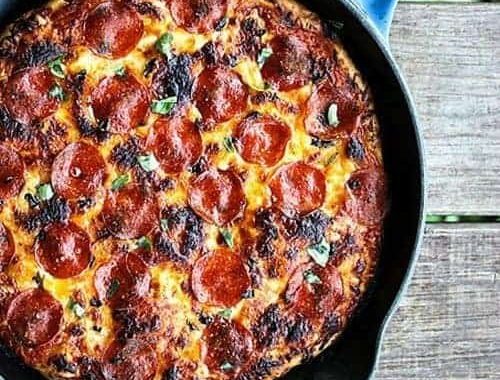
For the best pan pizza, you need to plan ahead. To make a truly outstanding pan pizza you should start the dough at least 8–10 hours before baking, and ideally up to 24 hours in advance. The method requires no special skills beyond patience and a few straightforward steps.
How to Make Pan Pizza
- 1. Measure, mix, and wait.
- 2. Divide, oil, and wait.
- 3. Top, bake, and wait.
- 4. Remove, slice, and wait.
The process revolves around slow fermentation—so yes, there is a lot of waiting. That waiting is the secret to flavor and texture. Using a kitchen scale to measure flour, water, oil, salt, and yeast by weight makes the recipe consistent; humidity and ambient temperature are the only variables you’ll still need to judge.
Precise measurement matters here. Don’t rely on scooping flour with a packed cup—either use a scale or spoon the flour into a cup and level it with a straight edge. The dough for this recipe is a slack, no-knead dough. You’ll simply mix the ingredients until evenly hydrated, cover, and let the dough rise at room temperature for at least 8 hours or up to 24 hours. Do not refrigerate during this bulk fermentation.
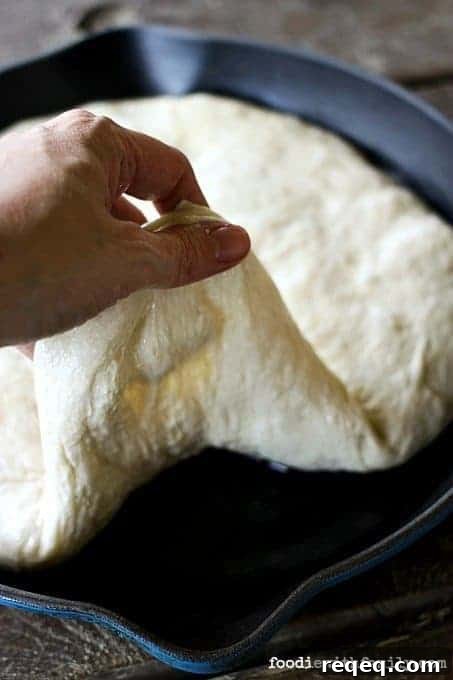
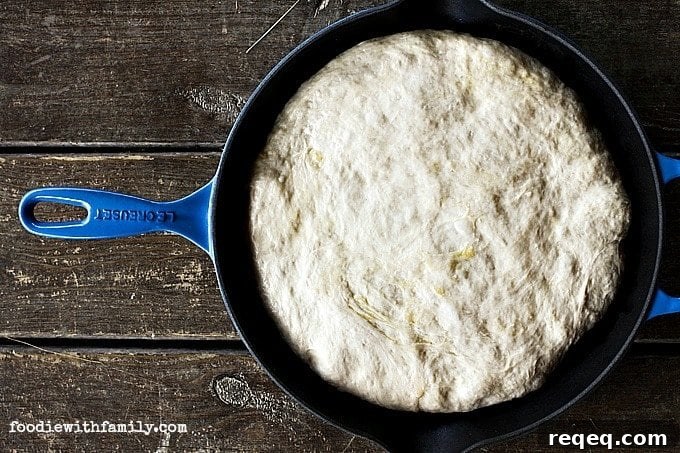
You want a slack dough that will spread in a well-oiled pan. That is the point: a no-knead dough that gently spreads to the edges of a cast-iron skillet. Once the dough has done its slow rise and been portioned, the remaining steps are simple: deflate any large bubbles, coax the dough to the pan edges, top, and bake. Be careful when eating—the pizza will be very hot right out of the oven.
Before baking, press down any large air pockets with the back of your knuckle and lift the dough edges to release trapped air. The dough should be easy to work with if you measured accurately. This method has added benefits: everything is prepared and baked in the same pan, reducing extra tools and cleanup. No pizza peel or stone is required—just a sturdy cast-iron skillet (or two).
Pan Pizza
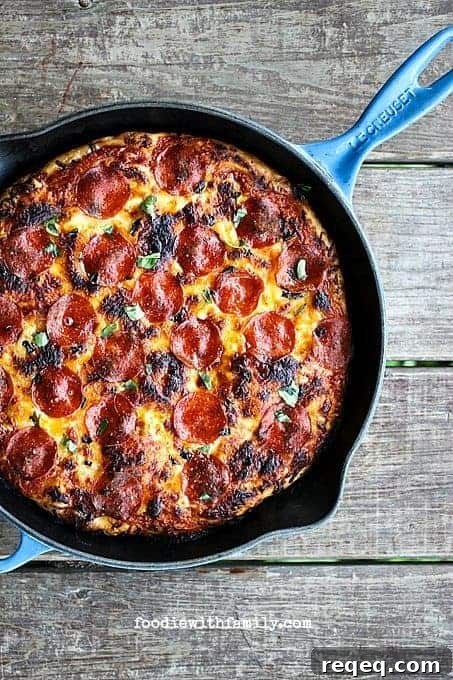
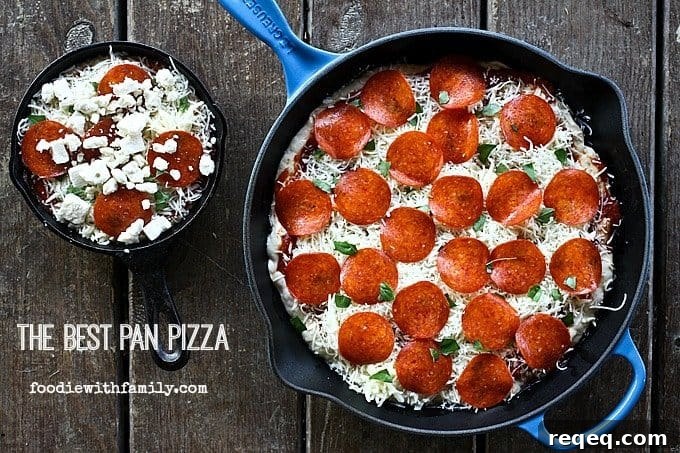
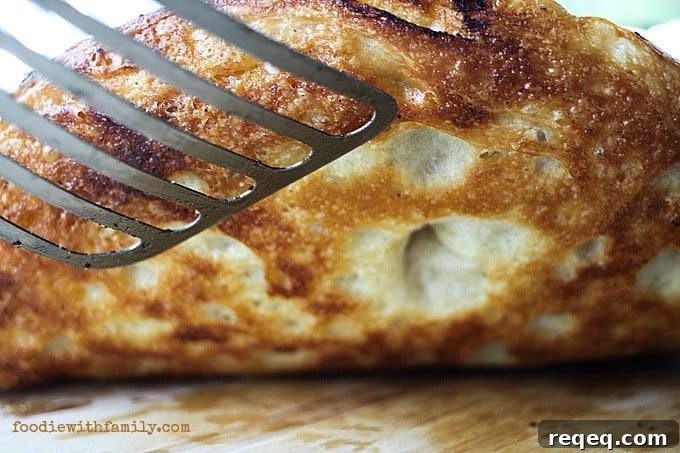
Everything for this pizza—from dough to toppings to baking—happens in one pan. A heavy cast-iron skillet produces the best results: a crisp, oil-soaked bottom with a chewy interior. The finished pizza is thicker than a thin-crust pie but far from a Chicago deep-dish. Think chewy, slightly fried crust with crisp edges and a satisfying bite.
What kind of flour to use for Pan Pizza
Use high-gluten or bread flour when possible. It has more protein than all-purpose flour, resulting in a chewier, more open crumb. If you only have all-purpose flour the pizza will still be tasty, but the texture will differ. I don’t have reliable guidance for gluten-free flour—results vary widely depending on the blend.
How much flour and water to use for pizza dough
Use water that’s about body temperature (just under 100°F) to help the yeast along. Keep extra water on hand: humid climates typically require the recipe’s listed water amount, while dry climates sometimes need up to 1/4 cup more. The dough should look shaggy but come together without kneading. A dough whisk is handy for mixing. The slow, long rise develops gluten naturally, so don’t knead.
The best cheese for pan pizza
Avoid fresh mozzarella for this high-heat method—its delicate texture and moisture won’t hold up in a very hot oven. Buy a block of whole or part-skim mozzarella and grate it yourself for the best melt, or use pre-shredded mozzarella if needed.
Homemade Pan Pizza
Use a large bowl or container for the dough; it will expand several times in volume. Store the rising dough in a draft-free spot at room temperature. Ideally, use heavy 10–12 inch cast-iron skillets for crisp edges. A cake pan works in a pinch but won’t deliver the same crunchy side crusts that cast-iron gives.
Pan Pizza Recipe
Choose an oil with a high smoke point for the pan—grapeseed, peanut, canola, or neutral olive oil work well. Don’t use extra-virgin olive oil because it can smoke at high temperatures. Don’t skimp on oil in the pan: it prevents sticking, helps the dough spread, and essentially fries the bottom for a crisp, tasty crust.
Preheat the oven as hot as it will go; if possible, aim for 550°F. That burst of heat produces lots of little bubbles and a great chewy texture. If your oven tops out lower, bake until the crust and top are deeply caramelized, and you can finish briefly on a hot stovetop burner to crisp the underside if needed.
When the pizza comes out, allow it to rest for at least five minutes before slicing, then a few more minutes before picking up a slice so you don’t burn your mouth. Enjoy the contrast of a crispy, oil-kissed bottom and a chewy, open crumb inside.
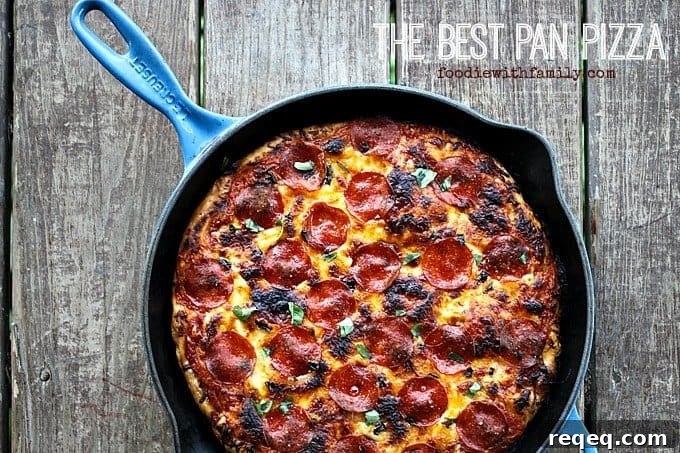
Tools to make the best pan pizza
- Cast iron frying pan (10–12 inch preferred)
- Large mixing bowl or dough bucket
- Flexible spatula for removing pizza
See how easy it is to make the Best Pan Pizza?
Below is the core recipe summary you can follow. The long fermentation, a well-oiled cast-iron pan, high oven heat, and a block of grated mozzarella make this method produce an irresistibly crispy, chewy pan pizza.

The Best Pan Pizza
Adapted from Serious Eats. Oil-soaked, crispy-bottomed, chewy pan pizza.
Ingredients
For the dough:
- 14 ounces bread flour (about 3 cups)
- 2 teaspoons kosher salt (about 0.35 ounces)
- 1/2 teaspoon instant yeast (about 1.5 g)
- 1 1/2 cups water (12 ounces), body temperature
For the pizzas:
- 4 tablespoons neutral oil (divided) such as grapeseed, peanut, canola, or pure olive oil
- 1 1/2 cups thick pizza sauce
- 2 cups shredded mozzarella
- 12–16 slices pepperoni per pizza
Optional:
- Fresh basil leaves, to add before and after baking
Instructions
- Mix all dough ingredients until evenly hydrated and there are no dry pockets. Cover tightly and let rise at room temperature for 8–24 hours.
- Pour 2 tablespoons oil into each 10–12 inch cast-iron skillet and swirl to coat. Divide the dough into two pieces, gently shape each into a loose ball, and place smooth side down in the oil, then flip to coat. Gently flatten with your palm (it won’t reach the edges yet). Cover tightly and let rest at room temperature for 2 hours.
To prepare the pizzas:
- Preheat the oven as high as it will go (preferably 550°F). Remove plastic wrap; the dough should have spread toward the pan edges. Gently lift edges to release trapped air and press out any large bubbles.
- Spread half the sauce on each pizza to the edges. Divide cheese and pepperoni evenly. If using basil, tear half the leaves over the pizzas now and reserve the rest for after baking.
- Bake 12–20 minutes depending on your oven and desired doneness. A finished pizza will have a deep-brown, crisp bottom and a bubbly, golden to deep-golden top.
- Slide pizzas onto a cutting board with a flexible spatula. Scatter remaining basil, let rest 5 minutes, slice, then rest another 3 minutes before serving.
Nutrition
Estimated per serving: Calories 348; Carbs 38 g; Protein 14 g; Fat 14 g. Nutritional values are approximate—calculate using your exact ingredients if precise nutrition is required.
Other recipes to try
- Best Middle Eastern Salad Dressing
- Best Thing Tomatoes
- Best Way to Cook Salmon – Air Fryer Salmon
- Best Method for Making the Best Baked Potato

Best Pan Pizza was originally posted August 1, 2014. Updated with video and tips in May 2017 and January 2021.