
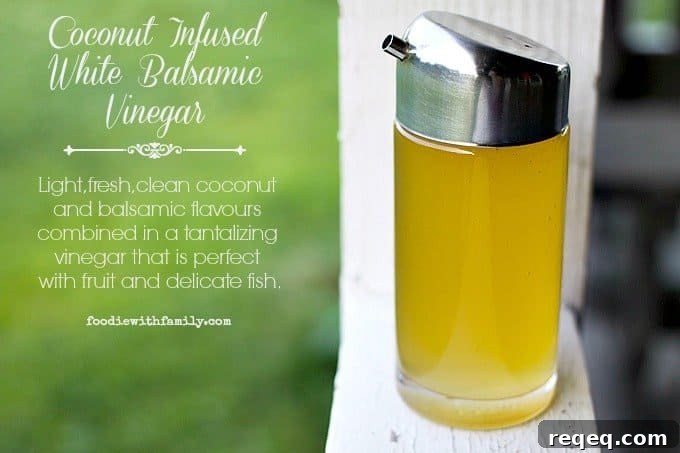
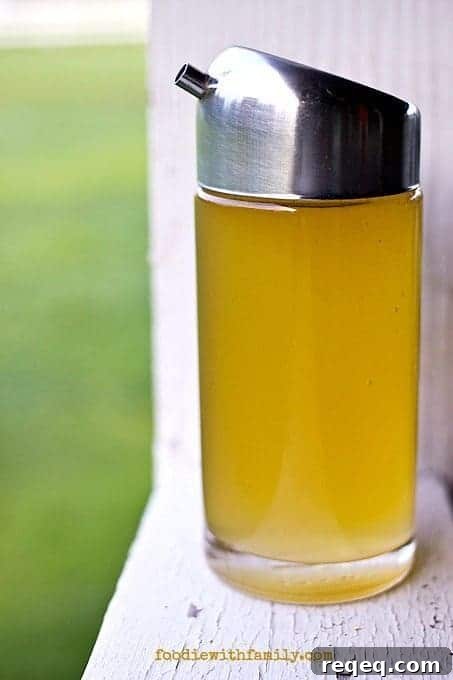
Are you familiar with white balsamic vinegar? It’s a bright, elegant alternative to traditional dark balsamic: similar flavor but lighter in body and cleaner on the palate. For my 40th birthday my sister gifted me a set of infused oils and vinegars, and tucked inside was a bottle of Coconut Infused White Balsamic Vinegar. Since she loves coconut, we opened it together. The aroma was incredible—the freshest, fruitiest coconut—so irresistible I sipped more than half the bottle before the day ended. Clearly, I needed another bottle.
The label revealed a simple ingredient list: white balsamic vinegar and unsweetened dry coconut. With both on hand, I opted for the easiest method. I filled a clean jar with unsweetened coconut flakes, then poured white balsamic over them until the coconut was fully submerged.
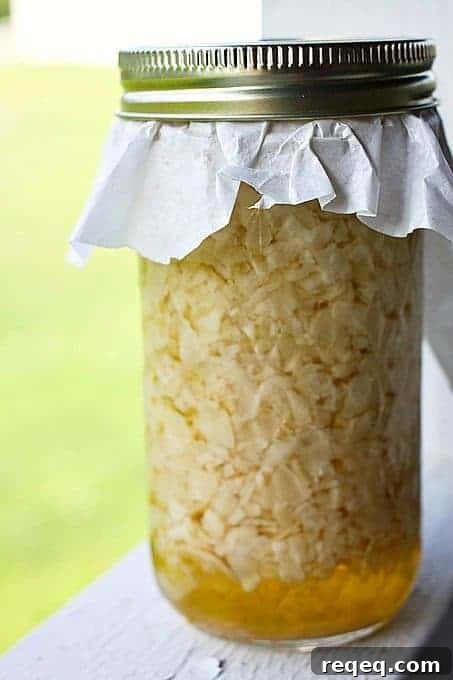
To protect the jar lid from the vinegar, I placed a square of parchment paper over the rim before fastening the lid and ring. I stored the jar in a cool, dark place for a week, shaking it daily and replacing the parchment each time. After seven days I strained the vinegar through a cheesecloth-lined sieve, pressed gently to extract every last drop, and tasted the result. Success—the finished vinegar captured the coconut’s natural sweetness within the crisp, clean profile of white balsamic.
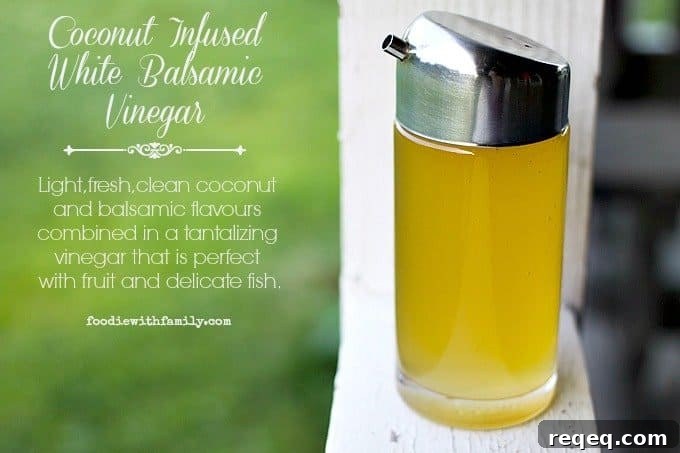
The Coconut Infused White Balsamic Vinegar is delicate and bright. It’s ideal as a finishing vinegar rather than one for long, heated cooking. I’m grateful to my sister Airlia for the inspiration—expect a jar in your stocking if you’re close to her!
How to use it: drizzle it over fresh, cut fruit to enhance natural flavors and slow browning; use it in fruit-salad dressings instead of citrus; or make a refreshing beverage by splashing it over ice and topping with cold soda or seltzer. It’s essentially a shrub-style drink—light, tangy, and very cooling on hot days.
Cook’s Notes
- The infused vinegar is best used raw as a finishing touch: over fresh fruit, fruit salads, or grilled fish.
- A small dash can be added to fruit crisps just before serving to brighten flavors.
- Straining options: for a clear vinegar, line your sieve with butter muslin or a fine layer of cheesecloth and strain carefully. If a little cloudiness or tiny coconut pieces don’t bother you, a colander or single-layer sieve is fine.
- Don’t discard the strained coconut: it keeps refrigerated and can be used in coconut shrimp, stir-fries, or baked goods—add it where you’d enjoy a concentrated coconut flavor.
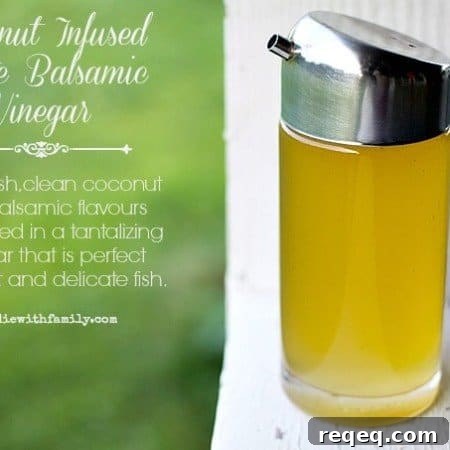
Coconut Infused White Balsamic Vinegar
Rebecca Lindamood
Ingredients
Ingredients:
- Dry unsweetened coconut flakes
- White balsamic vinegar
Equipment:
- 1 pint canning jar with a 2-piece lid
- several 5-inch parchment paper squares
Instructions
-
Fill the jar with dry coconut to within 1 inch of the rim. Pour in white balsamic vinegar to cover the coconut, then press gently with a clean spoon to pack it down. Lay a parchment square on the rim, position the lid over it, and screw the ring in place. Shake the jar vigorously and store it in a cool, dark spot for one week. Each day open the jar, replace the parchment square, reseal, and shake firmly.
-
After seven days, line a sieve or colander with a double layer of fine cheesecloth or butter muslin and set it over a large bowl. Pour the jar contents into the lined sieve and press the coconut with a sturdy spoon to extract as much infused vinegar as possible. Reserve the strained coconut in a covered jar in the refrigerator for other uses.
-
Transfer the strained vinegar to a sterile bottle or jar with a tight lid. Store at room temperature for up to six months, or refrigerate for longer shelf life.
Nutritional information is an estimate and provided as a courtesy. Calculate nutrition based on the specific ingredients you use.
Did you make this recipe?
If you try it, tag your photos so friends can see your creation and enjoy the bright, tropical flavor.
Are you a coconut lover excited to try this infusion? What would you drizzle it on first—fruit, fish, or a chilled soda?