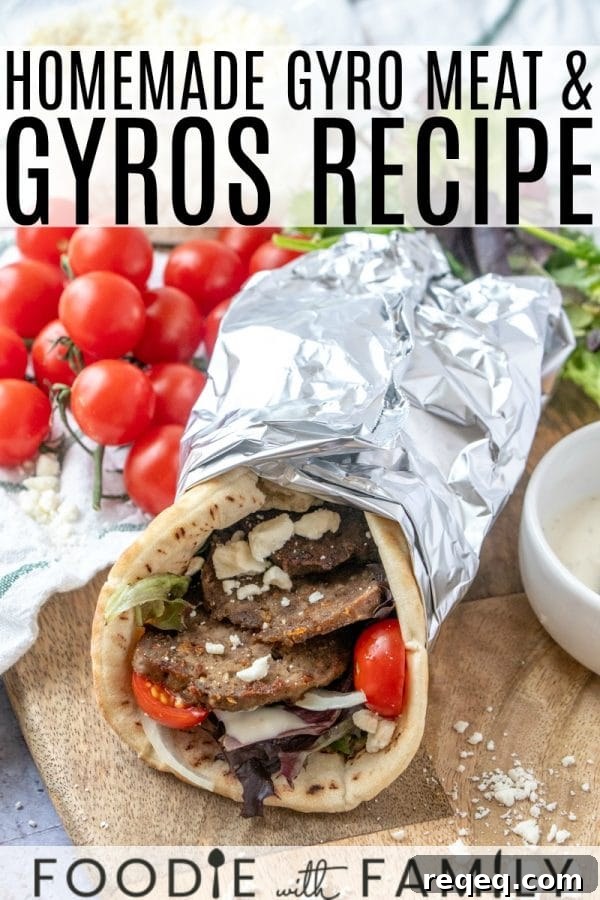
Make restaurant-worthy homemade gyro meat and gyros — flatbreads stuffed with garlicky, herbed, crisped strips of Greek/Lebanese-style meatloaf you can prepare at home.
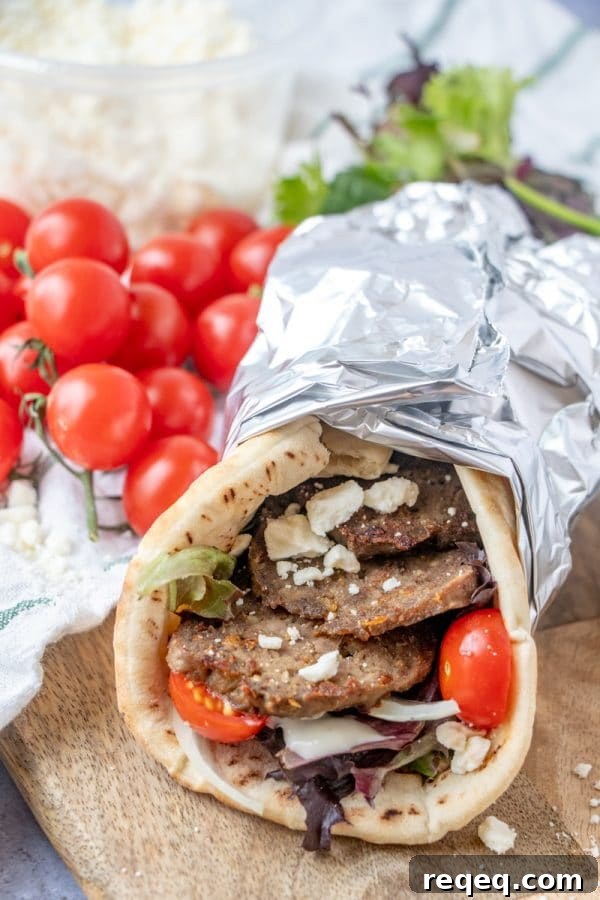
Some foods get stuck in your head and won’t let go — for me, it was gyros. A few weeks ago I went into the city with family for lunch and ordered a lamb-and-beef gyro platter. The plate arrived piled high with thin, crisped strips of gyro meat, and one bite made it clear: I had to recreate this at home.
The gyro meat I tasted at the restaurant was crisp on the outside, rich with garlic and herbs, and impossibly satisfying. I finished every last bite and then spent days thinking about how to capture that texture and flavor in my own kitchen. Driving into the city every time wasn’t an option, so I set out to make a large batch I could enjoy whenever I wanted.
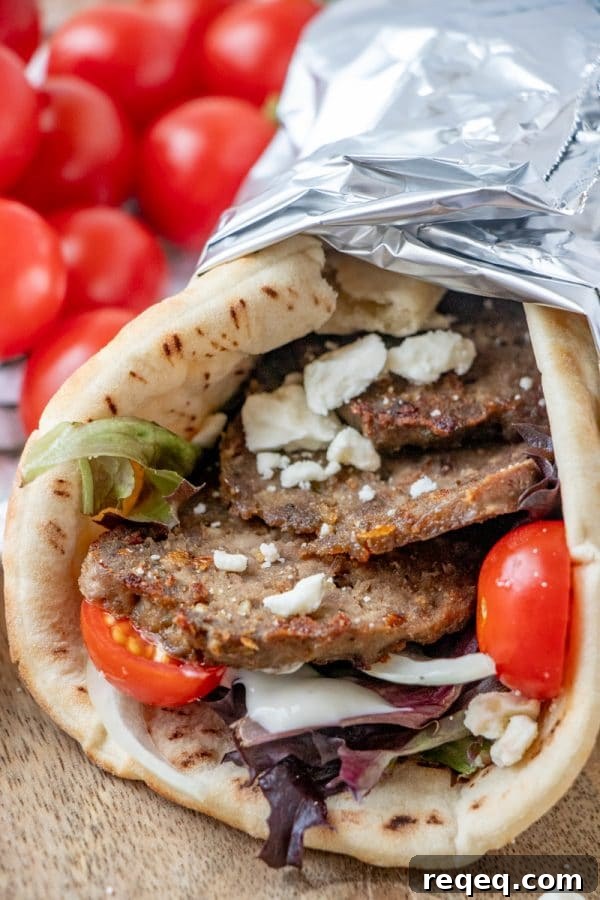
Homemade Gyros
I wanted the dense, super-fine texture of restaurant gyro meat while keeping the loaf moist and flavorful. I used equal parts ground beef and lamb for authenticity, then added plenty of garlic and Mediterranean herbs. After letting the mixture rest in the fridge so the flavors could meld, I put the meat through the food processor in batches until it became a tacky, thick paste.
I packed the paste tightly into loaf pans to avoid air pockets, nested them in a larger roasting pan, and poured boiling water into the outer pan to come about two-thirds up the loaf pans. The loaves baked in a water bath until the internal temperature reached 165°F. After removing excess fat, I placed foil-wrapped weights on top of the cooked loaves to compress them into that dense texture I love from restaurant gyros.
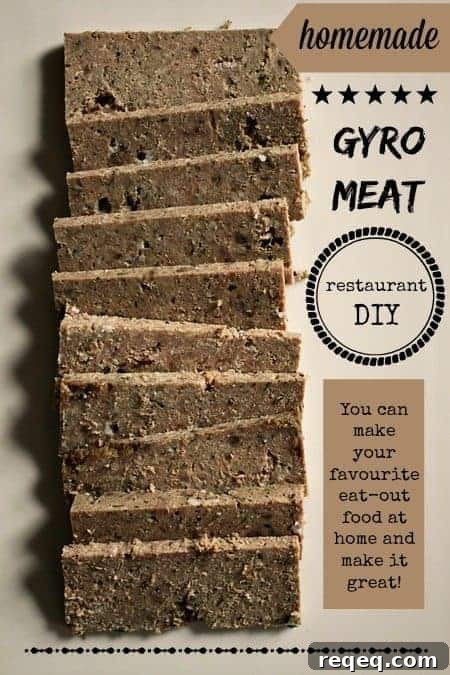
Once cooled, I wrapped the loaves tightly and refrigerated them until firm. Chilling the loaves is the key to slicing very thin strips for frying.
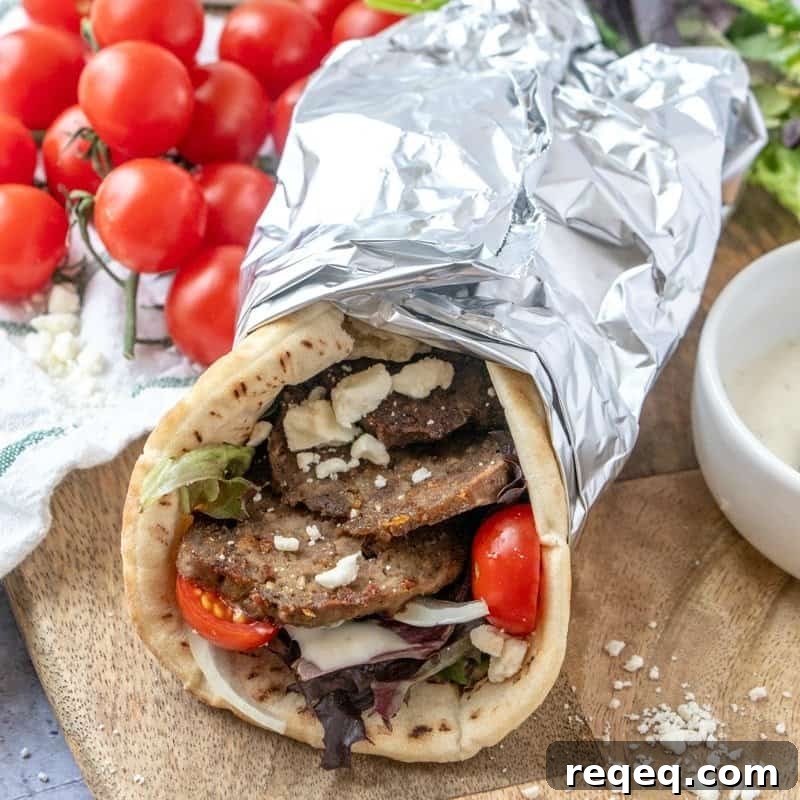
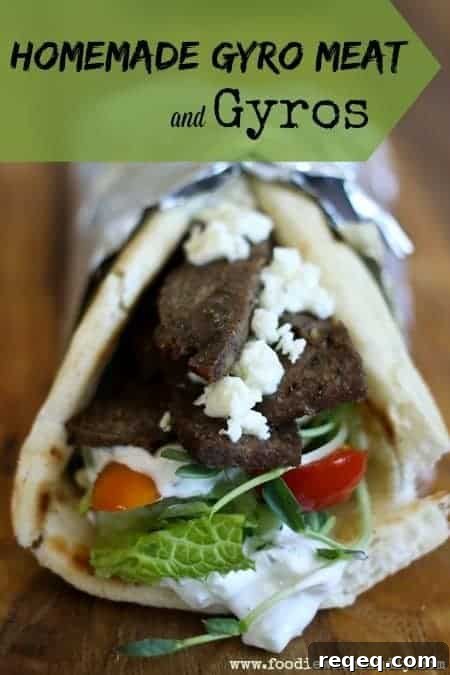
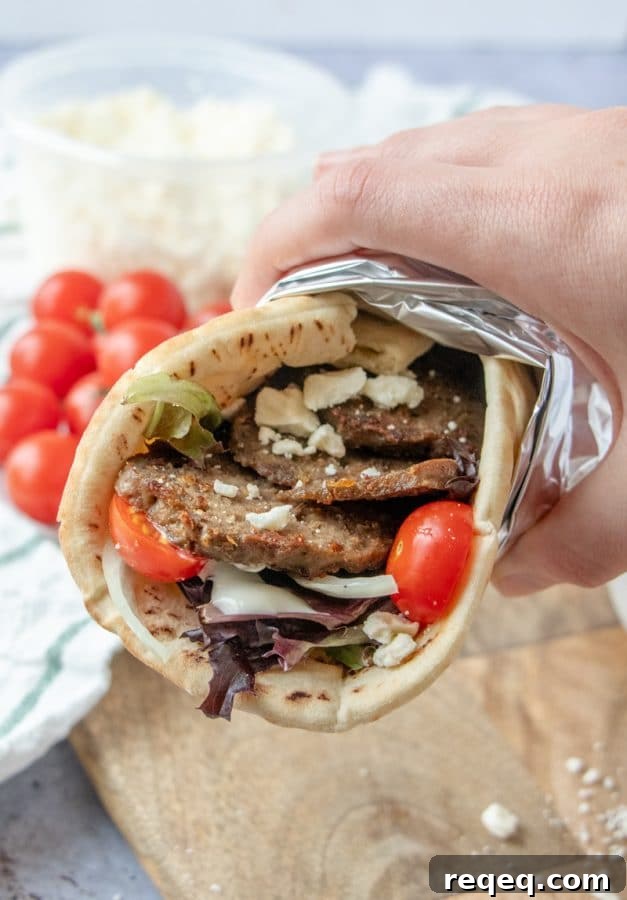
When I was ready to eat, I sliced the chilled loaves into thin strips and browned them in an indulgent amount of ghee. The aroma — garlicky, oniony, herb-scented meat crisping in browned butter — filled the house like a Mediterranean eatery. I let the cooked strips rest briefly, then piled them into warm flatbreads with salad greens, halved cherry tomatoes, thin sweet onion slices, cucumber-yogurt sauce, crumbled feta, smashed Greek olives, and a drizzle of Greek-style dressing.
I wrapped the filled pitas in foil to hold everything together and took a bite of one of the best gyros I’ve ever had at home. Planning ahead means you can have these whenever the craving strikes — and they freeze well, so a frozen gyro loaf makes future meals easy.
Cook’s Notes:
- Don’t be put off by the total time — most of it is passive waiting and the result is well worth it.
- Finely chopping the onion and then squeezing out excess moisture improves the loaf’s final texture. Don’t skip this step.
- You can use all beef or all lamb if you prefer; the flavor and texture will vary but both are delicious.
- This recipe yields a large quantity; feel free to halve it. It freezes very well, so making a full batch is convenient.
- For crisped strips, you can broil the slices, but frying in ghee, butter, or olive oil gives superior flavor. Ghee is my first choice for the best aroma and crispness.
- Compressing the cooked loaves with foil-wrapped weights isn’t absolutely required, but it helps achieve the fine, dense texture typical of restaurant gyro meat.
Gyro Recipe
To Make the Gyros:

Homemade Gyro Meat and Gyros
Rebecca Lindamood
Ingredients
For the Gyro Meat:
- 2 pounds ground beef (80/20 to 90/10)
- 2 pounds ground lamb
- 1 large onion, peeled and cut into 1-inch chunks
- 2 tablespoons minced garlic
- 1 tablespoon dried oregano
- 1 tablespoon dried thyme
- 2 1/2 teaspoons ground cumin
- 2 teaspoons kosher salt
- 2 teaspoons ground black pepper
- 1 teaspoon dried rosemary
For the Gyros:
- Prepared gyro meat, fully cooled
- Ghee or extra-virgin olive oil for frying
- Flatbread pitas
- Mixed salad greens
- Cucumber-yogurt sauce (tzatziki)
- Halved cherry tomatoes or chopped tomatoes
- Thinly sliced sweet onions
- Crumbled Feta cheese
- Optional: Greek dressing and chopped or smashed Greek olives
Instructions
To Make the Gyro Meat:
- Pulse the onion in a food processor until very fine. Squeeze the chopped onion in a clean towel to remove excess moisture. Mix the onion with the remaining gyro meat ingredients by hand. Cover and refrigerate for at least 1 hour or up to overnight.
- Preheat the oven to 325°F and bring a pot of water to a boil.
- Working in batches, pulse the meat mixture until it forms a tacky paste. Pack evenly into two standard loaf pans, pressing firmly to remove air pockets. Place loaf pans in a roasting pan on top of a wet towel, and pour boiling water into the roasting pan so it reaches about two-thirds up the loaf pans. Bake 50–70 minutes or until an instant-read thermometer reads 165°F in the center.
- Remove loaf pans, pour off any fat, and set on a heatproof surface. Place a foil-wrapped weight on each loaf and let rest 20 minutes. Remove weights, run a knife around the edges, unmold the loaves, wrap tightly in plastic, and chill for several hours or overnight until firm for easy slicing.
To Make the Gyros:
- Slice chilled gyro loaves into long strips no thicker than 1/4 inch. Heat at least 2 teaspoons of ghee or olive oil in a heavy skillet over medium heat and fry the strips about 1½ minutes per side, or until crisped and browned.
- Assemble on warmed flatbread with greens, tomatoes, onions, cucumber-yogurt sauce, feta, and olives. Fold, wrap in foil to hold together, and enjoy.
Nutrition
Carbohydrates: 34 g
Protein: 25 g
Fat: 27 g
Saturated Fat: 11 g
Cholesterol: 85 mg
Sodium: 735 mg
Nutritional information is an estimate. Calculate using your actual ingredients if needed.
did you make this recipe?
Tag @foodiewithfam on Instagram and use #foodiewithfamily so the author can see your creation.
Do you love this Homemade Gyro Meat recipe? You might dig these, too.
- Greek Salad Gyro Salad Plate
- Greek Dressing
- Cardamom Pistachio Baklava
- Greek Tzatziki Dip
- Greek Stuffed Sweet Potatoes
- Greek Chicken Pasta Skillet
This recipe for Homemade Gyros was originally published March 2014 and updated April 2019 with video and improved notes.