Recipes 4 min read
Perfect Poached Eggs Every Time: Simple Steps for Silky Whites
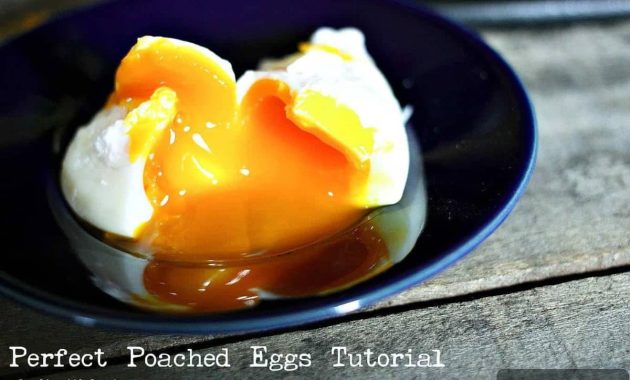
If you’ve never poached an egg before it can feel intimidating, but once you learn how to do it well you’ll open up a world of brunch possibilities: on toast, tossed over salads, or as Eggs Benedict. A perfectly poached egg—firm whites with no sliminess and a yolk that breaks into a golden pool—is simple to master with a few reliable steps.
The trick I learned working in a restaurant isn’t often mentioned in tutorials, but it consistently improves the appearance and texture of the eggs. It may sound fussy, but it works every time.

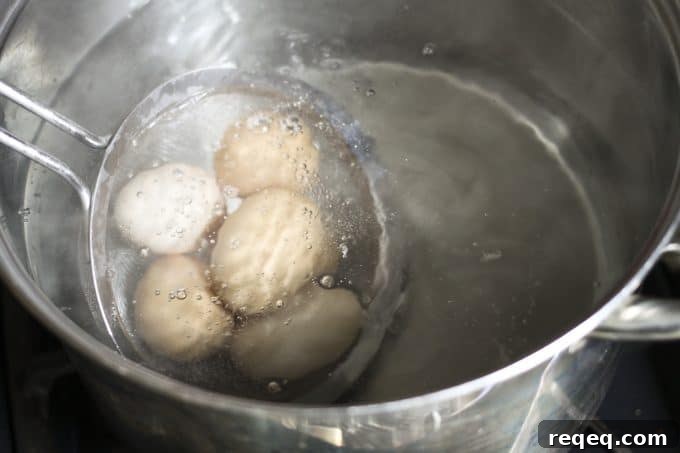
In short: bring your eggs to room temperature, then briefly dunk them in boiling water while still in their shells before cracking them into a ramekin and adding them to the poaching water. The photo above shows how the whites begin to set during that quick dunk, which helps them stay compact when you finish cooking them.
Why the quick dunk works
Warming the eggs slightly while they remain in their shells gives the whites a head start on setting. That first few seconds of heat helps the proteins in the white bind, so when you crack the egg into the water it’s less likely to feather or spread into wispy strands. The result is a tidy, rounded poached egg that looks as good as it tastes.
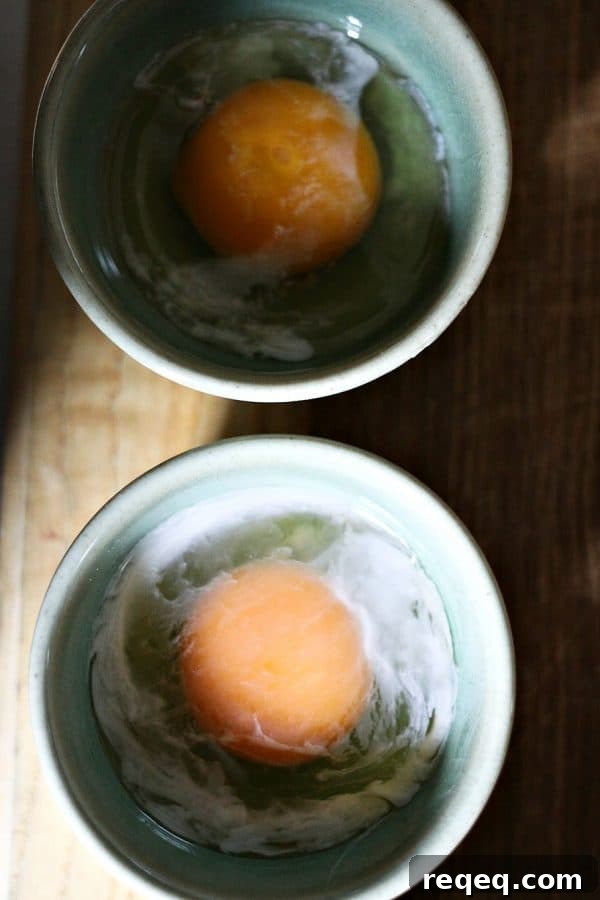
After the brief dip, cracking each egg into a small bowl or ramekin makes it easy to slide the egg gently into the water. You can see in the photos that most of the eggs hold together neatly, with only a tiny tail on one—easy to trim later for a cleaner presentation.
Step-by-step: How to poach an egg perfectly
Follow these steps for consistent results:
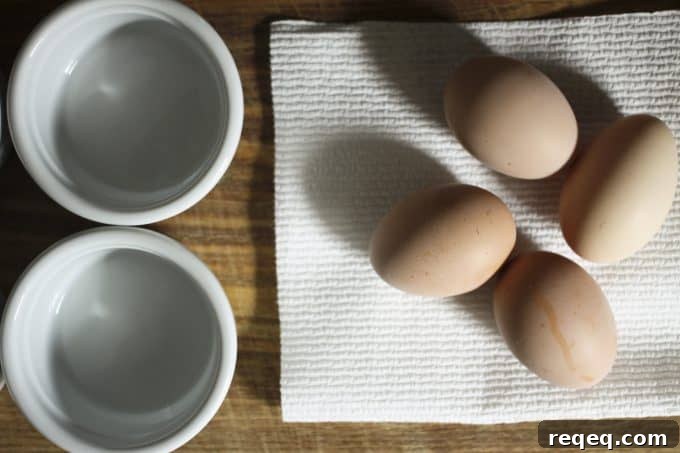
- Bring your eggs to room temperature for about 30 minutes before cooking. This reduces the shock of cold eggs hitting hot water and helps the whites cling to the yolk.
- Fill a pot with about 2 quarts of water and bring it to a rolling boil.
- Using a slotted spoon, steaming basket, or pasta drainer, lower the number of eggs you want to poach into the boiling water while they are still in their shells. Leave them in for 10 seconds, then lift them out and drain. (Wash shells thoroughly first, especially if you keep backyard hens.)
- Crack each egg into its own small bowl or ramekin.
- Add 2 teaspoons of white wine vinegar or rice vinegar and 2 teaspoons of kosher salt to the pot, reduce the heat so the water is hot and steaming but not boiling, and create a vigorous circular motion with a spoon to form a vortex.
- Lower the ramekin close to the water surface and gently slide the egg into the center of the vortex. Repeat with up to two eggs; if adding more than one, re-stir the water between additions by inserting the spoon about a third of the way down and giving it another twist.
- Set a timer: 3 minutes for set whites and very runny yolks, 3½ minutes for set whites and slightly thickened yolks, and 4 minutes for firm whites with almost-set yolks.
- Lift finished eggs with a slotted spoon to drain and transfer to a clean plate. Trim any stray bits of white with kitchen shears or a paring knife for a neat finish.
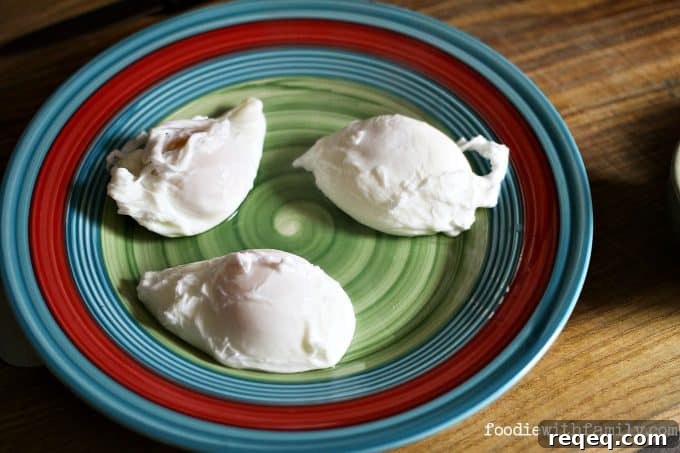
Poached eggs are wonderfully versatile. Serve them on buttered toast, over a green salad, on creamy polenta, or as part of classic Eggs Benedict. A tidy poached egg elevates any simple dish—pretty food makes a meal feel special.

Ingredients
- 2 quarts water in a soup pot
- 2 teaspoons white wine vinegar or rice vinegar
- 2 teaspoons kosher salt
- Fresh eggs
Instructions (concise)
- Bring the pot of water to a boil. Lower the eggs in their shells into the water for 10 seconds, then lift and drain. Crack each egg into its own small dish.
- Add the vinegar and salt to the pot, reduce the heat so the water is steaming but not boiling, and stir vigorously to form a vortex.
- Pour one egg at a time into the center of the vortex, repeating with up to two eggs. Keep the water gently spinning as you add eggs.
- Cook 3–4 minutes depending on desired yolk texture. Use a slotted spoon to remove and drain.
- Serve on toast, salad, polenta, or in Eggs Benedict.
Nutritional information will vary based on ingredient brands and portion sizes; calculate with your preferred nutrition tool if needed.
Tag your photos on social media if you try this method—practice makes perfect, and soon poached eggs will be one of your easiest go-to dishes for impressing family and friends.