
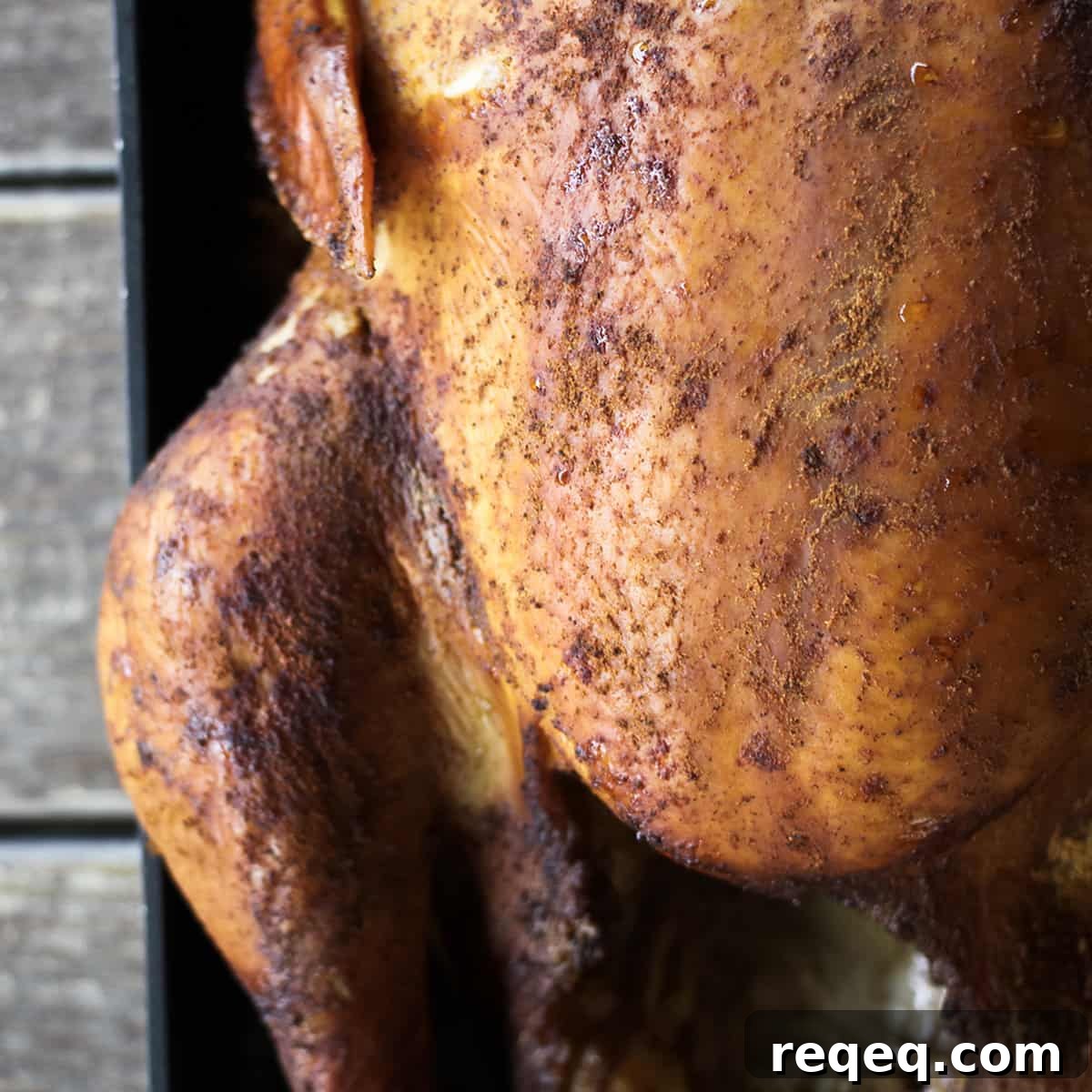
Have you always wanted to smoke your own turkey? This guide shows how simple it is to make a tender, flavourful smoked turkey that may be the best Thanksgiving bird you’ve ever served.
Smoked turkey offers exceptional texture and depth of flavour. With just a few basic ingredients and straightforward technique, you can produce a show-stopping centerpiece that will impress your family and guests.
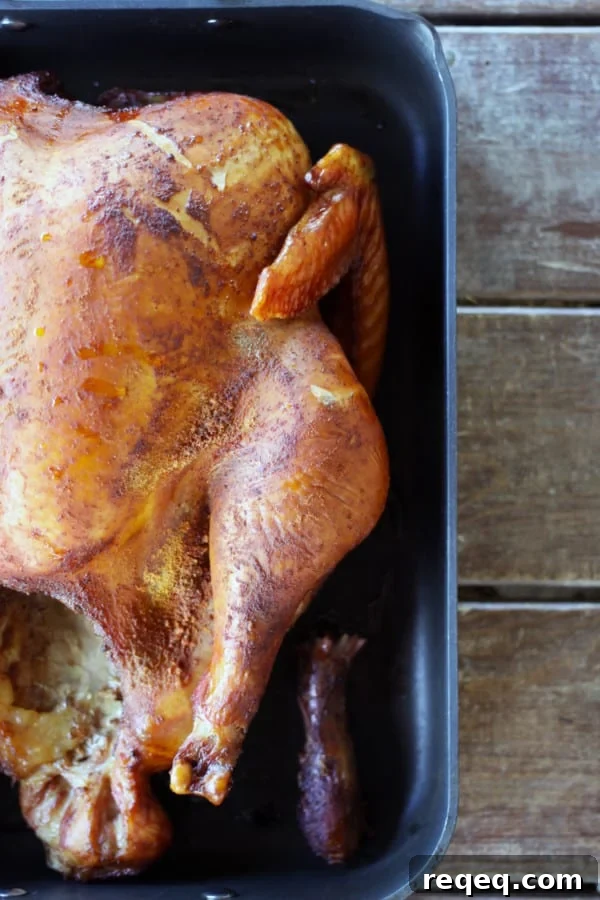
Smoked turkeys have a bit of mystique. In some places people pre-order smoked birds weeks in advance for holiday meals, and it’s easy to see why: the low-and-slow cooking method yields moist meat and a depth of smoke flavour that roasting rarely matches.
Roasting a turkey can dry it out if not closely watched. Smoking, however, cooks at a low temperature for an extended time, allowing the bird to baste itself and stay juicy while it absorbs smoke. Because of that, the seasoning can be very simple—kosher salt, black pepper, and a touch of granulated garlic and onion are often all you need.
Do I need to brine a turkey to smoke it?
You don’t have to brine a turkey to smoke it. Brining can add moisture and flavour, but it also increases prep time and creates extra cleanup. If you like the effect of brining without dealing with large volumes of liquid, try a dry brine: salt the skin and let the turkey air-dry in the refrigerator for several hours or overnight. That helps the skin dry out, which improves smoke absorption and gives a slightly better texture to the finished skin.
If you prefer to brine, go ahead—many cooks swear by it—but know that a well-smoked turkey will be juicy and flavorful even without a wet brine.
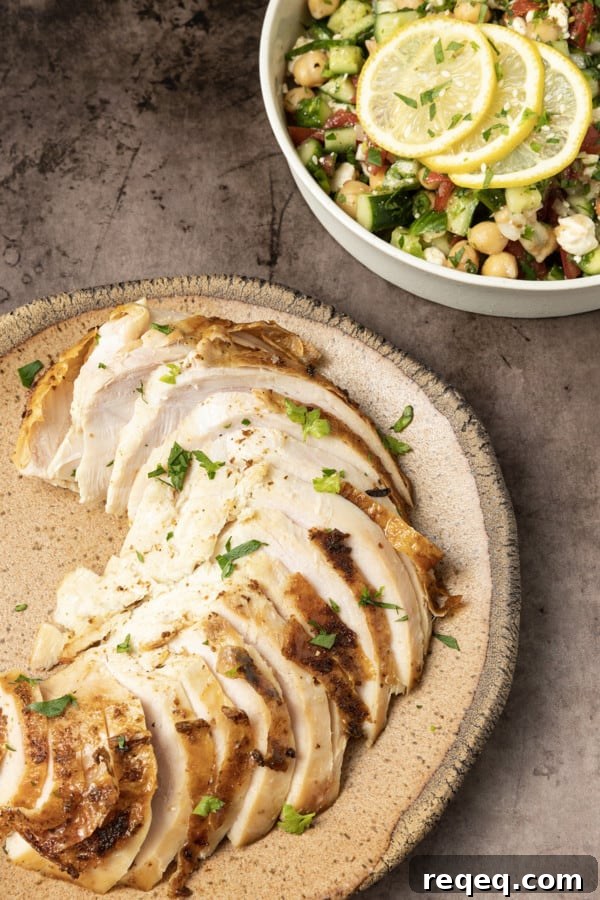
How to smoke a turkey
Smoke the turkey at a low temperature (225–250°F) so it cooks slowly and remains moist. The smoke itself contributes most of the character, so keep seasonings simple: salt, pepper, and a little granulated garlic and onion are usually sufficient. Stuffing the cavity with moist aromatics—onions, apples, garlic and fresh herbs like sage—adds moisture and flavor from the inside out while the bird cooks.
Drying the skin in the fridge before smoking is an easy step that pays off. Place the turkey breast-side up on a rack in a roasting pan and refrigerate uncovered for at least four hours or overnight. Air circulation dries the skin better than blotting with paper towels, which helps the skin take the smoke and crisp a bit during cooking.
Smoked turkey ingredients
- One whole turkey (ideally 12–15 pounds)
- Neutral oil (sunflower, canola, or vegetable)
- Kosher salt
- Black pepper
- Granulated garlic or garlic powder
- Granulated onion or onion powder
- Fresh sage
- Two yellow onions
- Three apples
- Optional: paprika for color or a pre-mixed poultry seasoning
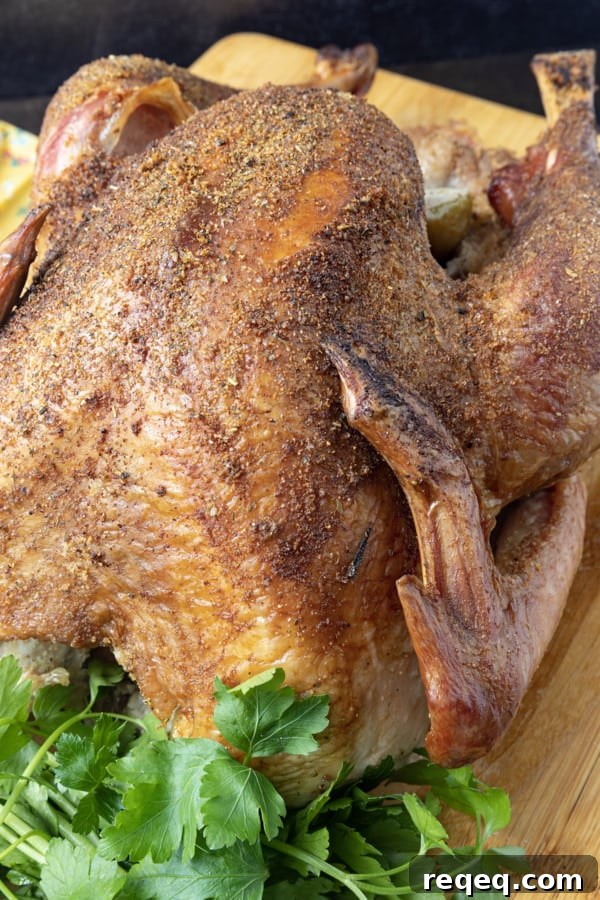
Keep the spice blend simple for the best results. The aromatics you stuff into the cavity—onions, apples, garlic and sage—play an important role in the final flavor, so don’t skip them.
Whole turkey vs turkey breast
A smaller whole turkey (under 15 pounds) is recommended for even, safe cooking. Larger birds spend more time in the temperature “danger zone,” increasing food-safety risk. If you need more servings, smoke two smaller turkeys rather than one very large bird.
If a whole bird is too much, consider a bone-in turkey breast. It still benefits from the same technique—dry the skin, season simply, stuff aromatics in the cavity if available, and smoke low and slow.
You can detach drumsticks before smoking if you prefer the dark meat to be more done when the breast finishes. I don’t recommend trussing the bird; leaving the legs free helps the dark meat cook more predictably.
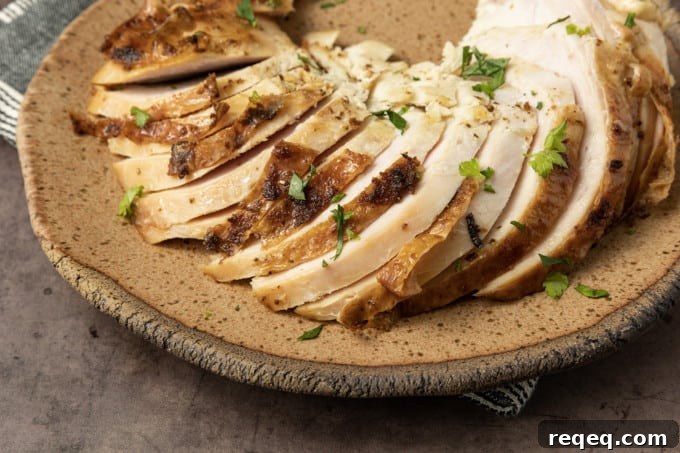
Equipment and wood for smoking
Essential equipment:
- A smoker or grill that can maintain a steady 225–250°F. A pellet grill like a Traeger, electric smoker, or well-controlled charcoal or gas grill set up for indirect heat works well.
- A roasting pan or drip pan with a rack to hold the turkey and catch drippings.
- Wood: apple or alder are excellent choices for turkey—mild and fruity. Hickory is a good second option; use stronger woods like mesquite sparingly.
A dedicated smoker with a thermostat makes the job easier, but a grill can work if you can maintain low, steady heat and good smoke. Place a drip pan beneath the turkey to collect juices for gravy or to roast vegetables with added flavor.
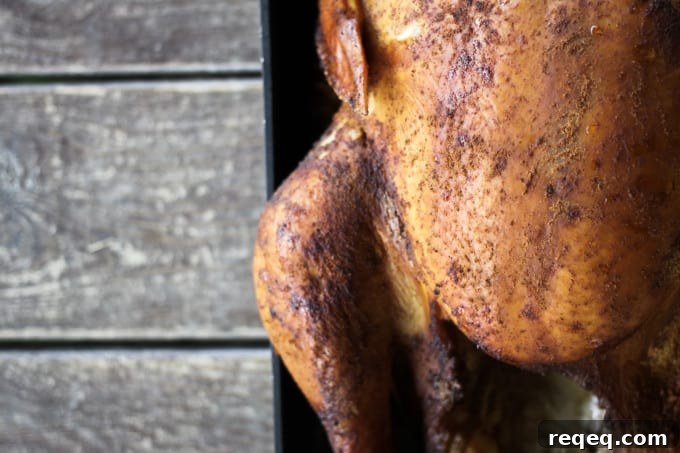
What temperature to smoke a turkey
Maintain the smoker at about 250°F for the duration. Use apple, alder, or hickory wood for smoke. If your smoker uses wood chips, follow the manufacturer’s instructions for loading chips and maintaining smoke at the set temperature.
How long to smoke a turkey
Plan about 30–40 minutes per pound as a general guideline. The most reliable method is to use a probe thermometer: target 160°F in the thickest part of the breast and 180°F in the thigh (many cooks pull the bird at 160–165°F breast and allow carryover to reach a safe final temperature during resting). Times vary by smoker, turkey size, and starting temperature.
Smoked turkey can be cooked ahead and reheated without drying out. To reheat a whole smoked turkey that hasn’t been frozen, preheat your oven to 375°F, place the turkey on a rack in a roasting pan with a cup of stock in the pan, tent with foil, and check every 30 minutes until the internal temperature reaches a safe, warm serving temperature. Finish briefly under a broiler if you want to re-crisp the skin, but watch it closely to avoid burning.
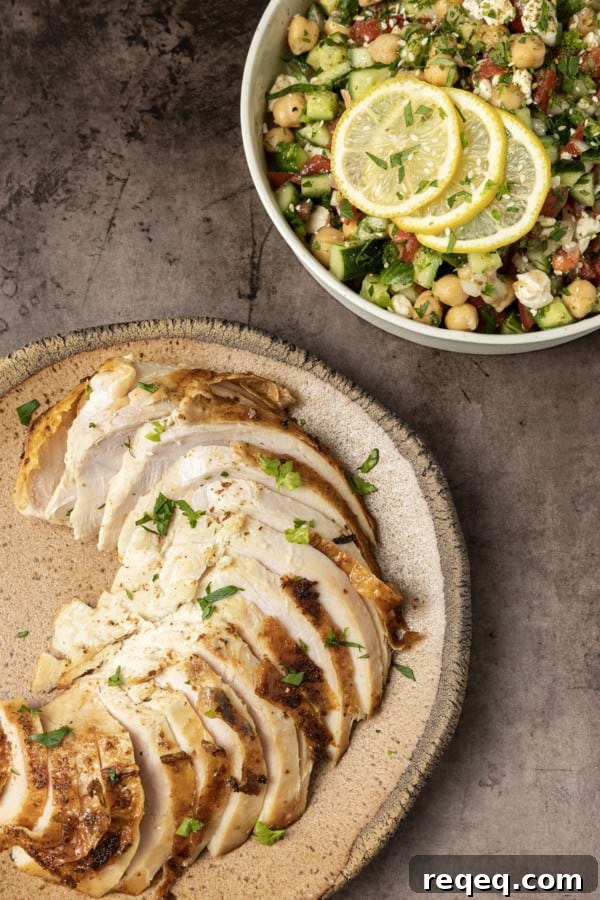
Smoked turkey: method summary
1. Pat the thawed turkey dry and set it breast-side up on a rack in a roasting pan. Refrigerate uncovered for 4 hours or overnight to dry the skin.
2. When ready to cook, heat your smoker to 250°F and pre-smoke with apple wood chips for 30 minutes.
3. Stuff the cavity with halved onions, apple wedges, garlic cloves and a bundle of fresh sage. Drizzle the turkey with oil and rub the skin with kosher salt, granulated garlic and granulated onion (and a little pepper). Optionally add paprika for color.
4. Place the turkey in the smoker and cook about 30–40 minutes per pound, or until the breast reaches about 160°F using an instant-read or in-bird probe thermometer. Keep a drip pan beneath the bird to catch juices for gravy.
5. Transfer the turkey to a clean pan, tent loosely with foil, and rest for 30 minutes before carving to let the juices redistribute.
Save pan drippings for smoked turkey gravy or to roast vegetables for extra flavor. Leftovers shine in sandwiches, pizza, or soups—don’t discard the bones; they make excellent stock for turkey pho or other broths.
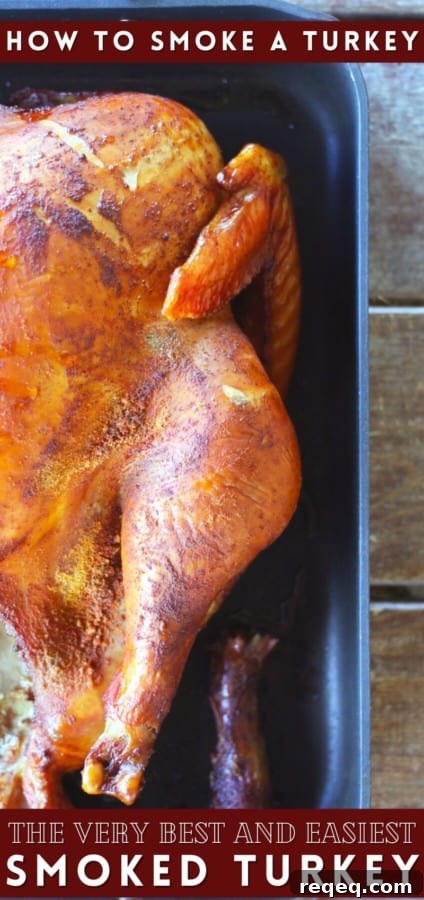
Originally published November 2014; updated with video and improved instructions in later revisions.