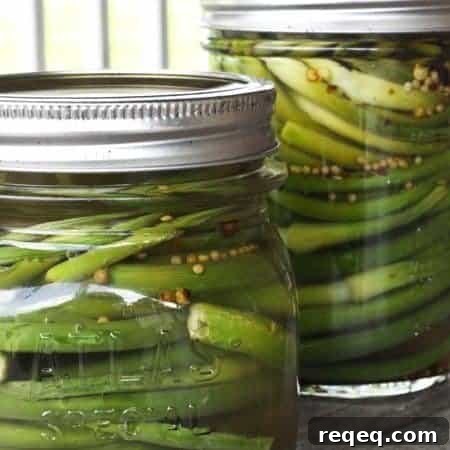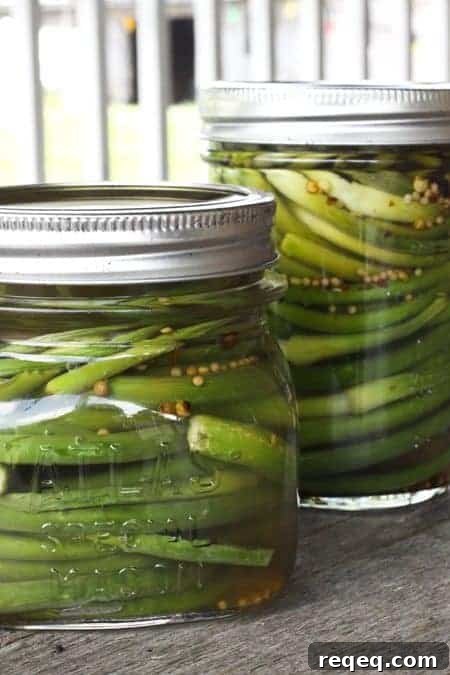
I’m a true pickle enthusiast. Each summer I put up dozens of jars of garlic dill pickles and a variety of other preserved delights: bread-and-butter pickles, dilly green beans, relishes, and sweet-and-spicy pickled carrots. I also make fresh-style pickles that never see a canner, like my Claussen knock-off pickles. Those fresh pickles are different from my canned ones because they’re stored cold and eaten while still crisp. Recently I added another fresh favorite to my pantry: pickled garlic scapes.
Why pickle garlic scapes?
Garlic scapes are the curly, tender shoots that emerge from garlic plants in late spring and early summer. They vary in thickness—from the size of a chive to that of a green onion—and offer a mild garlic aroma and flavor. If you like garlic, you’ll likely love scapes. Fresh scapes are terrific chopped into salads, blended into pesto, sautéed with bacon, placed on pizza, or used anywhere you want a bright, garlicky note.
Pickling garlic scapes elevates their flavor by adding a tangy vinegar bite and a hint of spice. Many people enjoy pulling a cold pickled scape from the jar and snacking on it straight. They’re bold, so be mindful if you’ll be around others, but at home they make a satisfying snack. The best part is that scapes are available only briefly each year—now is the time to preserve them. Imagine opening a jar in January to add chopped pickled scapes to a winter pasta, potato salad, pizza, or a vibrant garlic scape pesto to liven up a snowy day. Preserving scapes by quick pickling captures their seasonality and gives you several months of enjoyment.
Best of all, pickling scapes is fast: about ten minutes of active work plus refrigeration time. No canner needed.
How do I pickle garlic scapes?
This is one of the simplest pickles you can make. Wash and trim the scapes, coil them into jars, add spices, bring a vinegar-and-water brine with salt and sugar to a boil, and pour it over the scapes. Wipe the rims, seal the jars, let them cool, and refrigerate. For the best flavor, wait six weeks before opening, though they keep well for six to eight months in the refrigerator. The wait is worth it: the brine softens the scapes’ edges and develops their tang.
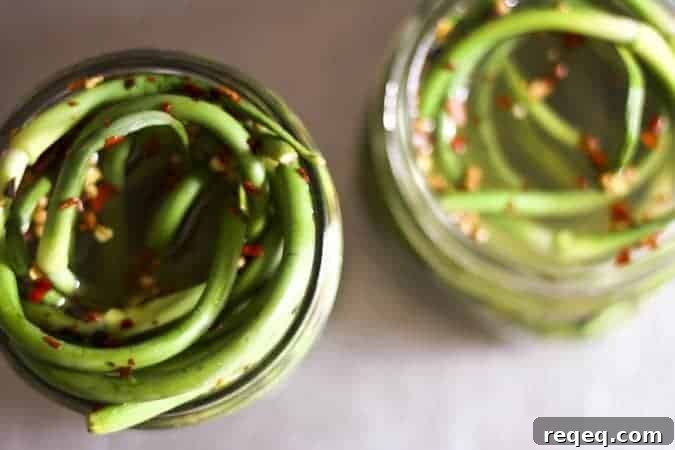
Here’s a straightforward recipe scaled to make about two pints.
Pickled Garlic Scapes | Make Ahead Monday
Author: Rebecca Lindamood
Ingredients
To make about 2 pints of pickled garlic scapes:
- 2 bunches garlic scapes, washed and trimmed of any withered or brown areas
- 1 ½ cups apple cider vinegar
- 1 ½ cups water
- 2 tablespoons kosher salt
- 2 tablespoons raw sugar (or granulated white sugar)
Additional ingredients per pint:
- ½ teaspoon black peppercorns
- ½ teaspoon mustard seed (whole, not ground)
- ¼ teaspoon crushed red pepper flakes (optional if you prefer heat)
- ¼ teaspoon coriander seeds (whole)
Instructions
- Coil each garlic scape and insert into a sterilized pint jar. Fill the jar to within about 1/4 inch of the top. If scapes are long, coil or break extra pieces and tuck them into the center. Add the spices to each jar.
- Combine the apple cider vinegar, water, salt, and sugar in a saucepan. Bring to a boil, stirring until the salt and sugar dissolve. Carefully pour the boiling brine over the garlic scapes in each jar. The scapes may rise; use a sterile chopstick or butterknife to push them back under the brine.
- Wipe the jar rims and seal tightly with lids. Allow the jars to cool to room temperature, then store them in the refrigerator. For best flavor, wait six weeks before opening. Be patient—it’s worth it.
- Pickled garlic scapes will keep well, tightly covered in the refrigerator, for up to eight months. If any scape develops mold because it sticks above the brine, remove the affected scape; the rest should remain fine.
Pickling garlic scapes is a quick, low-effort way to preserve their fresh, garlicky flavor for months. Use them as a snack, a pizza topping, chopped into salads, or blended into a vibrant pesto. You’ll be glad you made a few jars to enjoy long after scape season has ended.
Nutritional information is an estimate and provided as a courtesy. Calculate nutrition using the specific ingredients you use if you need exact values.