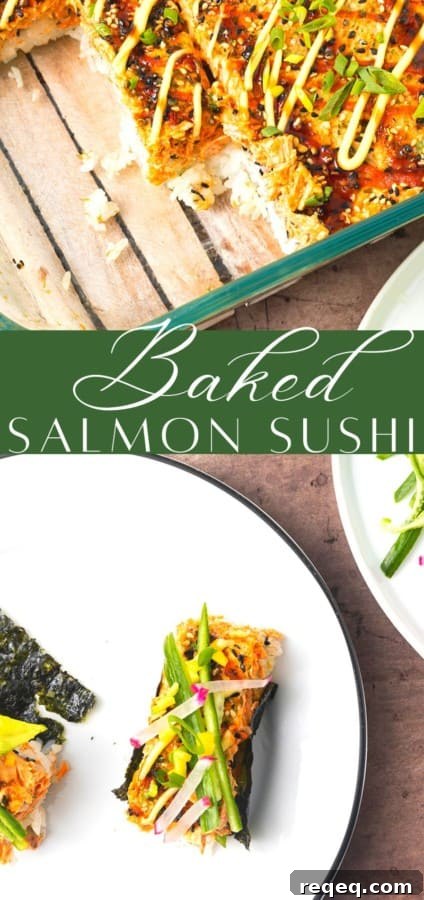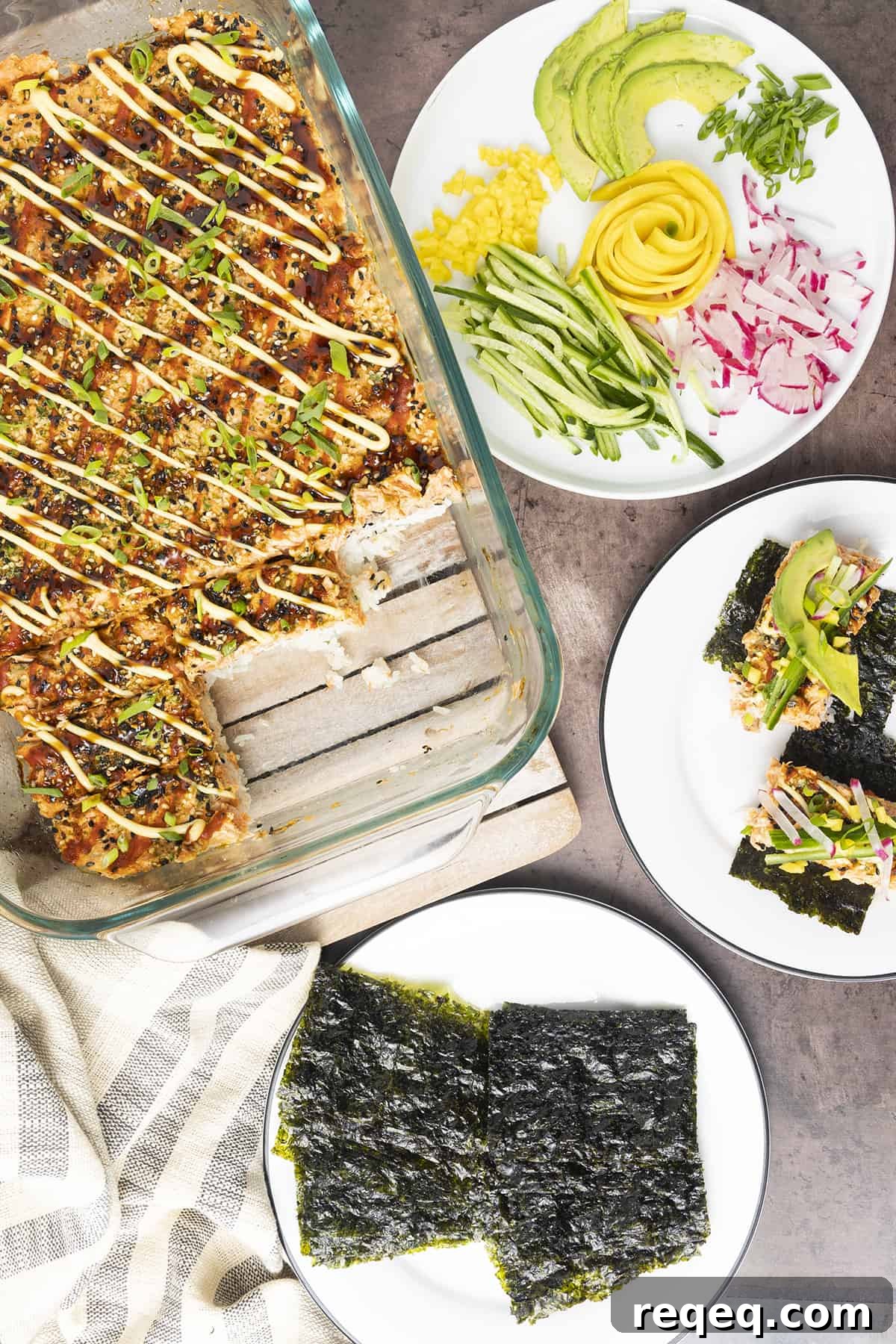
This salmon sushi bake captures the flavor of a Philadelphia roll in an easy, budget-friendly casserole that’s perfect for weeknight dinners, potlucks, or parties. It combines seasoned sushi rice, furikake, a creamy spicy salmon mixture, and finishing sauces for a dish that’s simple to assemble and always popular.
Salmon Sushi Bake
Rather than rolling sushi by hand, this deconstructed version layers the familiar components of a Philadelphia roll into a casserole that bakes in minutes. No special tools are required and most ingredients are commonly available at grocery stores or Asian markets.
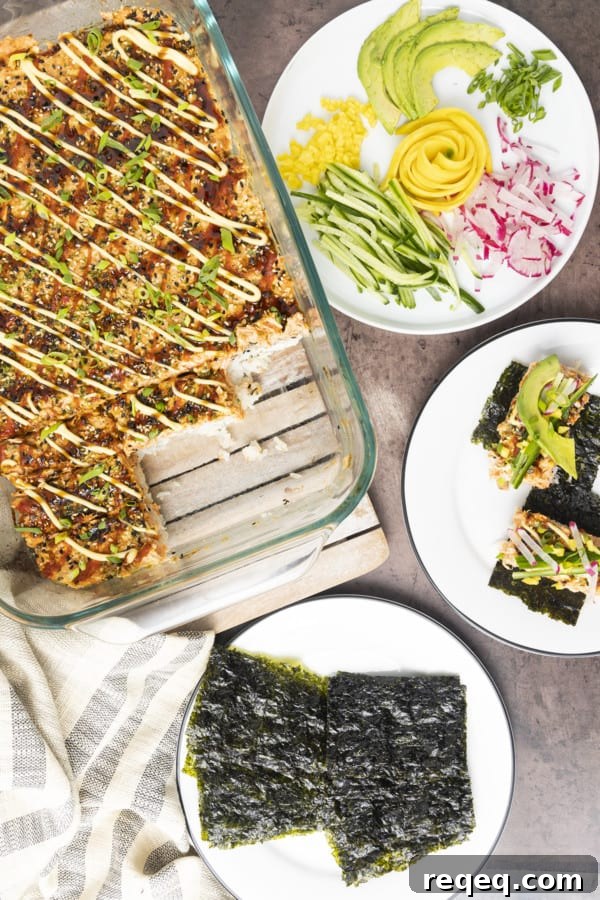
To build the bake, cooked sushi rice is dressed with seasoned rice vinegar and pressed into a baking dish. It’s topped with furikake, a creamy salmon and softened cream cheese mixture spiced with sriracha and mayo, then finished with unagi sauce (or a teriyaki/oyster glaze), Japanese-style mayonnaise, and a final drizzle of sriracha before baking until hot and bubbly.
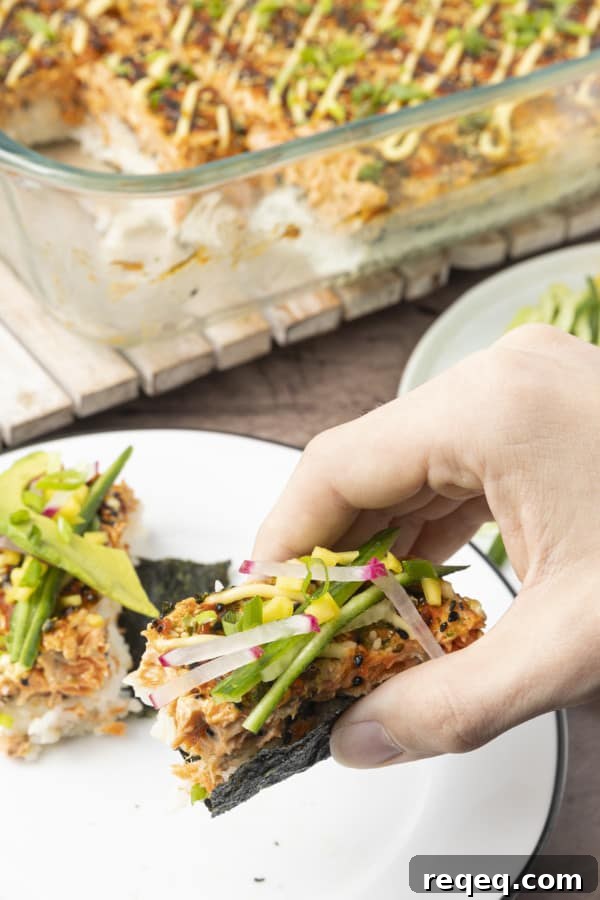
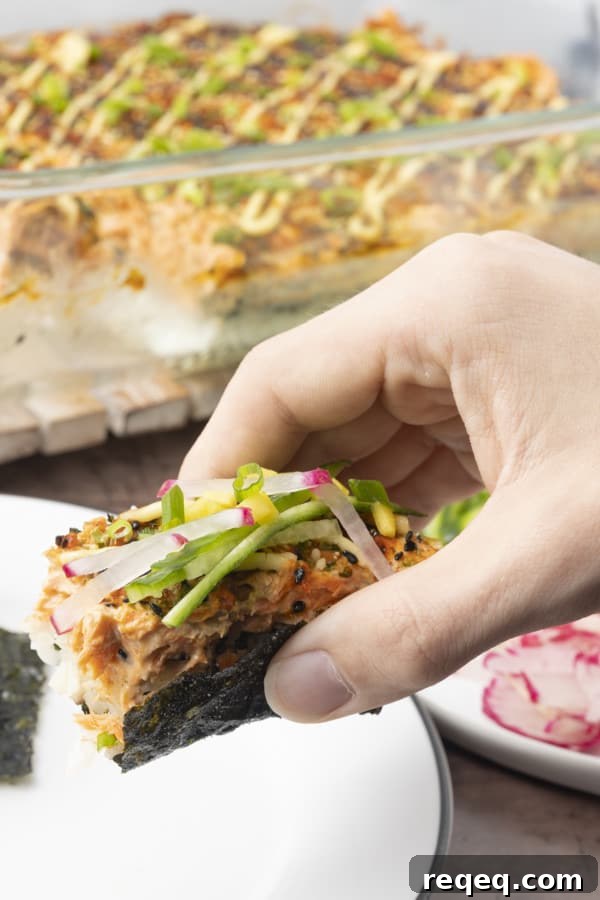
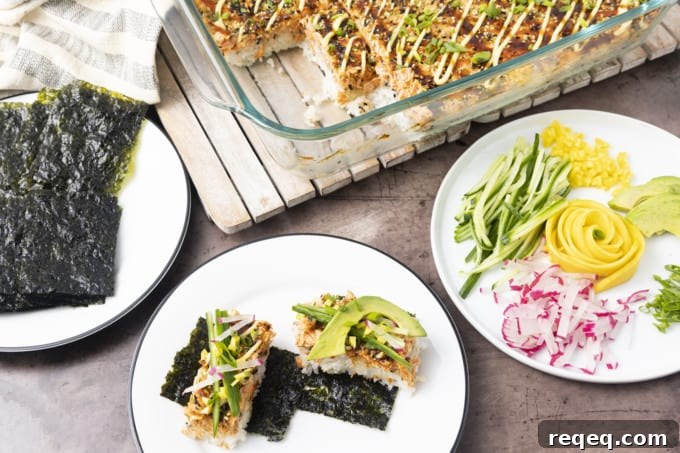
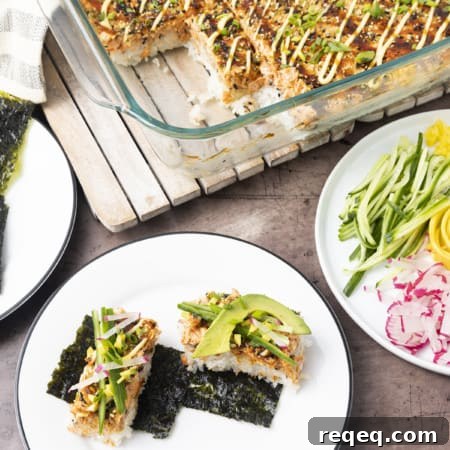
Once baked, the casserole is cut into small rectangles and served on seaweed snacks or nori sheets with your favorite sushi-style toppings: sliced cucumber, radish, green onions, avocado, cilantro, soy sauce, or extra spicy mayo. Fold the nori like a small taco and enjoy a handheld bite that tastes like sushi without the fuss.
This recipe satisfies both a sushi craving and a comfort-food craving at once, which explains why it’s so popular at gatherings. Below is a clear overview of ingredients, equipment, and methods to help you prepare it with minimal effort.
What Ingredients Do I Need to Bake Salmon Sushi?
- Toasted sesame oil
- Short-grain rice (white or brown sushi rice)
- Seasoned rice vinegar (or plain rice vinegar mixed with sugar and salt)
- Furikake (store-bought or homemade)
- Cream cheese, softened
- Mayonnaise (Kewpie preferred)
- Sriracha
- Cooked salmon (flaked; air fryer, baked, or canned are fine)
- Green onions
- Unagi sauce (eel sauce) or a sweet savory glaze
- Seaweed sheets or toasted seaweed snacks
Optional garnishes and accompaniments include cucumber, radish, avocado, toasted sesame seeds, soy sauce, and extra spicy mayo. Kewpie mayonnaise is suggested for a richer, slightly sweeter flavor and convenient squeeze bottle, but regular mayo works well—use a disposable sandwich bag with a tiny corner snip as an instant piping bag if needed.
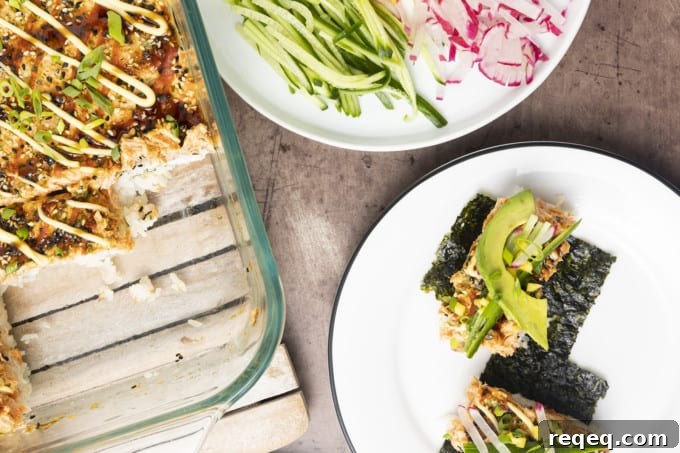
Instead of cold cubes of cream cheese, the recipe blends softened cream cheese into flaked, seasoned salmon, creating a creamy, spreadable topping for the rice layer. Spread it over the rice, add sauces and furikake, then bake until warmed through.
How Do I Cook Sushi Rice?
Short-grain rice is essential for the sticky texture of sushi rice. Rinse the rice several times before cooking to remove surface starch and any dust or debris picked up during processing. Rinsing helps grains cook up plump and non-gloppy.
Should I Rinse Rice Before Cooking It?
Yes. Rinsing cleans the rice, removes excess surface starch that can make the rice gummy, and helps hydrate the grains for even cooking. Rinse until the water runs clear for the best texture.
How Do I Rinse Rice?
Two common methods work well: place the rice in a bowl, cover with cool water, swirl by hand, then drain through a fine mesh sieve; repeat until water is clear. Alternatively, rinse rice directly in a fine mesh sieve under running water, turning gently until the rinse water runs clear.
How to Cook Sushi Rice
An Instant Pot simplifies cooking: after rinsing, add equal volume water, seal, and cook on low pressure for 12 minutes or high pressure for 5 minutes, then finish by tossing with seasoned rice vinegar. If you don’t have an Instant Pot, a rice cooker or a saucepan with a tight-fitting lid works perfectly—follow package or device instructions.
How Do I Make Seaweed Snacks?
Preheat oven to 250ºF. Lightly brush full nori sheets with sunflower or toasted sesame oil on both sides, cut into rectangles, sprinkle with fine sea salt or wasabi powder, and bake in a single layer for about 15 minutes. Cool completely and store in an airtight container for crispy seaweed rectangles.
What Equipment Do I Need for Baked Sushi
No specialty gear required. Typical kitchen tools are all you need:
- An Instant Pot, rice cooker, or saucepan with a tight lid to cook the rice
- Wooden spoon or rice paddle
- 9×13-inch baking dish
- Chef’s knife and cutting board
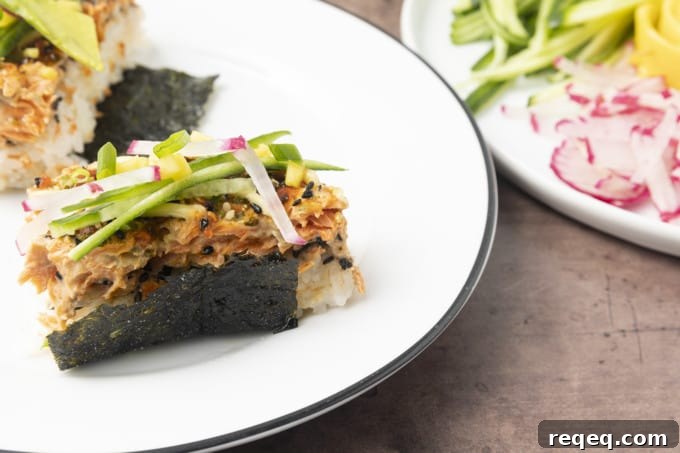
To Serve the Sushi Bake
When baking is complete, remove the pan and let the dish rest for 5 to 10 minutes. Scatter sliced green onions on top, then cut into rectangles while still in the pan. Use a narrow, flexible metal spatula to lift portions out.
Serve with nori rectangles, diced cucumber, and thinly sliced or minced radish so guests can assemble their own bites at the table.
Salmon Sushi Bake
Rebecca Lindamood
Equipment
- 1 9×13 baking dish
- 1 chef’s knife
- 1 cutting board
- 1 wooden spoon or rice paddle
- 1 instant pot, rice cooker, or pan to cook the rice
Ingredients
Sushi Rice Layer:
- 2 teaspoons toasted sesame oil
- 2 cups uncooked sushi rice, rinsed
- 1/4 cup rice vinegar
- 1 tablespoon white sugar
- 1 teaspoon kosher salt
- 2 tablespoons furikake
Spicy Salmon Layer:
- 8 oz cream cheese, softened
- 1/4 cup mayonnaise, divided (preferably Kewpie)
- 1 to 1/4 cup sriracha, divided (adjust to taste)
- 3 green onions, thinly sliced
- 3 cups cooked salmon, flaked
- 2 tablespoons furikake
Garnish
- 2 tablespoons unagi sauce (or teriyaki/oyster glaze)
- 2 tablespoons sriracha
- 2 tablespoons mayonnaise (preferably Kewpie)
To Serve:
- Green onions, thinly sliced
- Korean toasted seaweed snacks or nori rectangles
- Diced seedless cucumber
- 2 radishes, minced or thinly sliced
Instructions
To Make the Sushi Rice Layer
- Preheat oven to 400ºF. Lightly brush a 9×13 baking dish with toasted sesame oil and set aside.
- Cook rice according to package instructions. While the rice rests, heat rice vinegar with sugar and salt just until dissolved, then drizzle over hot rice and toss to combine.
- Scrape the rice into the prepared pan. Wet your hands and press the rice into an even layer without compressing it too much. Sprinkle generously with furikake and set aside.
To Make the Spicy Salmon Layer
- In a bowl, mash together softened cream cheese, 2 tablespoons mayonnaise, and sriracha. Add a splash of pickled ginger brine if available. Stir in sliced green onions and flaked salmon until combined.
- Dollop the salmon mixture over the rice and use a flexible spatula to spread it evenly.
To Garnish and Bake the Sushi Bake
- Sprinkle the salmon layer with additional furikake.
- Drizzle unagi sauce, mayonnaise, and sriracha decoratively over the top.
- Bake 10 to 12 minutes, or until hot throughout and the rice is sizzling.
To Serve the Sushi Bake
- Remove from oven and let rest 5 to 10 minutes. Scatter sliced green onions on top and cut into rectangles while still in the pan. Lift pieces out with a narrow flexible spatula.
- Serve with nori rectangles, diced cucumber, and radish so diners can assemble their own bites.
Notes
Nutrition
Nutritional information is an estimate and provided as a courtesy. Calculate nutrition using the specific ingredients you use if precise values are needed.