
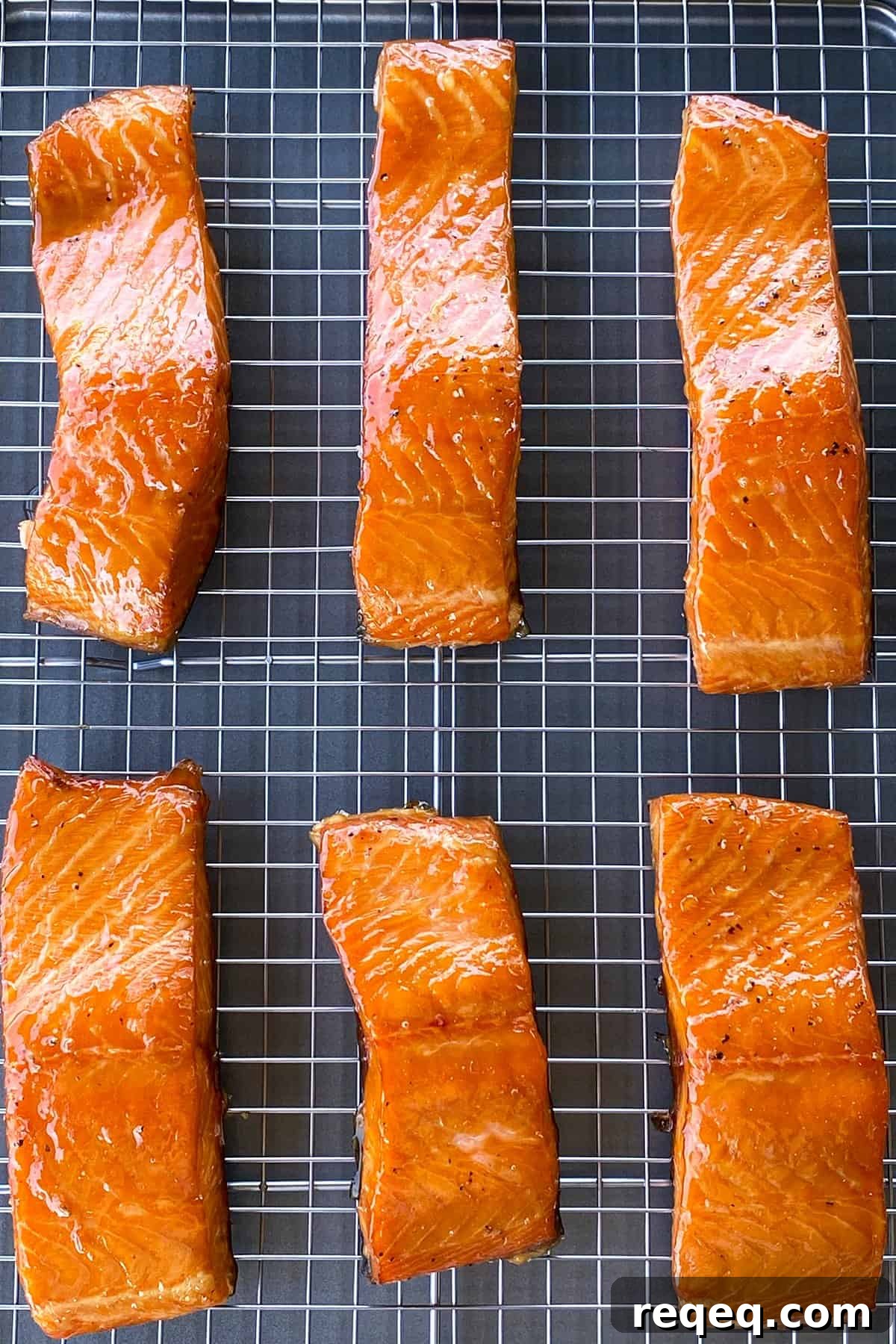
This step-by-step guide shows how to smoke salmon at home using fish from the grocery store or your own catch. The method is beginner-friendly and produces deeply flavorful smoked salmon with a great texture.
Whether you want a stash to layer on a bagel with cream cheese, or to use in a pasta salad or cucumber pizza, making your own smoked salmon is satisfying and surprisingly straightforward.
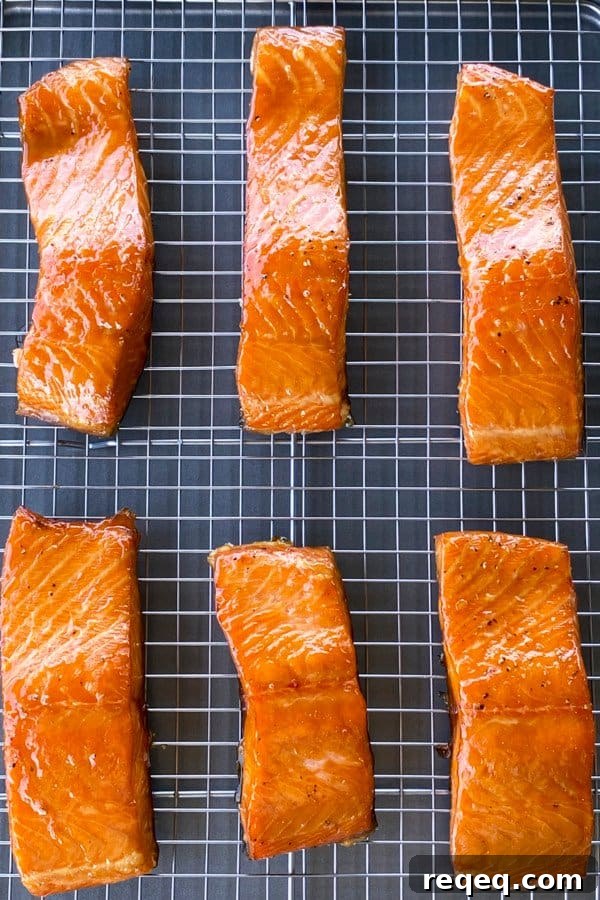
If smoking fish feels intimidating, this recipe breaks the process into simple, manageable steps. Most of the time is passive—your salmon sits in brine in the refrigerator—while the active steps are quick and easy.
You’ll need a few common ingredients, a smoker (or a grill with a smoke box), an airtight container for brining, a cooling rack and a rimmed baking sheet. You’ll also use an electric fan to help form the pellicle (the shiny surface layer that helps the fish accept smoke).
Here’s a quick overview of the process:
- Remove any pin bones and cut large fillets into 3-inch wide serving pieces, if needed.
- Whisk the brine ingredients in a rectangular container with a tight-fitting lid.
- Submerge the salmon in the brine, cover, and refrigerate 4–8 hours.
- Rinse the salmon and place it on a cooling rack set over a sheet pan.
- Pat dry with paper towels.
- Place the pan in front of an electric fan in a cool room for at least an hour, until the surface is shiny and tacky. You can then refrigerate or proceed to smoke.
- Oil the skin side only and place salmon on the smoker grates. Smoke 2–3 hours, brushing with maple syrup after the first hour and every hour after until the internal temperature reaches 130–140°F.
- Move the salmon to a cooling rack, brush once more with syrup or honey, cool completely, then wrap and refrigerate up to one week or freeze up to one year.
Smoke Salmon How To
Choosing the salmon: salmon’s high fat content soaks up smoke flavor nicely, so a wide range of salmon types work—King, Sockeye, Atlantic, farmed or wild, fresh or frozen. Aim for relatively thick fillets with the skin on when possible; skinless fillets are usable but tend to stick to grates unless well-oiled or placed in a grill basket.
Thinner fillets can be smoked too, but watch internal temperature closely to avoid overcooking. If the fish becomes very firm during smoking, you can continue longer to make “salmon bacon.”
How to Brine Salmon
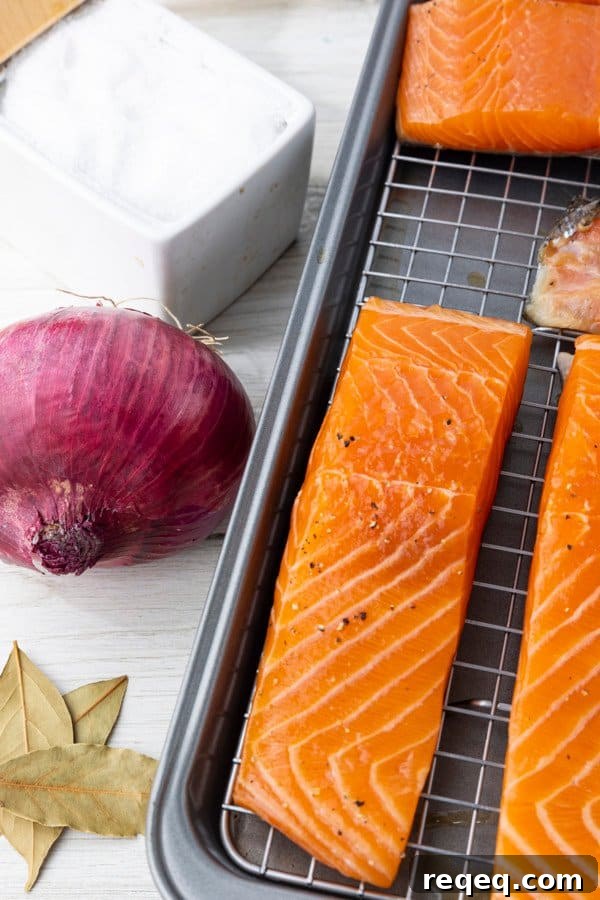
Brining seasonally seasons the salmon through and improves texture. Salt and sugar in the brine penetrate the flesh; salt seasons and the sugar is hygroscopic, helping the fish retain moisture during smoking. The brine also helps partially dissolve muscle fibers to create a tender, juicy result.
The cure is simple: whisk cool water with kosher salt and dark brown sugar (or maple syrup/honey), add aromatics like sliced red onion, black peppercorns and bay leaves, slide the fillets skin-side up into the brine, cover, and refrigerate 4–8 hours. If you prefer a milder onion flavor, remove the onion at the halfway point.
After brining, rinse quickly to remove surface salt, then pat the fillets dry with paper towels. To develop the pellicle, place the rinsed fillets on a wire rack over a sheet pan and set the pan in front of an electric fan in a cool room (ideally 60°F or lower but above freezing) for at least an hour until the surface becomes glossy and slightly tacky. The pellicle helps the smoke adhere and prevents moisture loss.
If needed, you can refrigerate the uncovered pan for up to 24 hours after the pellicle forms; bring the fish to room temperature for about an hour before smoking.
What Type of Smoker Do I Use?
Use whatever you have. Pellet smokers or electric smokers are convenient because they let you hold low temperatures (start around 165°F, target the bulk of smoking at about 185°F, and keep final temperatures under 225°F). A Traeger or similar makes this easy, and placing the salmon on the grill before it reaches full temperature helps reduce albumin formation.
Hot-smoking means you can also use a gas or charcoal grill with a smoke box—pay attention to maintaining a low, steady temperature and use a thermometer inside the grill or a probe in the fish to monitor doneness without opening the lid.
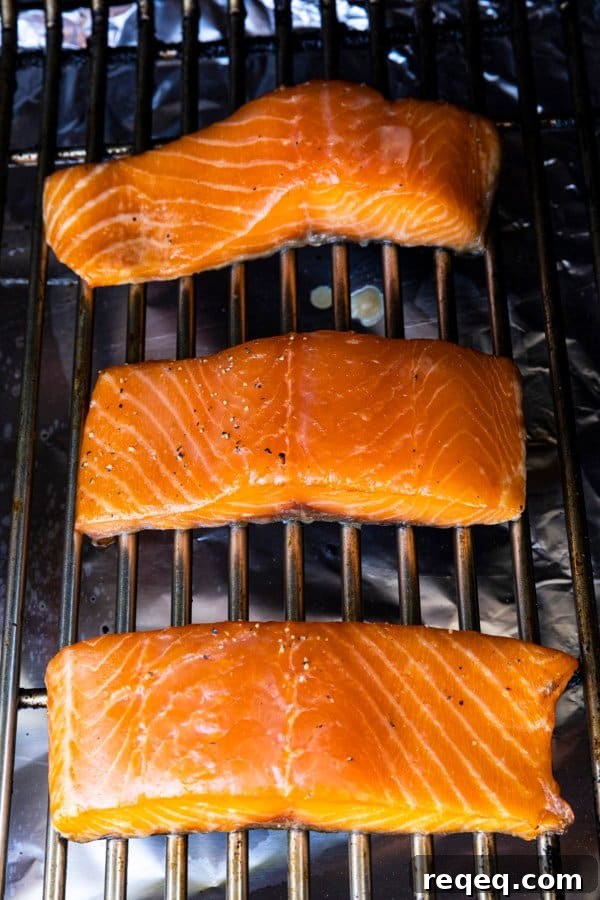
Things to Remember When Smoking Salmon
Albumin is the white protein that can appear on cooked salmon. It’s harmless but visually unappealing; slow, gentle heating during smoking reduces albumin. Positioning the salmon in a cool smoker and bringing the temperature up slowly minimizes its appearance. Any albumin that does surface can be wiped away during the regular syrup basting.
Salmon can stick to grates, so oil only the skin side generously before placing it on the smoker. Do not oil the flesh side—oiling the top will spoil the pellicle and interfere with smoke absorption and final texture.
How Long to Smoke Salmon
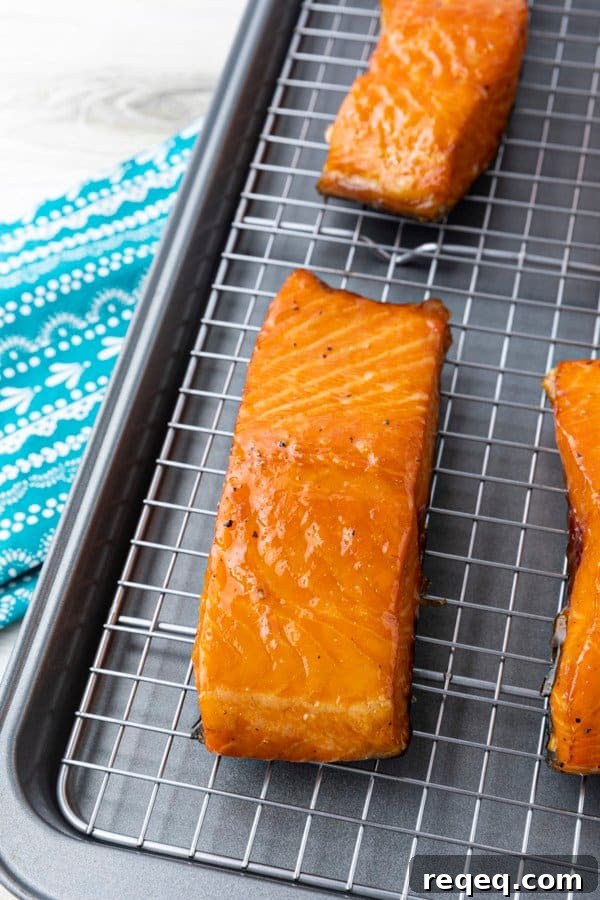
Start by smoking at 165°F. After the first hour, brush the fillets with maple syrup or honey and raise the smoker to around 180°F. Plan on a total of about two hours to reach an internal temperature of 130°F, though this varies with fillet thickness, fat content, and ambient conditions. If you prefer flakier salmon, cook toward 140°F.
If you want a less smoky finish, you can move the fish to a preheated oven set between 185–200°F after the first hour and finish there. Always baste with maple syrup or honey after the first hour and hourly thereafter.
To make “salmon bacon,” continue smoking up to five hours until the fillets are firm and well-colored. Crumble it over salads or rice bowls for a flavorful garnish.
How to Smoke Salmon
In a long rectangular container with a tight lid, whisk together 4 cups cool water, 1 cup packed dark brown sugar (or maple syrup/honey), and 2 ounces kosher salt until dissolved. Add one sliced red onion, 1 tablespoon lightly smashed black peppercorns and 2 bay leaves. Slide the salmon skin-side up into the brine, cover, and refrigerate 4–8 hours.
Rinse the fillets, place them on a cooling rack over a sheet pan, and pat the surface dry. Set the pan in front of an electric fan in a cool room for at least an hour until the surface is shiny and tacky; this forms the pellicle.
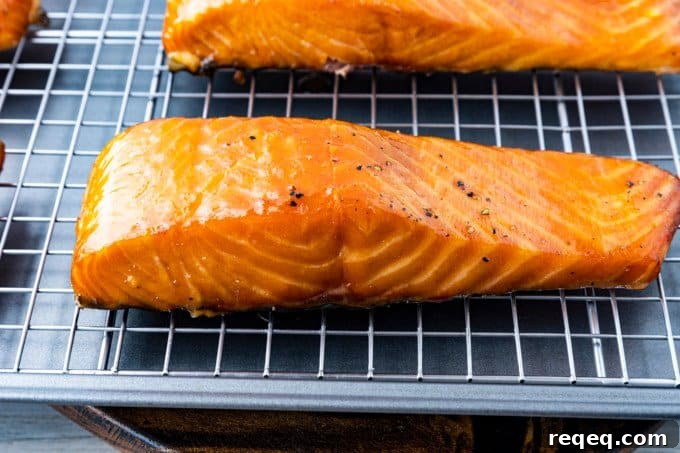
Oil the skin side only and place the salmon on smoker grates. Set the smoker to 165°F. After one hour, brush the fish with maple syrup or honey and raise the temperature to 180°F. Smoke 2–3 hours total, brushing every 60 minutes, until the internal temperature reaches 130–140°F.
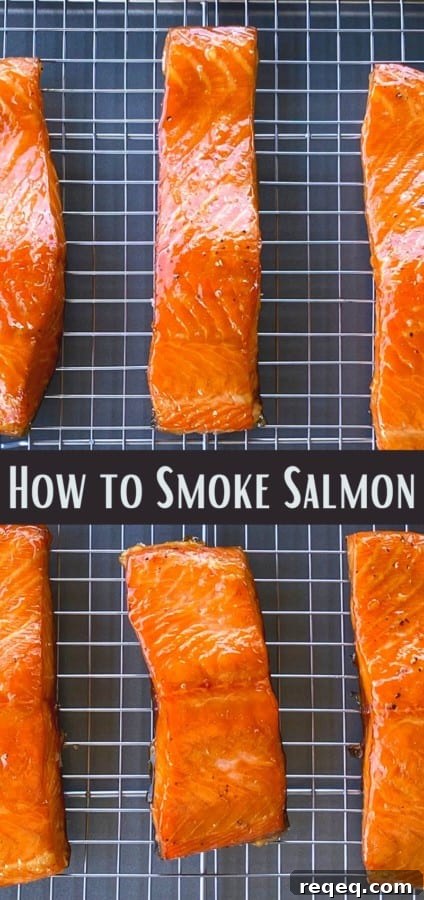
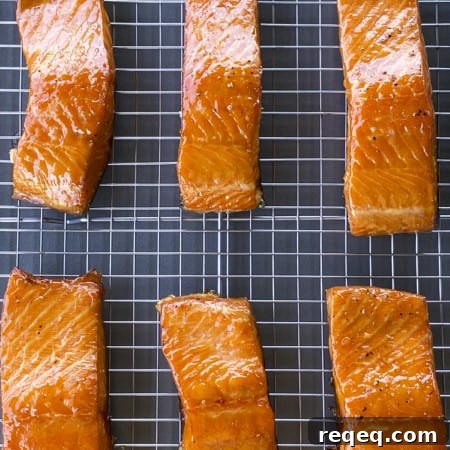
Transfer the smoked salmon to a cooling rack, brush one more time with syrup or honey, and let cool completely before wrapping. Refrigerate for up to one week or freeze for up to a year.
How to Smoke Salmon
Rebecca Lindamood
Equipment
- Smoker or grill with a smoke box
- 1 cooling rack
- 1 baking sheet
- 1 rectangular container with tight fitting lid
Ingredients
- Up to 5 lbs fresh or thawed salmon, cut into 3-inch wide pieces if starting with large fillets
- ½ cup maple syrup or honey for brushing during smoking
For the Brine:
- 4 cups cool water
- 1 cup packed dark brown sugar (or maple syrup or honey)
- 2 ounces kosher salt
- 1 red onion, peeled and cut into slabs
- 1 tablespoon black peppercorns, lightly smashed
- 2 bay leaves
Optional:
- 2 slices fresh lemon (about ¼” thick)
Instructions
- In a long rectangular container with a tight-fitting lid, whisk together water, brown sugar (or maple syrup/honey) and kosher salt until dissolved.
- Stir in the onion slabs, peppercorns and bay leaves, then slide the salmon skin-side up into the brine. Refrigerate 4–8 hours, covered.
- Rinse the salmon and place on a cooling rack set over a sheet pan. Pat the surface dry with paper towels.
- Place the pan in front of an electric fan in a cool room for at least an hour or until the surface is shiny and tacky (the pellicle). Refrigerate uncovered if needed, up to 24 hours.
- Oil the skin side only and place salmon on the smoker grates. Set smoker to 165°F. After 1 hour brush with maple syrup or honey and raise the temperature to 180°F.
- Smoke 2–3 hours total, brushing every 60 minutes, until internal temperature is 130–140°F.
- Move the smoked salmon to a cooling rack, brush once more with syrup or honey, cool completely, then wrap tightly. Refrigerate up to one week or freeze up to one year.
Notes
Nutrition
Carbohydrates: 4 g
Protein: 11 g
Fat: 4 g
Nutritional information is an estimate. Calculate nutrition using the actual ingredients you use.
Did you make this recipe?
Share your results on social media and tag the recipe author so it can be seen and enjoyed.