
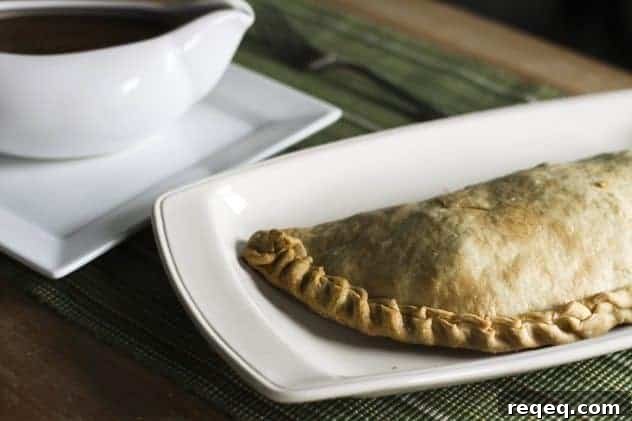
Okay. If you’re a Yooper (Upper Peninsula resident) or generally from Michigan, you’ll know exactly what I mean. If you’re not, a quick clarification: the pasties I’m talking about are pronounced “PASS-tees,” not the other word you might be thinking. These are handheld meat pies, not adhesive modesty patches. So whenever you see “pasties” below, please picture the tasty portable meal, and we’ll all avoid awkwardness.
A few local definitions for readers unfamiliar with Michigan:
- Yooper: A resident of Michigan’s Upper Peninsula.
- U.P.: Short for the Upper Peninsula.
- Big Mac: Nickname for the Mackinac Bridge, the five-mile suspension bridge that connects the U.P. to Michigan’s Lower Peninsula.
- Trolls: Playful term for residents of the Lower Peninsula — they live “under” the bridge.
- Summer: Two months of reduced snowfall, in local joke form.
Now, back to the food.
Pasties are a Yooper and Cornish specialty. Cornish miners brought this portable pie to the Upper Peninsula during the iron and copper mining boom. Because pasties are easy to eat by hand, filling, and wonderfully warming in cold U.P. weather, they spread quickly beyond Cornish and Finnish miners and became a regional staple. You’ll also find pasties in restaurants south of the Mackinac Bridge. One well-known spot in the northern Lower Peninsula is Cousin Jenny’s in Traverse City.
Pasties are so tied to Yooper identity that people who’ve moved away get nostalgic when they make or buy them. I felt that tug when a friend emailed a church pasty order form. I pictured local volunteers assembling trays of steaming pasties to support community causes. The conversation left me starving, so I went into the kitchen and made a couple dozen.
“Whip up” isn’t the most honest description — making pasties is a bit of work — but with a little sisu (a Finnish word for grit and perseverance) you’ll manage.
Sisu: a Finnish concept of inner strength, persistence, and determination.
People often say pasties are “handheld beef stew pies.” That’s not far off. There are many variations—beef, venison, chicken, turkey—and cooks sometimes change the mix of vegetables. Traditional pasty vegetables are potatoes, onions, carrots, and rutabaga. I stick with that lineup because it’s a classic for a reason. I’ll admit I sometimes make cheese-filled pastries, which are delicious, but those belong to a different family; true Yooper pasties are savory meat-and-veg affairs.
Yooper Pasties
This recipe makes roughly 16 large pasties. Adjust amounts as desired, and consider making extras for the freezer.
Ingredients
- 1 large rutabaga and 1 small rutabaga, peeled and diced
- 2 large carrots, peeled and diced
- 2 medium onions, peeled and diced
- 8 medium potatoes (waxy variety like Yukon Gold or red), peeled and diced
- 4 pounds lean ground beef
- Enough sturdy pie dough for eight double-crust pies (or eight refrigerated pie crusts)
- Salt and pepper to taste
Notes
Many cooks double or triple the pie crust batch to have extra dough on hand. Pasties don’t usually have an egg wash glaze; they finish with a deep, crisp, golden-brown crust.
Before you start chopping the rutabaga, take care: it’s dense and slippery. Slice a thin piece off one end so it sits steadily on the cutting board, then halve it with a large, sharp knife. If that feels unsafe, you can use a heavy tool outdoors—but avoid using an axe on your kitchen counter.
With the rutabaga halved, cut each half into quarters. Trim a bit from the bottom so the quarters stand upright, then peel the inside faces. Slice into 1/4″ rounds, stack them, then cut into 1/4″ strips and finally into 1/4″ cubes. Combine all the diced vegetables in a very large bowl. Crumble the ground beef over the vegetables, season with salt and pepper, and mix thoroughly.
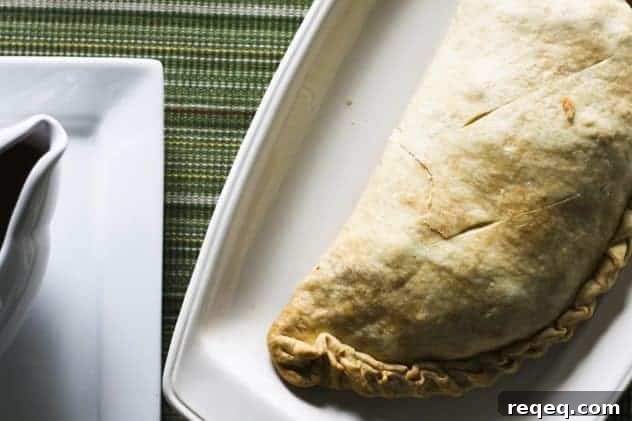
Roll out pie crusts to 8–10″ circles. Lay a crust in a pie plate or on your work surface with about 1/4″ overhang. Pile as much filling as the crust will hold onto half of the circle, mounding it and pressing down lightly. Fold the empty half of the dough over the filling, pinch the seam closed, then crimp the edge with a fork.
Cut three small vents in the top of each pasty to allow steam to escape. Place pasties on a baking sheet (parchment-lined if you prefer) and bake in a 375°F oven for 45 minutes to an hour, until the crust is deep golden and crisp.
Pasties are portable and can be eaten hot, warm, or cold. My father used to warm his on the steam pipe at work or on a machine manifold—true testament to their grab-and-go convenience.
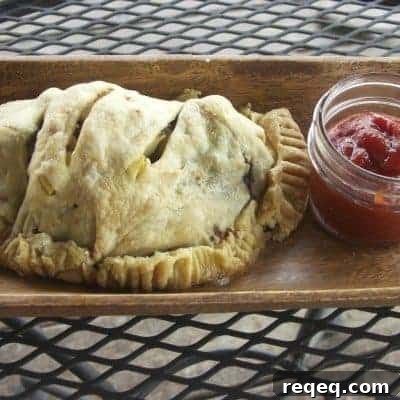
Traditionally, serve pasties with good ketchup. If ketchup isn’t your thing, serve with your favorite gravy. Either way, they’re wonderfully satisfying and warming—a classic Yooper comfort food.