
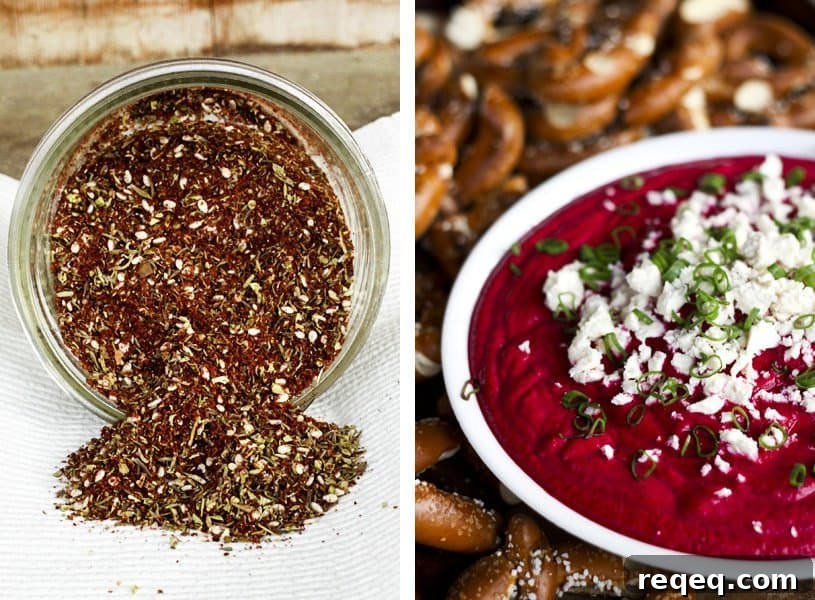
Roasted beets and za’atar might not be the first thing you think to start your Monday with, but these two flavors pair wonderfully. Ready to dive into some vibrant, delicious food?
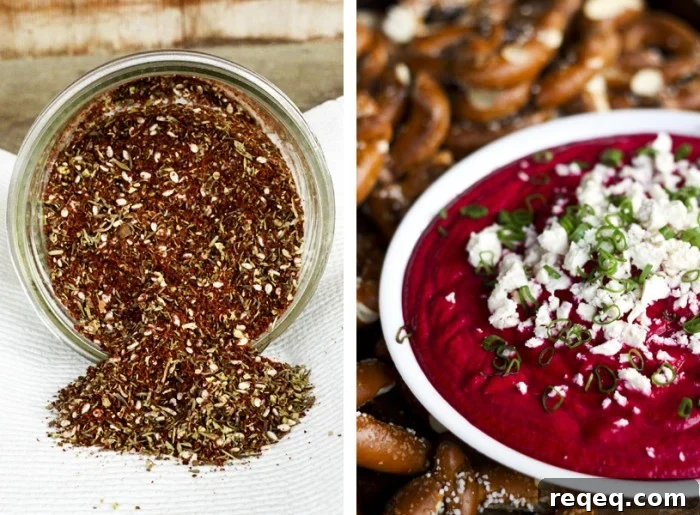
This dip makes me say “Yum!” out loud every time. The color is an intense magenta — all from beets, no food coloring. If you’re used to canned beets, you might be surprised; roasted beets taste completely different: sweet, earthy and tender. Once you try roasted beets, you may find yourself hooked like I did after tasting them on a salad at a friend’s house. Roasting transforms their flavor and texture in the best way.
To get that brilliant color and the best texture, roast the beets whole at a moderate temperature (350°F) and peel them after they’re cooked. Once roasted, the skins slip off easily, avoiding stained hands and counters. Leaving the skins on during roasting also helps retain moisture, especially when combined with a drizzle of olive oil and a foil packet.

For the dip, the peeled roasted beets are cut into wedges and processed with garlic (use 2–4 cloves depending on how much you like garlic), a pinch of cayenne for warmth, and plain Greek yogurt for creaminess. After blending smooth, add olive oil, salt and za’atar to deepen and brighten the flavor. The result is a velvety dip that’s savory, sweet, earthy and lightly spicy — perfect with crusty bread, pita chips, pretzels, vegetable sticks, or as an unexpected accompaniment to grilled meats. One favorite serving idea: a thick dollop stirred into cottage cheese for a colorful, flavorful twist.
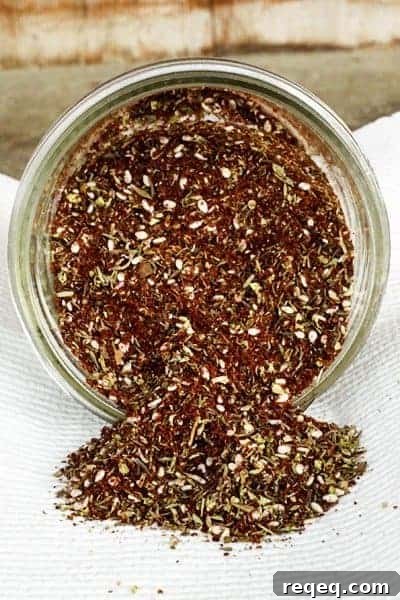
If you’re wondering what za’atar is: it’s a Middle Eastern herb blend that tastes familiar and bright thanks to thyme, oregano, marjoram, toasted sesame seeds, salt and dried sumac. Sumac adds a lemony tang that lifts the mix. Za’atar is versatile — I use it on fish, popcorn, salads, soups, dips and even sprinkled over pizza. It’s easy to make at home and much more economical than buying small jars in specialty stores. Store it in a cool, dark pantry and use within a few months for the best flavor.
This post includes a recipe for both a homemade za’atar blend and a roasted beet dip. The za’atar requires only a few pantry spices and a quick pulse in a blender or mortar and pestle so the individual ingredients remain recognizable. The beet dip combines roasted beets, yogurt, garlic and a touch of cayenne, finished with olive oil, za’atar, feta and green onions for garnish. Optionally add a little honey if your beets aren’t sweet enough.
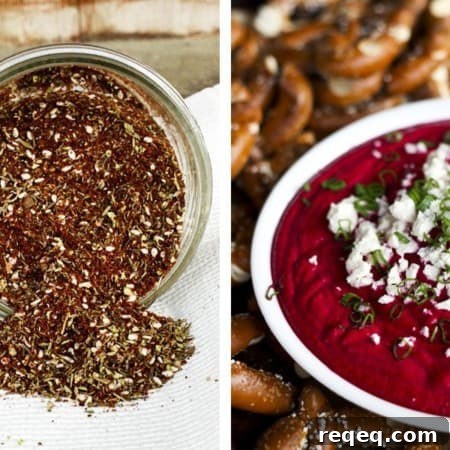
Roasted Beet Dip and Homemade Za’atar | Make Ahead Mondays
Rebecca Lindamood
Ingredients
For the Homemade Za’atar:
- 4 tablespoons dried ground sumac
- 2 tablespoons dried thyme leaves
- 2 tablespoons dried oregano leaves
- 2 tablespoons dried marjoram leaves
- 1 tablespoon toasted sesame seeds
- 1 1/2 teaspoons coarse kosher salt
For the Roasted Beet Dip:
- 1 1/2 pounds fresh beets scrubbed clean
- 2 tablespoons plus 4 tablespoons extra virgin olive oil divided
- 1 teaspoon kosher salt
- 1/2 teaspoon black pepper
- 1 cup plain Greek yogurt
- 2 to 4 cloves garlic peeled
- 1/2 teaspoon ground cayenne pepper
- 1 to 2 tablespoons Za’atar to taste
- 1 tablespoon honey optional
- 4 tablespoons feta cheese crumbled
- 3 green onions green part only, thinly sliced
Instructions
To Make the Za’atar:
-
Combine sumac, thyme, oregano, marjoram, toasted sesame seeds and salt in a blender, food processor or mortar and pestle. Pulse until the herbs are broken up but still identifiable. Store in an airtight jar in a cool dark place for up to three months.
To Make the Roasted Beet Dip:
-
Preheat oven to 350°F. Line a rimmed baking sheet with foil. Trim beet greens leaving about 1 inch of stem. Trim any tails. If beets are large, halve them lengthwise to speed roasting. Place beets cut-side down on the foil, drizzle with 2 tablespoons olive oil, sprinkle with 1 teaspoon kosher salt and 1/2 teaspoon black pepper, and toss to coat. Cover with a second sheet of foil and seal into a packet. Roast, checking every 20 minutes, until a fork inserts easily into the thickest part. If beets dry before tender, add a tablespoon of water and reseal the packet. Remove beets as they finish if others need more time.
-
Let the beets cool in a covered bowl until easy to handle. Wipe the skins off with a paper towel, trim the tops, and cut into wedges. In a food processor combine the beets with garlic, yogurt and cayenne; process until smooth. Scrape sides, add remaining 4 tablespoons olive oil and 1 1/2 tablespoons za’atar, and blend. Taste and adjust salt and za’atar; add 1 tablespoon honey if beets need sweetness. Blend to combine, then transfer to a serving dish. Sprinkle with crumbled feta and sliced green onions, and optionally a little extra za’atar.
-
Serve slightly warm, at room temperature or chilled. Store leftovers tightly covered in the refrigerator for up to one week.
Notes
Adjust cayenne to your heat preference. Omit if sensitive to spice; increase up to 1 teaspoon if you like it fiery.
Young, small beets are usually sweet enough without honey. Use the optional tablespoon of honey only after tasting the finished dip if you think it needs extra sweetness.
Nutritional information is an estimate and provided as a courtesy. Calculate nutrition using the exact ingredients you use if needed.
Did you make this recipe?
Tag @foodiewithfam on Instagram and use #foodiewithfamily so the author can see your photos.
Disclosure: This post originally included an affiliate reference for dried sumac. The author may receive a small commission if you purchase via that link; it does not affect the item price.