

Pain au Chocolat, also called French chocolatines, are layered, shatteringly flaky, buttery pastries filled with batons of semi‑sweet or dark chocolate. This classic French treat is well worth learning to make at home.
Many of my strongest memories revolve around food: the tucked‑away basket of dinner rolls at Thanksgiving, childhood trips to the freezer for pudding pops, my mom’s lumpia, my dad’s zucchini burgers, my stepmom’s oatmeal bread and the Pain au Chocolat I used to eat near my school in France. These flavors are so vivid that a quiet moment with closed eyes brings them back instantly.

*Called chocolatine in some regions of France and parts of Canada.
Those Pain au Chocolat stole my heart the moment I saw them. They weren’t the flashiest pastries in the bakery, but their glossy, dark‑brown crust and chocolate‑filled center were irresistible. Rather than the tapered ends or shell shape of a croissant, a Pain au Chocolat is a rectangular sheet of laminated dough wrapped around two chocolate batons and baked until deeply caramelized.
At first I hesitated to try making French pastry at home. Once I finally did, I wondered why I’d waited. Homemade Pain au Chocolat are, in my opinion, better than anything you can pick up at a big coffee chain—richer, flakier and fresher. If you haven’t made them yourself, try it: you’ll see the difference.
Pain au Chocolat Recipe Overview
Making Pain au Chocolat is not difficult; it just requires attention to a few steps. I break the process down into four main stages: make the dough, prepare the butter block, laminate to create the layers, then shape and bake.
Notes before you start:
- Chocolate batons are the traditional choice for filling. If you can’t find them, use good quality dark chocolate bars cut into batons. (Using bars can be more expensive than batons.)
- There is no true substitute for butter in this recipe. Use unsalted butter so you can control the salt level.
- Except for the final resting and baking, you’ll work with cold butter and chilled dough throughout the process.
Step 1: Make the Dough
Mix the softened butter with the yeast, milk, sugar, salt and about half the flour until uniform. Add the remaining flour and mix until the dough pulls away from the bowl. A stand mixer with a dough hook works well, but you can knead by hand until smooth and elastic. Place the dough in a lightly greased bowl, cover and let it rise until puffy, about an hour (longer if your kitchen is cool).
After the first rise, flatten the dough gently, fold it in thirds like a letter, place it in a sprayed gallon‑size zipper bag, seal and refrigerate for at least 2 hours and up to 24 hours.
Step 2: Prepare the Butter Block
While the dough chills, shape the butter block. Cut two cold, unsalted half‑cup sticks of butter in half lengthwise to make four long rectangles. Place them touching on a floured piece of waxed paper or plastic wrap, dust with more flour, cover and gently pound and roll into a single flattened rectangle roughly 6 × 9 inches. Wrap and chill for at least an hour or until ready.
Step 3: Create the Lamination
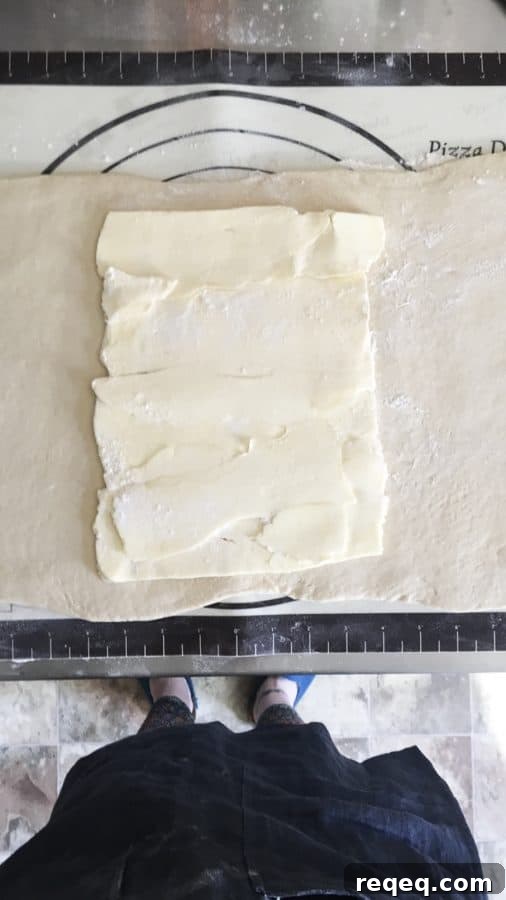
Roll the chilled dough into a rectangle about 10 × 20 inches. Center the chilled butter block on the dough so the dough covers roughly one third, leaving a third uncovered on each side. Fold one uncovered side over the butter, then fold the other side over (letter fold), sealing the edges to fully encase the butter.
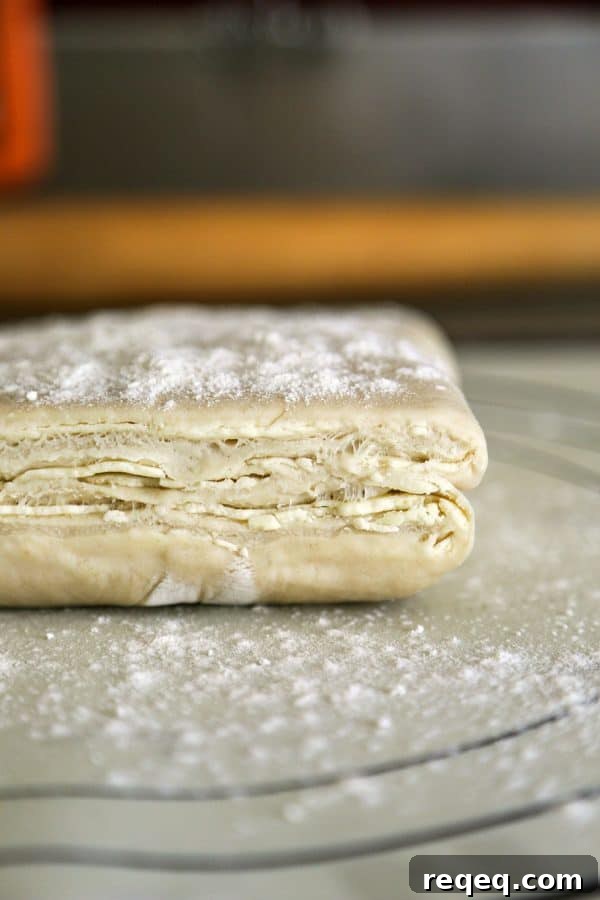
Roll the dough to roughly 10 × 24 inches, fold both ends to the center, then fold in half like closing a book. Wrap in floured plastic and refrigerate for at least 2 hours and up to 7 days.
Step 4: Shape and Bake
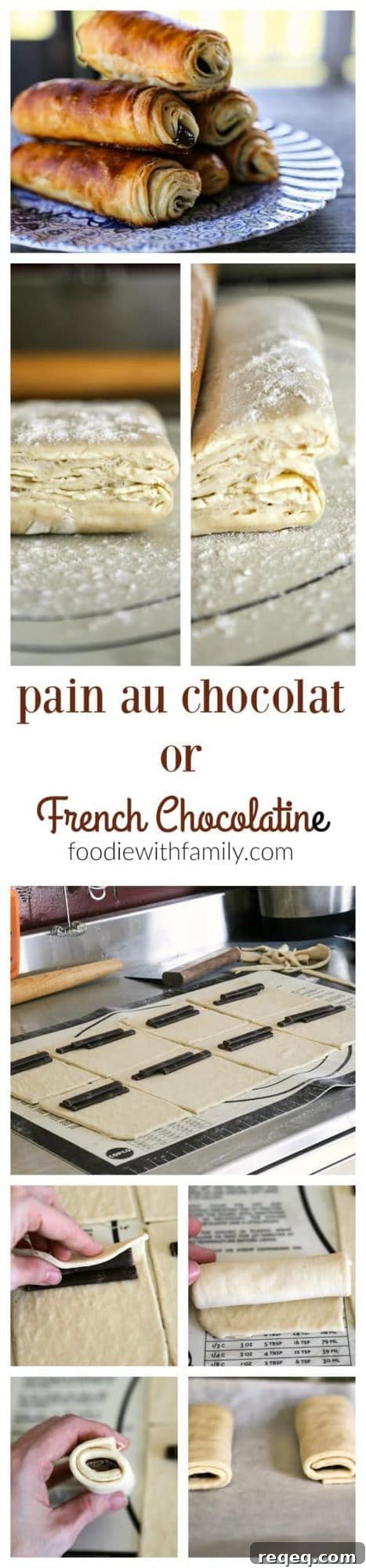
Unwrap the chilled dough, cut it in half, rewrap one half and refrigerate. Roll the other half to about 9 × 25 inches. Trim the edges to create an 8 × 24 inch rectangle, then cut lengthwise and across to yield eight pieces roughly 4 × 6 inches.
Place 2–3 chocolate batons near the end of each rectangle and roll the dough around them, sealing the seam. Place the rolls seam‑side down on a parchment‑lined half‑sheet pan, leaving space between them. Gently press the tubes slightly flat so they have a good base.
Cover the pan with a clean towel and let the pastries rest at room temperature for about 30 minutes until slightly puffy. Preheat the oven to 425°F (220°C). Whisk a large egg with a pinch of salt and brush the tops of the pastries with the egg wash.
Bake 15–18 minutes until the pastries are puffed, flaky and caramelized to a deep golden‑brown. Let cool on the pan for 5 minutes before transferring to a rack. Serve slightly warm the same day for best flavor; they also keep well and are enjoyable the next day.

Timing and Planning
This recipe is flexible. There are two main points where you can pause: after the first rise when the dough is chilled (2–24 hours), and after laminating and folding (2 hours up to 7 days). That lets you spread the work across several days if desired.
Sample quick timeline (same day): make dough in the morning, chill, laminate midmorning, shape early afternoon, bake and enjoy by mid‑afternoon.
Sample extended timeline: make dough and chill one day, laminate the next, then shape and bake up to a week later after resting the laminated dough in the refrigerator.
Pain au Chocolat – Ingredients (summary)
- For the dough: whole milk, granulated sugar, unbleached all‑purpose flour, instant or active dry yeast, kosher salt, a small amount of softened unsalted butter
- For the butter block: cold unsalted butter sticks and flour for dusting
- Additional: dark chocolate batons (or cut chocolate bars), 1 large egg and a pinch of salt for egg wash
Enjoy the process of making laminated pastry at home. With some practice and patience, you’ll end up with glossy, golden Pain au Chocolat that taste far superior to prepackaged versions—crisp, layered and filled with molten chocolate.