
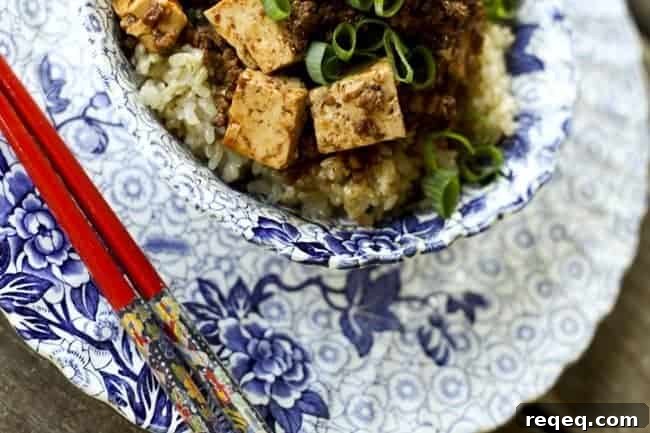
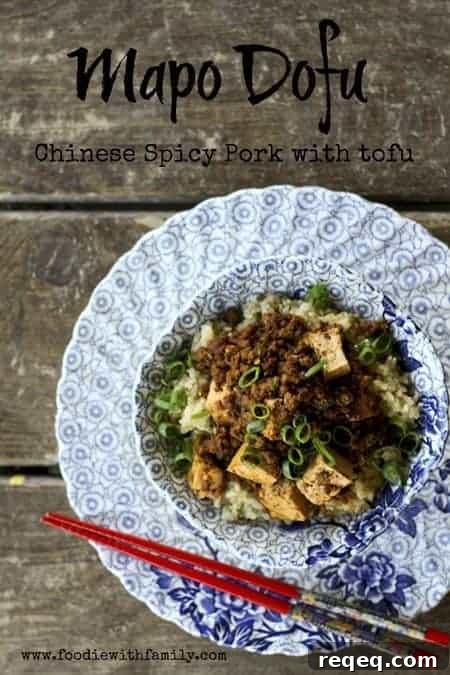
Mapo Tofu — literally “Pockmarked Lady Tofu” — is a beloved Chinese dish featuring crumbled, pan-fried ground pork simmered with soft tofu in a glossy, spicy-sweet sauce scented with garlic and ginger. Served over hot rice, the sauce soaks into the grains, creating a comforting, mouthwatering meal.
I come from a family of excellent cooks — everyone has their specialty, whether it’s canning, vegetarian fare, gluten-free baking, or more. If you’re part of my family circle, you’re likely to be well fed. The version of Mapo Tofu I’m sharing here is my little sister Christina’s specialty.
Both Christina and I were once vegetarians and never particularly excited about tofu on its own — bland texture and subtle flavor didn’t win us over. That changed when we discovered the Chinese approach of pairing tofu with meat. Suddenly tofu mattered: it absorbs flavor, balances richness, and lightens a heavy dish. Mapo Tofu quickly became a favorite takeout order and now a staple at home.
What is Mapo Dofu (Mapo Tofu)?
Mapo Dofu traditionally consists of ground pork browned until crisp, then simmered with soft cubes of tofu in a thick, fragrant sauce. Typical aromatics include garlic and ginger, and the sauce is both spicy and slightly sweet. The tofu soaks up the sauce, giving each bite a silky texture and rich flavor—especially satisfying when spooned over steaming rice.
This dish showcases tofu’s strengths: it absorbs intense flavors while providing a tender contrast to crispy pork. Even committed meat eaters in my family adore it, and while a couple of kids may avoid tofu, it’s only a matter of time before they try it and fall in love.
One more reason to make this at home: it’s fast. With a little prep, Mapo Tofu comes together quickly—faster than calling for takeout—and reheats beautifully for tasty leftovers.
Authenticity and Adaptations
This particular recipe comes from my sister in Cleveland and is an interpretation rather than a strict traditional version. I’ve added gochujang (a Korean fermented chili paste) as an accessible substitute for fresh chiles. Gochujang provides a savory, tangy heat that complements black bean chili sauce and mimics the bright spice you’d often get from fresh chilies. Whether strictly “authentic” or adapted, the flavor profile aims to capture the essence of Mapo Dofu while using ingredients that are easier to find.
Most importantly, this version is deeply delicious and habit-forming. I keep tofu on hand for cravings and often make a double batch so there are leftovers to enjoy the next day.
Ingredients and Where to Find Them
Some ingredients, like black bean chili sauce, Szechuan peppercorns, and gochujang, can be a little harder to find in mainstream supermarkets but are widely available at Asian markets and many grocery stores’ international aisles. They aren’t expensive and are versatile for many other dishes, so they’re worth stocking. If you don’t have a nearby Asian market, many stores and online retailers carry them.
Szechuan peppercorns are not conventionally “hot” but lend a citrusy, tingling sensation that’s characteristic of many Szechuan dishes. Black bean chili sauce brings fermented umami and heat, while gochujang or Sriracha adds depth and chili flavor; I prefer gochujang for its savory complexity.
A Handy Trick for Grating Ginger
Fresh ginger can be difficult to grate because the fibrous strands clump and stick. Freeze individual pieces of ginger in plastic wrap inside a zip-top bag; fully frozen ginger is much easier to grate into a fine texture while retaining bright flavor. If you prefer convenience, tube ginger paste from the produce aisle works, but frozen fresh ginger often delivers a stronger, fresher taste.
What Rice to Serve With Mapo Tofu
Mapo Tofu is delicious over any rice you like. Popular choices include sushi rice, sticky brown rice, jasmine rice, or plain long-grain white rice. Personally, I often choose sticky brown rice, but this dish is forgiving—served over simple minute rice it’s still highly satisfying.
Do you keep ginger in the freezer? Are you a tofu fan or skeptic? Would you try tofu in a meaty, savory dish like this? What’s your favorite Chinese takeout? I’d love to hear.
Mapo Tofu
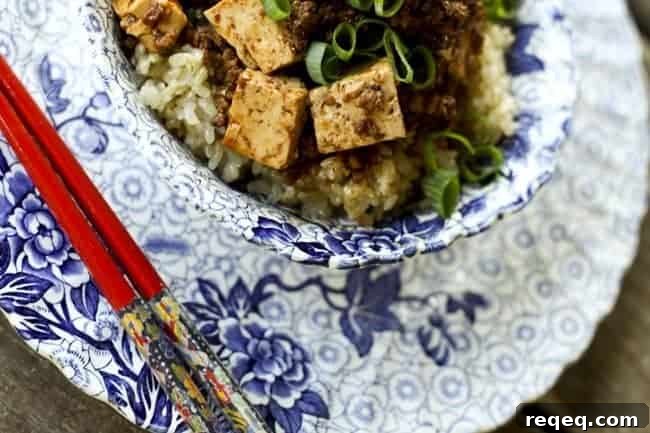
Mapo Tofu | Chinese Spicy Pork with Tofu
Rebecca Lindamood
10
25
Ingredients
- 1 tablespoon Szechuan peppercorns
- 1 tablespoon peanut or canola oil
- 1 pound ground pork
- 2 tablespoons chili powder
- 6 cloves garlic, peeled and minced
- 1 1/2-inch piece fresh ginger, grated or finely minced
- 1 bunch green onions, trimmed and thinly sliced (white and green sections separated)
- 1/2 cup black bean chili sauce
- 1 cup water
- 1 tablespoon reduced-sodium soy sauce or tamari
- 1 tablespoon gochujang or sriracha, plus more to taste
- 1 block soft tofu (14 ounces), drained and cut into 1/2-inch cubes
For Serving:
- Hot cooked rice
Instructions
-
Toast the Szechuan peppercorns in a dry skillet over medium-low heat, shaking occasionally, until fragrant and slightly darkened. Cool, then grind in a spice grinder, blender, or mortar and pestle. Store in an airtight container until needed.
-
Heat the skillet over medium-high. Add the oil, then add the ground pork, breaking it into small pieces. Cook until the pork is browned and crisp on the edges. Stir in the chili powder, garlic, ginger, and the white parts of the green onions and cook until fragrant.
-
Add the black bean chili sauce, water, soy sauce, and gochujang or sriracha. Stir and bring to a gentle simmer, scraping up any browned bits. Gently add the tofu cubes and simmer until the sauce thickens and the tofu is heated through. Stir in at least 1 teaspoon of the ground Szechuan peppercorns, taste, and adjust heat with more gochujang or sriracha if desired. If the sauce is too salty or thick, add a little more water and heat through.
-
Serve over hot rice, garnished with the sliced green parts of the green onions. Store leftovers, tightly covered, in the refrigerator for up to 4 days.
Nutritional information is an estimate. Calculate nutrition using the specific brands and ingredients you use.
Did you make this recipe?
Tag @foodiewithfam on Instagram and use #foodiewithfamily so I can see your version!