
UPDATE: After seven successful batches, some readers experienced issues with gelling. My eighth attempt failed to set.
I experimented with several pectins and, following a reader’s suggestion, switched to Dutch Gel Pectin which worked beautifully. Use a generously rounded 2/3 cup of Dutch Gel and the jelly sets reliably. Many thanks to Stephanie for the tip!
My husband is obsessed with coffee. Truly. He lives, breathes, sleeps, drinks, and eats coffee. He even prefers driving to flying on business trips under 12 hours so he can take his coffee and his coffee maker along.
He has it delivered on a regular schedule because running out of coffee is out of the question. He loves almost everything coffee-related, except for coffee yogurt, which he says “isn’t right.”
On a recent trip to the Western Caribbean we stopped in Roatán, where coffee-filled gift shops lined the streets. One shop sold coffee jelly, and I knew I had to try making it at home.
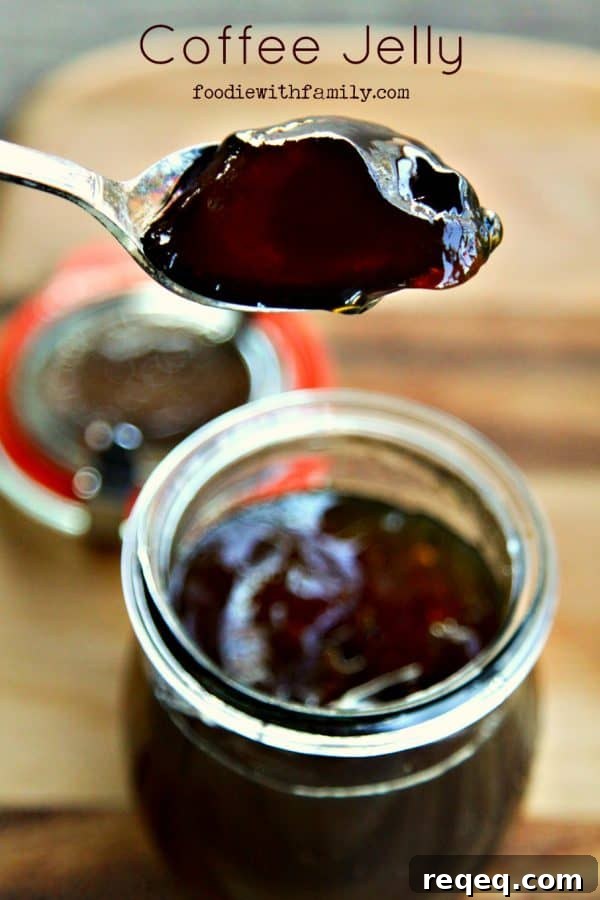
I began testing right away using my usual pectin, Pomona’s Universal Pectin, which I rely on for jams and jellies every summer and fall. It has never failed me, so I expected a good result. To my surprise, my first 4-cup coffee batch didn’t set—it remained a syrup. I increased pectin in the second batch and got a slightly thicker syrup but still no jelly. Batches three through five followed the Pomona’s helpline guidance but still produced a thick syrup rather than a set jelly.
After draining 14 cups of coffee across multiple attempts, I tried SureJell and made a full 4-cup batch. That produced a proper set. Later testing revealed that Dutch Gel pectin is the most reliable option I’ve used for this recipe: it gives the ideal jelly texture and consistency.
Reflecting on why Pomona’s failed here, I suspect it’s due to its unique activation method. Pomona’s relies on calcium to activate gelling in lower-sugar recipes. Coffee can bind or leach calcium, which may prevent the calcium from activating the Pomona’s pectin. That’s my working theory and the best explanation I’ve found for Pomona’s inconsistent results with coffee.
So that’s how Dutch Gel earned a spot on my shelf beside Pomona’s. It also explains how I used up a 32-ounce bag of my husband’s coffee and forced him to eat coffee jelly for breakfast until I ordered a replacement bag overnight. Sorry, honey.
Cook’s Notes
-
- Dutch Gel is the most dependable pectin for this recipe. Pomona’s failed in every variation I tried for coffee jelly.
-
- Do not omit the lemon juice. It provides necessary acidity for safe canning by preventing microbial growth in the jars. It also brightens the coffee flavor without making the jelly taste lemony. In some cultures, serving lemon with coffee is common, so don’t worry—its presence is subtle and purposeful.
-
- Do not reduce the sugar. Dutch Gel is formulated to work within a specific sugar range; this recipe was tested with exactly 5 1/2 cups of granulated sugar. To make a lower-sugar version, you must use a pectin designed for low-sugar recipes, which I found unreliable for coffee in my tests. Consider this a sweet treat.
-
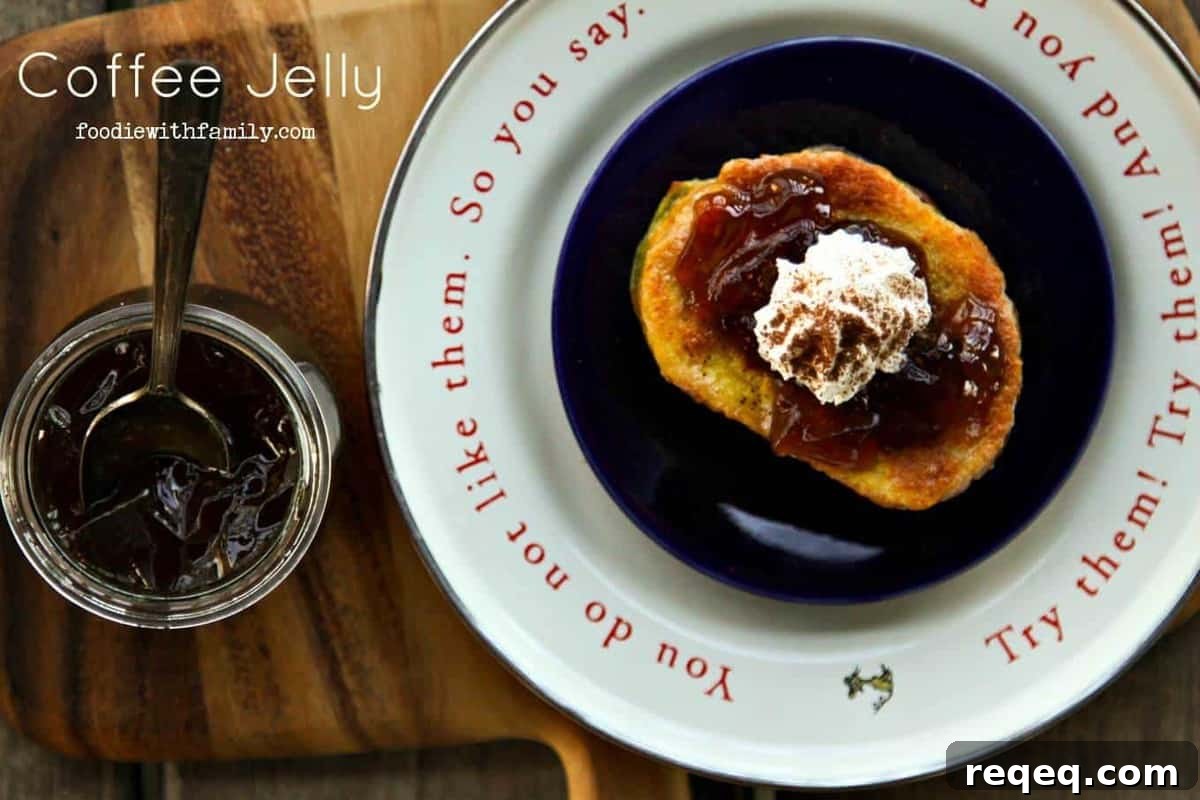
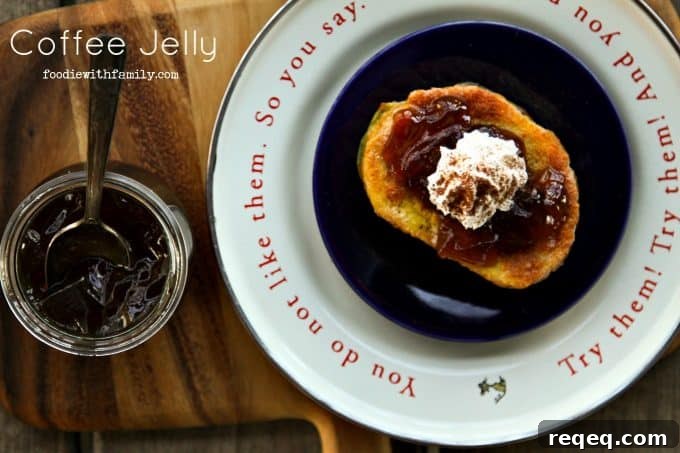
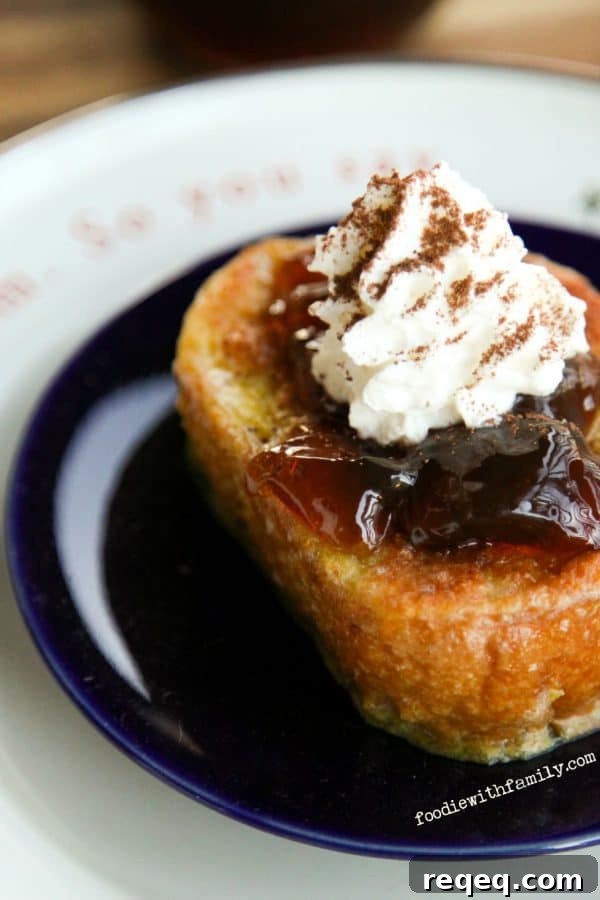
- Ideas for using coffee jelly: it makes a lovely hostess gift or stocking stuffer for coffee lovers. Spread it on toast or spoon it over Simple French Toast topped with whipped cream and a dusting of cocoa powder. It also pairs well with waffles, pancakes, or as a layer in cakes.
- This jelly is a good beginner canning project. If you need canning basics, consult a trusted canning guide for safe processing practices.
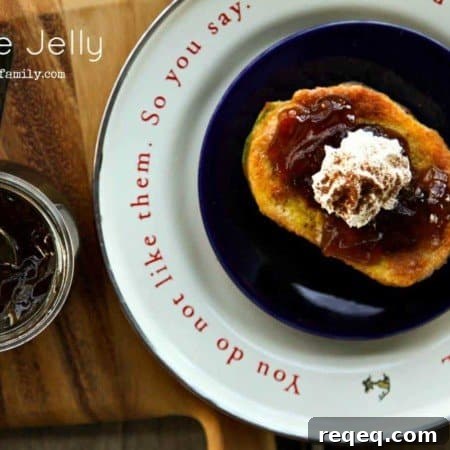
Coffee Jelly
Rebecca Lindamood
Ingredients
- 4 cups VERY strongly brewed coffee preferably a darker roast
- 1/4 cup lemon juice
- 5 1/2 cups granulated sugar
- 1 1/3 cups Dutch gel pectin
Also needed:
- 5 to 6 jelly jars with new two-piece lids. 8 ounce
Instructions
-
Stir the coffee and lemon juice together in a 4-quart saucepan and bring to a boil over high heat. In a separate bowl, whisk together the sugar and Dutch Gel pectin. Add the sugar-pectin mixture to the boiling coffee all at once and whisk vigorously for 2 minutes, until the pectin and sugar are fully dissolved. Return the mixture to a full rolling boil and boil for exactly 1 minute. Remove from heat and ladle into clean 8-ounce jars, wipe the rims with a damp paper towel, and screw on new two-piece lids until fingertip tight.
-
Process the jars using the boiling water bath method for 10 minutes. Carefully transfer to a cooling rack or towel and let cool undisturbed overnight. After cooling, remove the rings, wipe jars clean, and label. Store the jelly in a dark, preferably cool, place away from temperature fluctuations. Best used within a year.
Video
Nutrition
Nutritional information is an estimate and provided as a courtesy. Calculate values using the exact ingredients you use.
did you make this recipe?
Tag @foodiewithfam on Instagram and use the hashtag #foodiewithfamily so the author can see your result.
Originally published November 2014; updated with video and revised cook’s notes October 2018.