
Quick reminder: there are six days left to submit to the Second Tuesdays Déjà Food Event. We’re excited to see how you repurpose leftovers and reduce kitchen waste. No blog? No problem — email your submission and we’ll add it. There’s a tasty prize awaiting the winner.
This week I’ll keep it short and give you the recipe for something I’ll soon show you used in another dish. Try these now and check back to see the follow-up — it’s worth it.
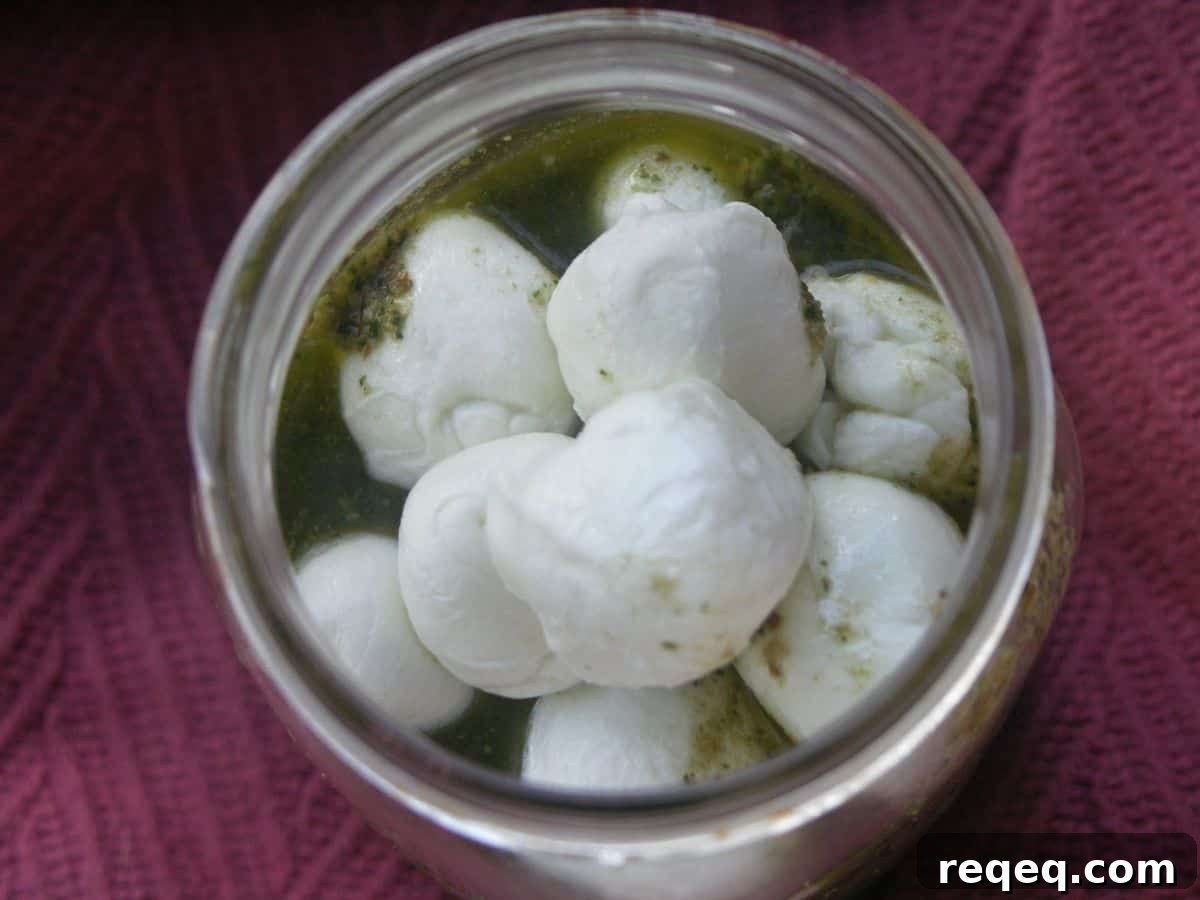
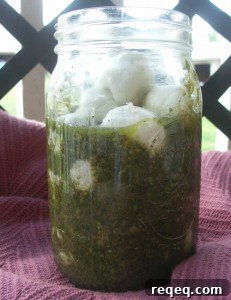
Homemade goat’s milk mozzarella bocconcini marinated in fresh pesto!
Homemade Mozzarella Bocconcini
Making fresh mozzarella at home is surprisingly simple and far more economical than buying small balls at specialty stores. This quick method takes about 30 minutes and requires a couple of specialty supplies (citric acid and rennet) that are easy to source online. Once you have them on hand you can make mozzarella whenever the craving strikes — and you will crave it after tasting these.
Note: for the creamiest results avoid ultra-pasteurized milk — it won’t set properly.
Homemade Mozzarella and Pesto Marinated Bocconcini
Rebecca Lindamood
Ingredients
For the Cheese:
-
1 1/2
teaspoons
citric acid powder dissolved in 1/4 cup cool water -
1
gallon
whole milk
(you can use goat or cow milk; avoid ultra-pasteurized) -
1/4
teaspoon
regular strength rennet dissolved in 1/4 cup cool water -
1
teaspoon
cheese salt (optional)
For the Pesto:
-
4
cups
fresh basil leaves -
5
cloves
garlic, lightly smashed -
1/2
cup
almonds -
Kosher or sea salt and fresh ground black pepper
to taste -
1 1/3
cups
extra virgin olive oil -
1 1/4
cups
fresh grated Pecorino Romano or Parmesan - zest of one lemon (optional)
Instructions
- Pour the gallon of milk into a large stainless steel or other non-reactive pot. Sprinkle the dissolved citric acid over the milk and stir gently. Heat the milk to 88°F; it will begin to curdle, which is expected.
- While the pot is still on the heat, stir in the diluted rennet thoroughly so it disperses through the milk. When the milk reaches 100–105°F, remove it from the heat and leave it undisturbed for about five minutes.
- After resting, the curds should have separated from the sides and pale yellow whey should be visible. If the whey is still milky, wait a few more minutes.
- Using a slotted spoon, scoop the curds into a microwave-safe bowl. Gently press the curds together and drain whey back into the pot — save the whey for baking or other uses.
- Microwave the curds on high for 1 minute. Drain off extra whey, then fold and knead the curds by hand like delicate dough to encourage elasticity.
- Microwave again for 35 seconds, knead and drain. Microwave a final 25 seconds, add salt if using, and knead until the curds become shiny and stretch like taffy. If they cool and break, heat in short 10–20 second bursts until pliable.
- Form the cheese into small balls (walnut to golf-ball size) by stretching and rolling each piece, then place them in an ice water bath to set.
- To make the pesto: toast the almonds in a heavy skillet over medium heat until fragrant and lightly browned. Immediately transfer to a food processor with garlic, basil, salt and pepper. Pulse until the basil is finely torn and the nuts and garlic are minced.
- With the processor running, stream in the olive oil until incorporated. Turn off the processor and add the grated cheese and lemon zest if using; pulse a few times to combine. Use the pesto for pasta, as a spread, or to marinate the bocconcini.
Nutritional information is an estimate. Calculate nutrition using the exact ingredients you use if needed.
Did you make this recipe?
Tag @foodiewithfam on Instagram and use #foodiewithfamily so I can see your creations.
My new favorite summer staple: basil-almond pesto marinated fresh mozzarella bocconcini.
How did we like this recipe?
Both parts of this dish — the cheese and the pesto — were a unanimous hit with everyone at the table. Even the picky eaters who normally avoid cheese or anything green approved. That little victory encourages me to keep offering fresh, simple dishes that introduce more greens to reluctant eaters. I’ll be serving this often.