
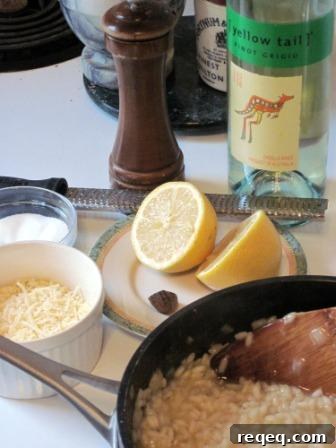
We’ve been savoring the foods that fit this season: hot teas and cocoa, comforting soups, and fresh homemade breads and muffins. While rummaging through the pantry, I discovered about a cup of arborio rice. For those familiar with it, arborio is the classic choice for risotto—creamy, flavorful, and often enriched with cheese. Risotto is straightforward to make, though it requires attention and about 20 minutes of stirring to coax the rice into a creamy texture. Often served as a side, risotto can easily be the main course—add a simple salad or sliced fruit, a few grapes, and a glass of white wine, and you have a satisfying meal.
I considered a crockpot version, but I returned to the traditional stovetop method. Since I hadn’t made risotto in a while and wanted to be sure the result would be excellent—especially as it would be our main dish—I stuck with the classic approach.
The essential ingredient is high-quality arborio rice. You can generally find it at well-stocked grocery stores, whole foods co-ops, or online retailers. Arborio’s high starch content helps create the risotto’s signature creamy consistency.
I’ve also been exploring alternative grocery sources. Sometimes online vendors offer better prices and convenient shipping. For example, a larger bag of arborio rice bought through an online retailer could be significantly cheaper per pound than local options, and subscription services can bring additional savings. Buying in bulk may make sense if you use arborio often, but think about storage and handling—an 11-pound or 50-pound bag requires space and someone to carry it!
Other key ingredients are good olive oil and butter, and aromatic savories such as onion, shallots, leeks, garlic, and fresh or dried herbs. I usually include white wine to deglaze and brighten the dish; it cuts through the richness and balances the cheese. The cooking liquid is usually broth—chicken or a flavorful vegetable broth works best. A light beef broth can work too, but keep it delicate so it doesn’t overpower the rice.
Freshly grated Parmesan yields the best flavor; when fresh isn’t available, bulk-shredded parmesan from a restaurant supply or wholesale source kept frozen is a good alternative. Look for grated or shredded cheese that’s close to 100% cheese to avoid fillers and additives. While some recipes call for adding cream or extra butter at the end, I prefer a slightly lighter finish. A final touch of lemon zest and a squeeze of lemon juice brightens and balances the dish, much like the wine does.
Vegetables integrate easily into risotto. Peas and mushrooms are classic add-ins. I usually cook vegetables separately and fold them in during the last few minutes so they’re heated through without overcooking. Saute mushrooms until browned for best flavor. Fresh or thawed petite peas can be warmed briefly to maintain a pleasant bite.
Risotto is simple but requires presence of mind—stirring and attention are part of the ritual. It’s a pleasant time to listen to music or enjoy quiet moments at the stove. With that in mind, here is the recipe I made last night.
Risotto with Parmesan and Lemon
1 cup arborio rice
4 cups chicken or vegetable broth, kept hot
1 small onion, finely chopped
2 cloves garlic, finely chopped or pressed
2 tablespoons olive oil
2 tablespoons butter
1 teaspoon dried thyme
1/4 teaspoon freshly grated nutmeg
1/2 cup dry white wine
2/3 cup shredded Parmesan
Freshly ground black pepper, to taste
Zest of one lemon
Juice of 1/2 large lemon or one small lemon
Heat the broth in a saucepan and keep it warm while you prepare the risotto.
In a larger, wide-bottomed saucepan, warm the olive oil and butter over medium heat. Add the onion and garlic and sauté until translucent but not browned. Stir in the arborio rice, coating each grain with the fat. Add the thyme and nutmeg and stir to combine.
Pour in the white wine and stir until it is mostly absorbed and the pan bottom shows a clear line when stirred. Begin adding the warm broth a ladleful (about 1/2 cup) at a time, stirring gently and allowing the rice to absorb the liquid before adding more. Continue this process, adjusting heat if the liquid is absorbed too quickly, so you don’t run out of broth before the rice is tender.
After roughly 20 minutes, taste a grain of rice: it should be tender with a slight bite (al dente) and not crunchy. If more cooking is needed, continue adding broth and testing every couple of minutes. When the rice is cooked and the mixture is creamy, remove from heat and stir in the Parmesan and lemon zest until well combined. Add the lemon juice a little at a time, tasting until you reach a pleasant balance where the lemon brightens the dish without overpowering it.
This is the point to stir in a splash of cream, extra butter, or any cooked vegetables you prefer.
Serve the risotto immediately in warm bowls and finish with an extra sprinkle of Parmesan and a touch of freshly ground pepper. A side of sliced fruit such as kiwi or a simple salad, and a glass of dry white wine, make this a complete, satisfying meal. Enjoy the comforting creaminess and the bright lemon finish—simple ingredients, attentive cooking, and a little patience transform them into something memorable.