
Tradition — that inexplicable tie that connects generations — explains why a nation roasts turkeys on the fourth Thursday in November and fires up grills on the Fourth of July. It also explains why hundreds of people gather each year in a small Pennsylvania town every February 2nd to wait for a groundhog to appear. Traditions shape communities, define cultures, and help us make sense of the world.
On a personal level, tradition is at the heart of many of our most meaningful family moments: weddings, funerals, Christmases, Independence Days, Thanksgivings and Easters — all occasions that bring loved ones together around the table. Traditions become a shared memory that tells a family who they are.
When my husband (affectionately known here as The Evil Genius) and I began dating seriously, we adopted a longtime family tradition: weekly dinners at Kam Wah Chinese Restaurant in Penfield, New York. The Lindamood clan had been going there since my husband’s junior year of high school, and over the years the restaurant became a touchstone for every milestone in his adult life and many in mine. Uncle Wong, the owner, and his staff welcomed us like family. They treated me to off-menu favorites like “Vicki’s Dumpling Dipping Sauce” and a private stash of homemade kimchi. We celebrated our engagement there, ate our first post-honeymoon meal there, and returned for the night we discovered we were expecting each of our children. We celebrated buying our first home and used Kam Wah whenever we wanted to treat someone or make an impression.
As our family grew, dining out became harder, but we continued to bring the children to Kam Wah whenever we could. Uncle Wong would carry the babies around the dining room and proudly show them off while we ate. Photos and drawings by my kids hung on the wall by the cash register. We were part of the regulars — welcomed and remembered.
Then, two years ago, we discovered the restaurant had closed. At first I refused to believe it. I called the restaurant repeatedly with no answer and even sent my husband to check on his commute — he found the lights off and a sign on the door. The news was devastating. After calling family and friends and finally reaching Uncle Wong, we learned the truth: he had retired. He hadn’t told regulars because he didn’t want anyone to dissuade him. I missed the food — potstickers with Vicki’s sauce, House Special Soup with deep-fried wontons, pork shreds in garlic sauce with extra broccoli, and extra-crispy sesame beef — and my children missed the little paper umbrellas and sweet bags Uncle Wong used to send home. There was no chance to plead our case or lobby him to change his mind. Kam Wah remained closed, and my cravings remained.
In the two years since, I moved through the expected stages of grief and finally reached acceptance — my version of it, at least. I accepted that Uncle Wong had retired while secretly holding hope he might reopen someday. Acceptance, however, also brought determination. I needed to recreate those flavors at home. I began hunting for the perfect potsticker.
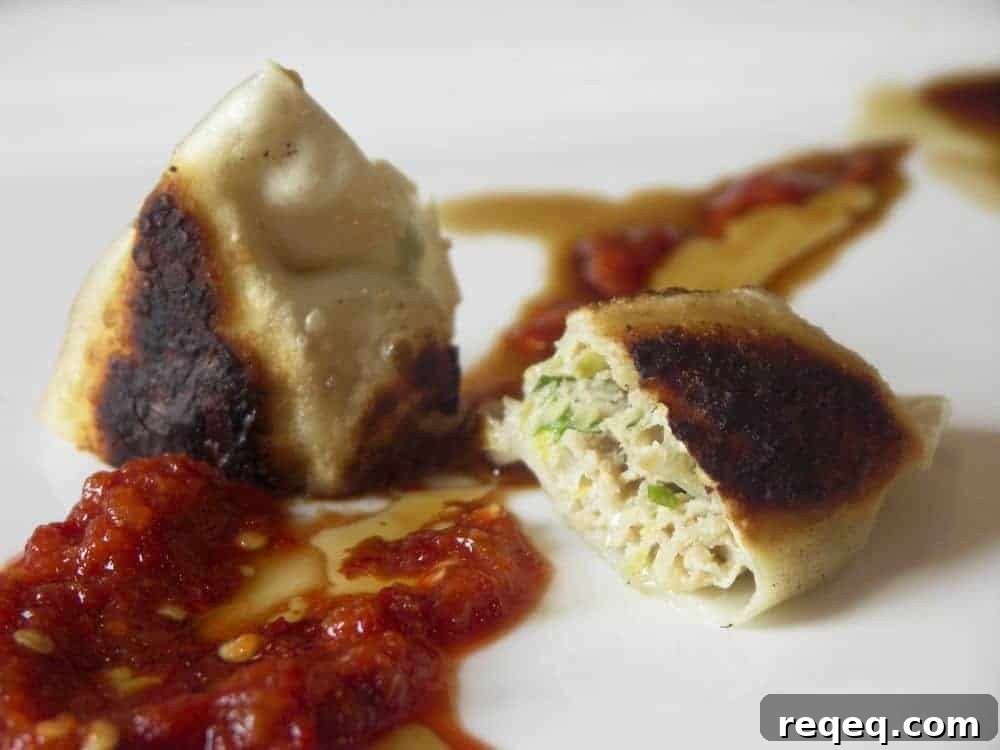
Potstickers are the culinary memory I most associate with Kam Wah: steaming hot dumplings with crisp bottoms and soft tops, filled with moist, gingery, garlicky meat studded with cabbage and scallions. Dipped in a mixture of chili-garlic sauce, soy, and sesame oil or laid atop a ginger-scallion sauce, they are a sublime combination of salty, crispy, garlicky, gingery, and full of umami.
I experimented with many store-bought brands and recipes until I landed on a filling that closely matches my memories of Kam Wah’s dumplings. This chicken-and-pork version is the closest I’ve come so far. I suspect the restaurant used all pork with a bit of minced shrimp, but this blend of chicken and pork is delicious and satisfying in its own right. It’s become the basis for a new family tradition I’ve wanted to start: Chinese food on Christmas Eve. Borrowed from friends who takeout Chinese every Christmas Eve, this tradition fits our family perfectly and is especially handy in an area with limited Chinese options. Making potstickers at home ensures the meal exists at all.
One of the advantages of homemade potstickers is that you can prepare them ahead and freeze them. Pull out as many as you need, pan-fry and steam them, and have fresh potstickers on the table in under ten minutes — ideal when you’re finishing last-minute wrapping and stocking-stuffing. I even joked to my kids that leaving out potstickers for Santa might earn them cooler presents than cookies.
Below is the recipe I use and the method for forming and cooking the dumplings. I keep the instructions straightforward so you can easily prepare a batch, freeze extras, or cook them fresh.
Chicken and Pork Potstickers
Ingredients:
- 1 pound ground pork
- 2 pounds ground chicken
- 1 small head Chinese, Napa or Savoy cabbage, minced
- 1-1/2 bunches green onions, washed and trimmed of roots and any dry ends
- 8 cloves garlic, minced or pressed
- 1/4–1/2 cup peeled, minced or grated fresh ginger root
- 1/4 cup soy sauce
- 1 Tablespoon dark sesame oil
- 1 teaspoon fish sauce
- 1 package dumpling (gyoza) wrappers
- 1 teaspoon cornstarch mixed with 1 Tablespoon cold water
Slice the green onions thinly on an angle and set them aside. If the onions have large bulbs, cut them lengthwise first to ensure smaller pieces. Combine the ground pork, ground chicken, garlic, ginger, soy sauce, sesame oil and fish sauce with your hands until thoroughly blended. At this point you can reserve a small amount of filling if you have picky eaters who want a plain version.
Add the minced cabbage and sliced green onions to the meat mixture and mix until evenly incorporated. Scoop about 1-1/2 teaspoons of filling into the center of a dumpling wrapper. Moisten the edge of the wrapper with the cornstarch-water mixture, fold the wrapper up around the filling like a taco, and press to seal. Squeeze out as much air as possible so the dumplings won’t burst during cooking.
Once sealed, form pleats starting at the center and folding toward the middle, pinching firmly so the pleats stick. Make two or three pleats on each side until the dumpling is neatly pleated and sealed. Place finished dumplings on a cookie sheet in a single layer. Repeat with remaining filling and wrappers.
You can freeze the dumplings flat on a cookie sheet, then transfer them to a zipper-top bag for storage. Alternatively, cook them fresh. Leftover filling or wrappers can be tightly wrapped and frozen for another session.
To Cook the Dumplings:
Pour 1 tablespoon of neutral oil (canola, vegetable, or peanut) into a heavy non-stick skillet with a tight-fitting lid. Heat over medium-high until the oil is hot and coats the pan. Arrange several dumplings in the pan without crowding. Fry for about three minutes to brown the bottoms. Add 1/2 cup warm water to the pan and immediately cover with the lid. If cooking fresh potstickers, steam with the lid on for 5 minutes; if frozen, steam for 8 minutes. Remove the lid and cook another 1–2 minutes so the bottoms crisp up again.
Serve with condiments such as chili-garlic sauce, soy sauce, Sriracha, or your favorite sweet chili sauce.
Making potstickers at home has allowed me to preserve part of the Kam Wah memory and to build a new family ritual around food and togetherness. Whether served on Christmas Eve or any weeknight, hot, crispy-bottomed dumplings remind us that traditions can be recreated, carried forward, and shared with the next generation.