
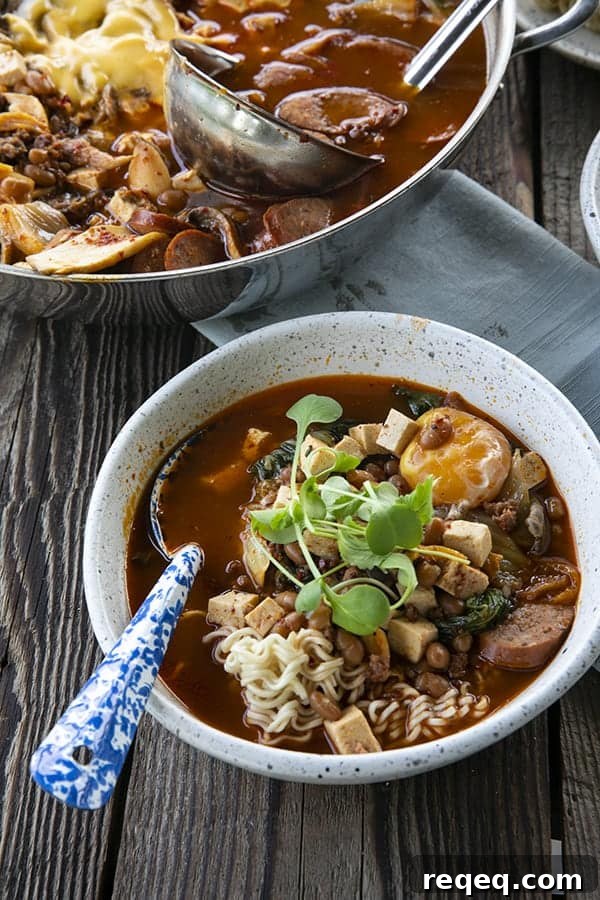
Korean Army Stew—also called Spicy Sausage Stew or Budae Jjigae—is a beloved, comforting, and satisfyingly hearty one-pot dish. This fusion stew combines a rich, spicy kimchi broth with ground meat, smoked sausage, processed additions like Spam, an assortment of vegetables, and noodles for a warming meal that’s easy to adapt and impossible not to enjoy.
When my little brother moved to Korea nearly two decades ago, I dove into learning about Korean food culture. My favorite way to understand a country is through its food, sampling popular dishes and discovering the stories behind them.
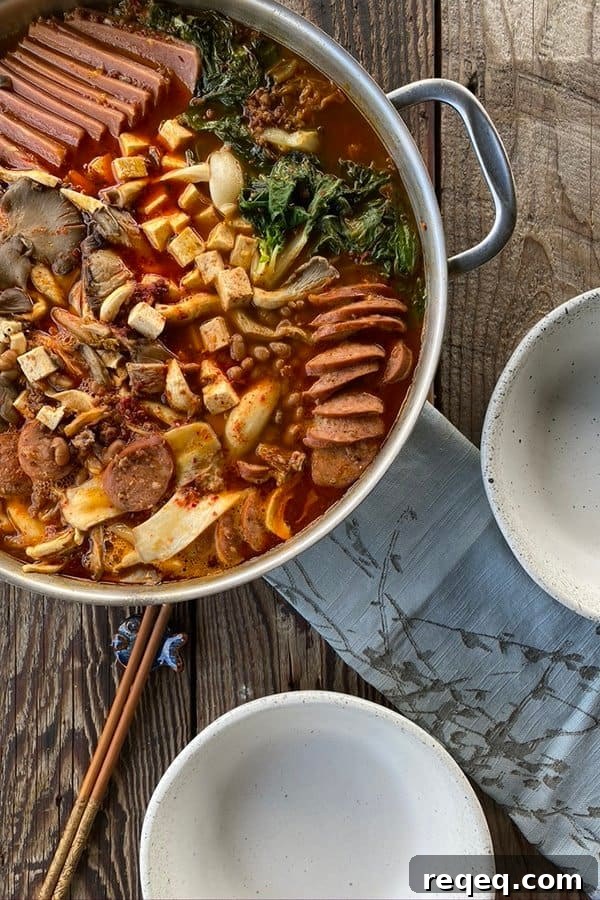
Budae Jjigae is a fascinating recipe: born from post-war scarcity, it blends traditional Korean ingredients with surplus processed items from U.S. military bases. At first the idea of a spicy kimchi broth with hot dogs, smoked sausage, Spam, instant ramen, and vegetables sounded strange, but after tasting it I understood its enduring popularity. It’s flavorful, spicy, filling, simple to prepare, and highly customizable depending on what you have on hand.
What Ingredients Do You Need for Korean Army Base Stew?
The ingredient list may seem long, but this is one of the quickest and most comforting stews to make as temperatures drop. There’s no single “correct” version—swap ingredients to suit your pantry—but a few elements are essential and listed below.
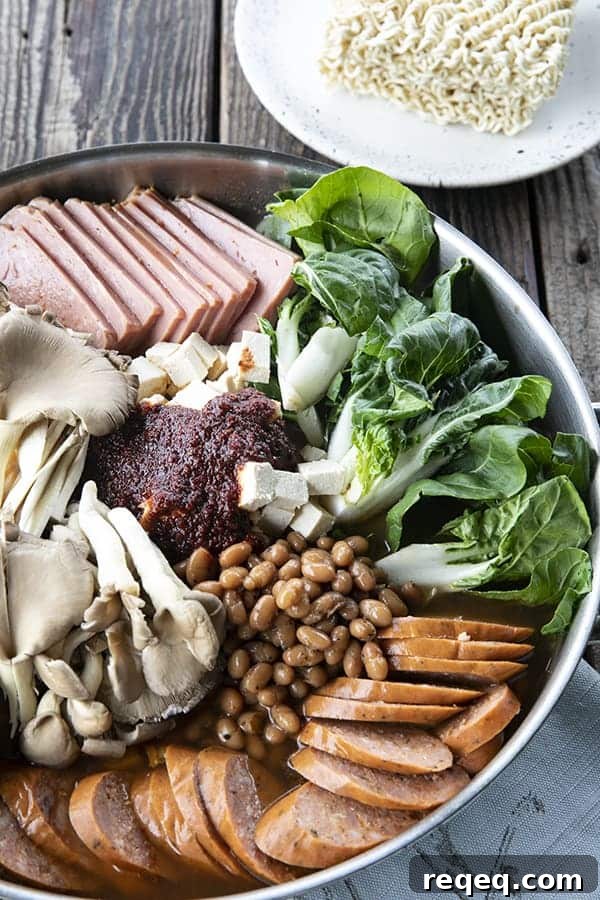
Necessary Ingredients for Budae Jjigae
Kimchi
Kimchi is non-negotiable. Bite-sized kimchi pieces provide a fermented tang and texture foundational to the stew. Use homemade or store-bought kimchi, cut into bite-sized pieces.
Stock or Broth
Traditional recipes use anchovy and kelp broth, but if that’s unavailable you can substitute low-sodium chicken or vegetable broth.
Meat
There are many options here. Ground beef is my personal favorite, though ground pork, turkey, or chicken also work well. Smoked sausage and Spam are common additions; hot dogs, canned Vienna sausage, bacon, or ham can be used instead. Spam may seem odd, but it’s authentic to the dish and adds a salty, savory note that complements the kimchi.
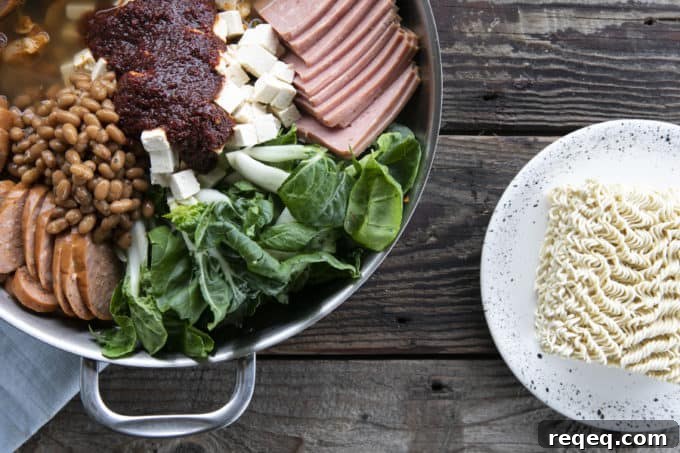
Aromatics
Don’t skip the garlic, ginger, and green onions. They deepen the flavor and lift the entire stew.
Noodles
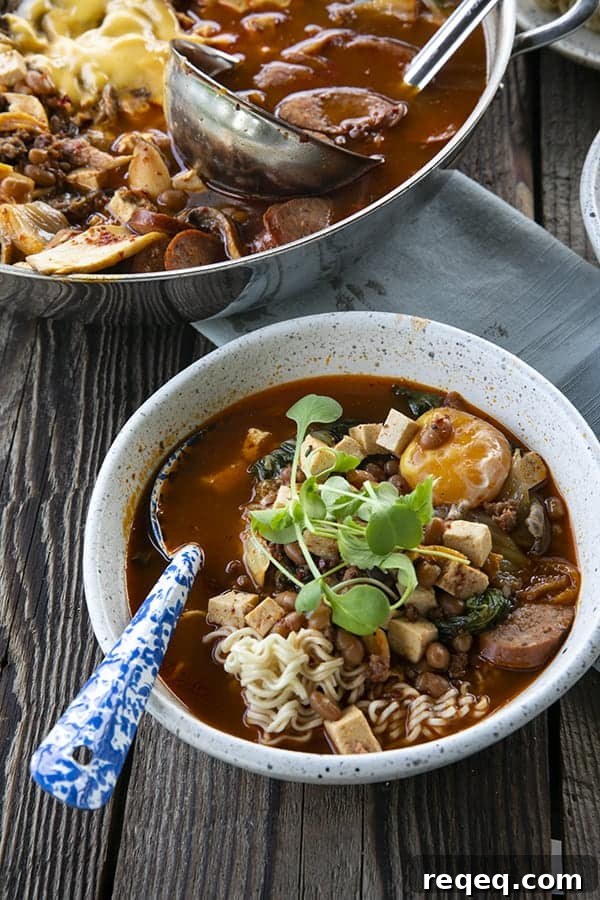
Instant ramen is the most common noodle for budae jjigae—use inexpensive packets and discard the seasoning. Glass noodles (sweet potato starch noodles) are a great gluten-free alternative. Always cook noodles separately and add them to bowls when serving: boiling noodles in the stew will absorb too much broth and will turn mushy if stored with leftovers.
Optional Ingredients for Budae Jjigae
The optional ingredients let you play with texture and richness. Some may seem unlikely, but they work surprisingly well together.
Vegetables
Baby bok choy is a favorite, but thinly sliced Napa or savoy cabbage, spinach, or a variety of mushrooms (enoki, shiitake, king oyster, etc.) are all excellent. Red bell pepper adds color and sweetness.
Tofu
Firm tofu pairs nicely with the meats and helps stretch the stew. It’s optional but recommended.
Baked Beans
Baked beans are an unexpected but delicious addition that echoes the fusion origins of the dish—don’t be afraid to try them.
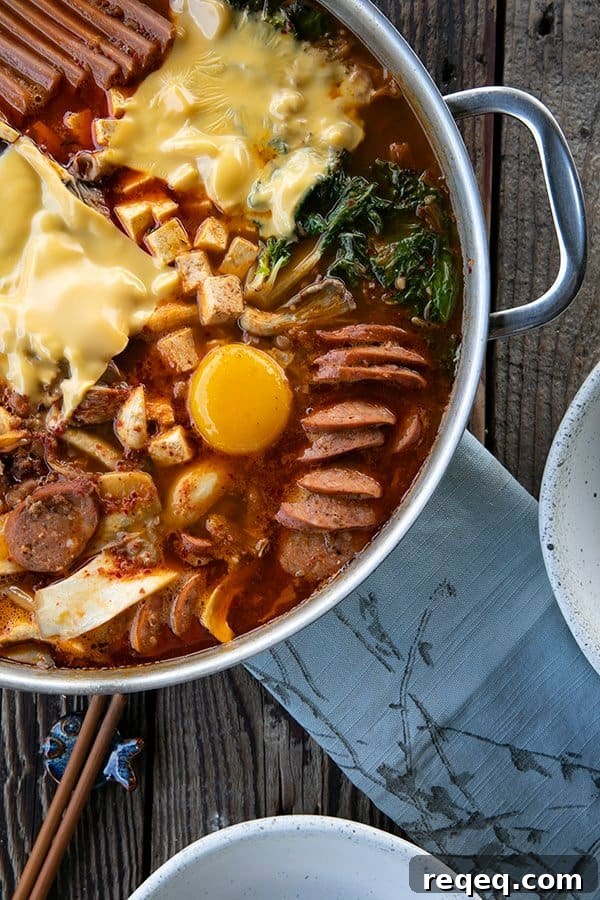
American Cheese
Yes—American cheese appears often in budae jjigae. It melts into the broth and adds a creamy richness that balances the spice.
Egg Yolks
Adding egg yolks at the end gives the stew a velvety finish; leave them runny or cook through slightly to your preference.
How to Make Korean Army Stew
This recipe is delightfully straightforward. Use a deep 12-inch pan or a shallow Dutch oven. Traditionally served bubbling at the table from a hot plate, it’s just as easy to cook on the stovetop.
1. Mix the sauce ingredients (rice wine or mirin, gochugaru, soy sauce, sugar, gochujang, and pepper) and set aside.
2. In the pan, brown the ground meat with a little oil over medium-high heat, breaking it up until it develops some crispy edges. Add kimchi, garlic, and ginger and stir over high heat for about 3 minutes, scraping the browned bits free for extra umami.
3. Reduce heat to medium. Arrange the sliced sausage, Spam, mushrooms, tofu, baked beans, and bok choy in the pan, then pour the seasoning sauce into the center.
4. Pour broth along the side of the pan, increase heat to medium-high, cover, and bring to a boil. Cook until bok choy is crisp-tender, about 8 minutes. Stir in green onions.
5. If using American cheese and/or egg yolks, add them on top and simmer uncovered for another 1–2 minutes until the cheese melts and yolks are just set. For firmer yolks, spoon hot broth over them.
6. Cook ramen separately, then ladle stew into bowls, add noodles, break egg yolks and swirl into the soup as you serve, and garnish with radish greens or additional green onions if desired.

Ingredients
Sauce Ingredients
- 2 tablespoons rice wine (mirin or dry sherry)
- 1 tablespoon gochugaru (Korean chili flakes; add more to increase heat)
- 1 tablespoon soy sauce
- 1 1/2 teaspoons sugar
- 1 1/2 teaspoons gochujang (Korean chili paste)
- 1/2 teaspoon freshly ground black pepper
Stew Ingredients
- 1/2 pound ground beef (or pork, turkey, chicken)
- 1 cup kimchi, bite-sized pieces
- 1 tablespoon minced ginger
- 1 tablespoon minced garlic
- 1 pound assorted mushrooms, sliced or cut into bite-sized pieces
- 8 ounces smoked sausage, sliced
- 6 ounces Spam, thinly sliced (about half a can)
- 1/2 cup firm tofu, diced into 1/2-inch cubes
- 2 heads baby bok choy, quartered (or 2 cups thinly sliced Napa cabbage or spinach)
- 1/2 cup baked beans
- 2 packages instant ramen noodles (discard seasoning packets)
- 3 green onions, thinly sliced
Optional
- 2 slices American cheese
- 2 egg yolks
- 1/2 cup radish sprouts or baby arugula
- 4 cups low-sodium chicken broth or anchovy-kelp broth
Instructions
- Mix the seasoning sauce and set aside.
- Brown the ground beef in a deep pan over medium-high heat, breaking it up. When browned with some crispy bits, add kimchi, garlic, and ginger.
- Stir over high heat for 3 minutes, scraping up browned bits.
- Reduce heat to medium. Add sausage, Spam, mushrooms, tofu, baked beans, and bok choy. Pour the sauce into the center of the pan.
- Pour broth along the side, raise heat to medium-high, cover, and bring to a boil. Cook until bok choy is crisp-tender, about 8 minutes. Stir in green onions.
- If using cheese or egg yolks, add them on top and simmer uncovered 1–2 minutes until cheese melts and yolks are barely set. Spoon hot broth over yolks if you prefer them firmer.
- Cook ramen separately. Ladle stew into bowls, add noodles, break the yolks and swirl into the soup as you serve, and garnish with radish greens or extra green onions.
Nutrition (estimate per serving)
- Calories: 880 kcal
- Carbohydrates: 54 g
- Protein: 45 g
- Fat: 54 g
- Sodium: 2712 mg
Nutritional information is an estimate; calculate with your actual ingredients for precise values.
Enjoy this adaptable, flavorful stew that reflects a unique chapter of Korean culinary history. It’s perfect for sharing and easy to tailor to your taste.