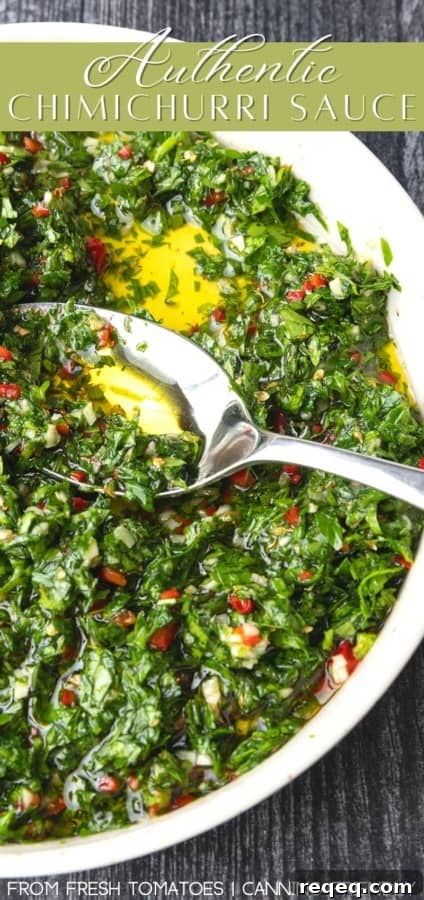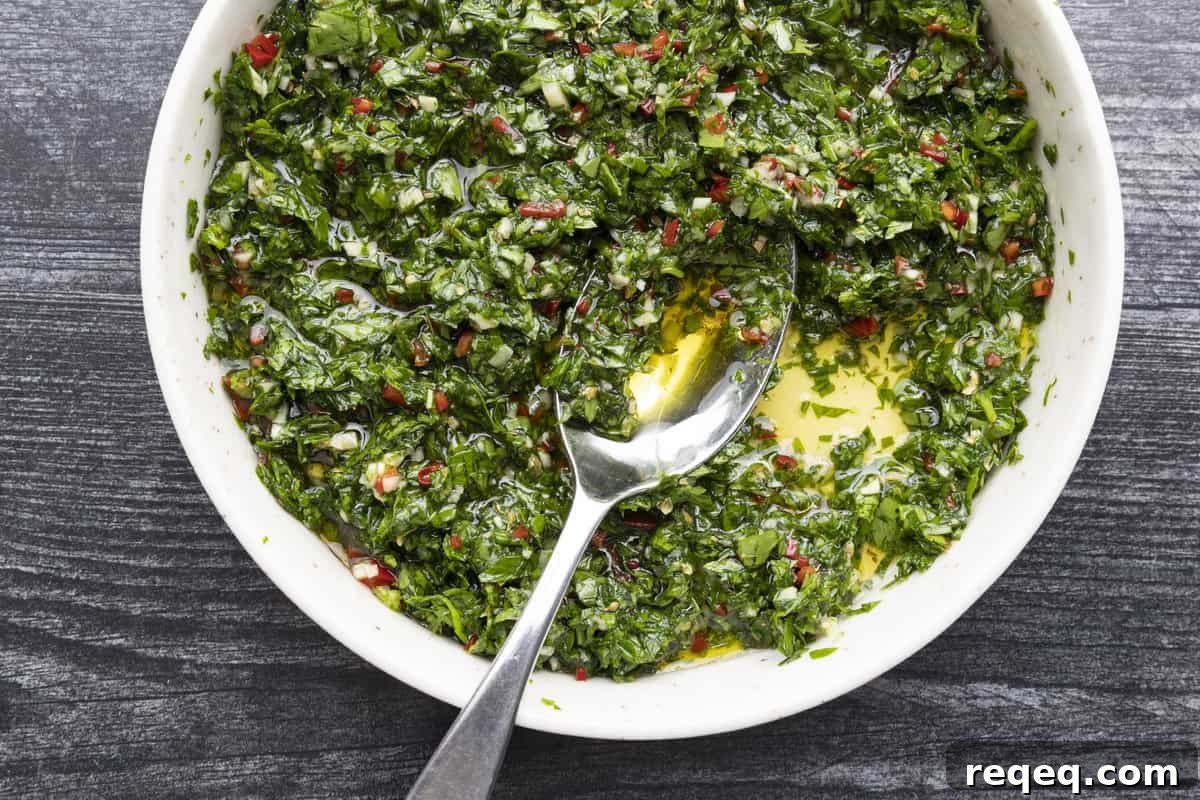
This chimichurri sauce recipe is our fresh, herb-forward take on the classic South American condiment that’s a staple of Argentine cuisine. Bright, garlicky, and tangy from red wine vinegar, this version combines plenty of parsley, cilantro and oregano with minced garlic, onion and hot pepper, all suspended in extra virgin olive oil. Once you try it, it will become a regular on your table.
Is chimichurri a sauce, a marinade or a relish? Yes — it excels at all three. It’s equally at home spooned over grilled meats, used to marinate proteins or vegetables, or served as a vibrant dipping sauce.
What makes homemade chimichurri special is the balance of fresh herbs with assertive aromatics. Hand-chopped parsley, cilantro and oregano mingle with garlic, red onion and a fresh hot pepper, then mellow and marry in vinegar and olive oil. The result is fresh, herbaceous and bold.
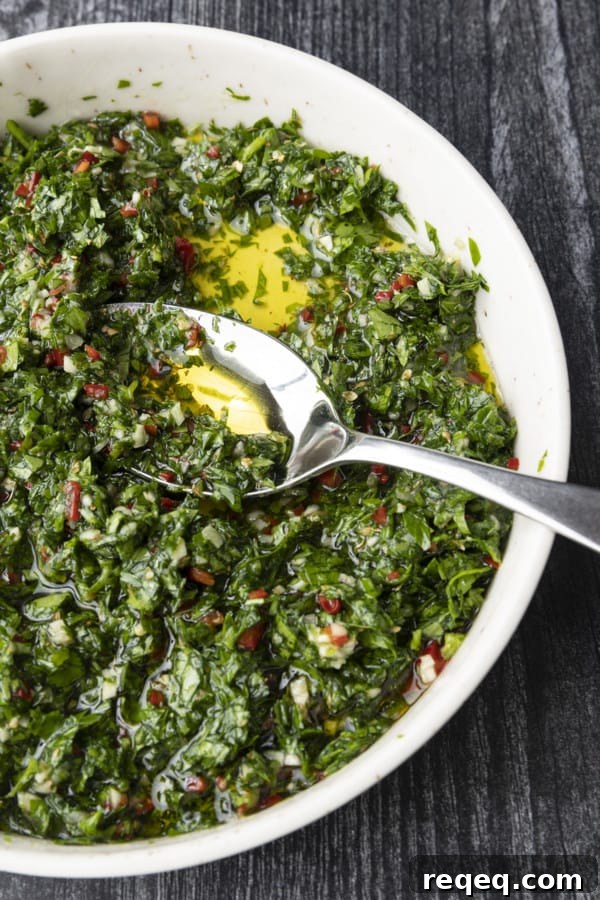
Let the mixture sit at room temperature while you prepare whatever you’ll serve with it; resting helps the flavors develop. Chimichurri is incredibly versatile — here are a few popular uses to get you started:
- Drizzle over grilled or roasted beef cuts, pork tenderloin, sausages or chicken breast.
- Use as a marinade for meats, fish, mushrooms or vegetables.
- Serve as a dipping sauce for roasted or grilled potatoes and vegetables, or alongside meatballs.
- Spread on burgers, toss with plain yogurt for a creamy dip, or use as a zesty salad dressing.
- Top grilled or fried cheese for a bright contrast to rich, melty cheese.
Best Chimichurri Recipe
There are countless chimichurri variations and everyone claims a “best” or “most traditional” method. This is our straightforward, reliable version that highlights fresh ingredients and simple technique. The ingredient list is approachable: mostly pantry staples plus fresh herbs and aromatics.
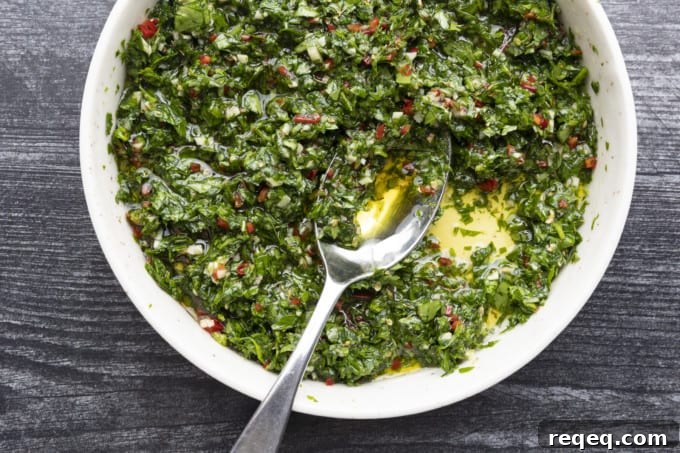
Ingredients for This Recipe:
- Fresh flat-leaf parsley
- Fresh cilantro
- Fresh oregano
- Fresh garlic
- Fresh red hot pepper (Fresno or jalapeño)
- Red, white or sweet onion
- Red wine vinegar
- Extra virgin olive oil
- Salt
- Pepper
Fresh herbs and aromatics are the defining elements of an excellent chimichurri — use fresh parsley, cilantro and oregano whenever possible.
Equipment Needed to Make This Recipe:
- Chef’s knife
- Cutting board
- Measuring cups and spoons
- Mixing bowl
- Mixing spoon
How to Make Chimichurri Sauce
For the best texture and flavor, we recommend chopping the herbs and aromatics by hand rather than using a food processor. Hand-chopping yields a more delicate texture and helps the garlic and onion integrate without becoming overly aggressive. If you prefer, you may pulse the ingredients briefly in a food processor, but avoid pureeing into a paste — you want recognizable bits of herbs and garlic.
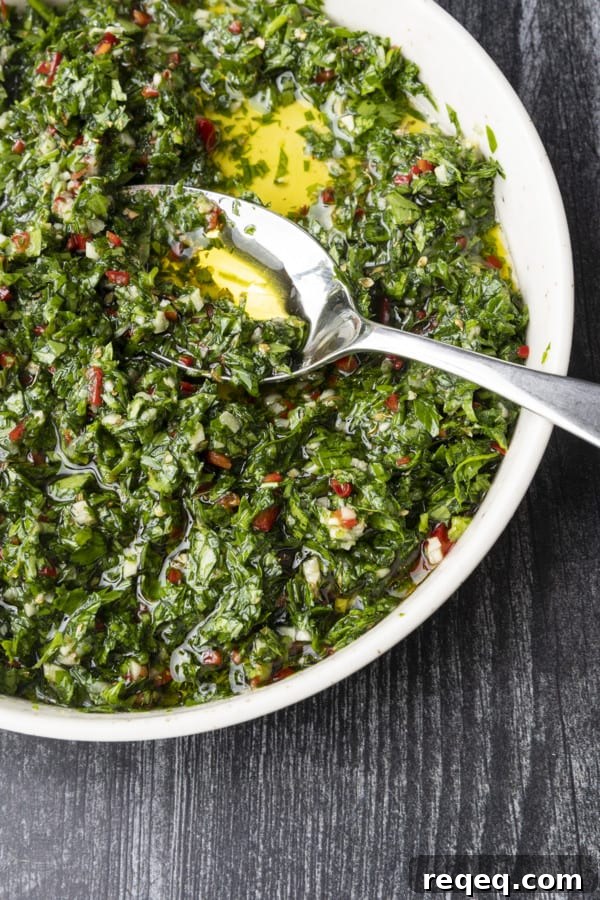
You don’t need perfect knife skills — aim to mince the herbs and aromatics finely enough that the flavors can mingle well.
Chimichurri Recipes FAQ
- Red wine vinegar is classic here, but you can substitute white wine vinegar or apple cider vinegar. Each will shift the flavor slightly.
- Lemon or lime juice can be used instead of vinegar for a brighter citrus note.
- If flat-leaf parsley isn’t available, curly parsley can be used, though it has a different, slightly grassier flavor.
- No fresh Fresno or jalapeño? Use ½–1 tsp crushed red pepper flakes to taste.
- If you want a thinner sauce for drizzling, add extra olive oil and a splash more vinegar, a tablespoon at a time.
- Refrigerate unused chimichurri in an airtight container and use within 5 days; it improves after resting but is best within a few days for peak freshness.
Chimichurri Sauce Recipe
Toss together the minced garlic, finely diced onion, chopped pepper, red wine vinegar and salt in a mixing bowl. Let the mixture sit 10 minutes while you chop the parsley, cilantro and oregano.
Stir the chopped herbs into the bowl, then add ½ cup extra virgin olive oil and mix to combine. If you prefer a thinner consistency, add more olive oil one tablespoon at a time until you reach the desired texture.
Serve immediately if you like, but the sauce benefits from resting at least an hour, tightly covered, in the refrigerator to allow flavors to meld. Store leftovers in a tightly sealed jar in the refrigerator for up to 5 days, though it’s best within 2–3 days.
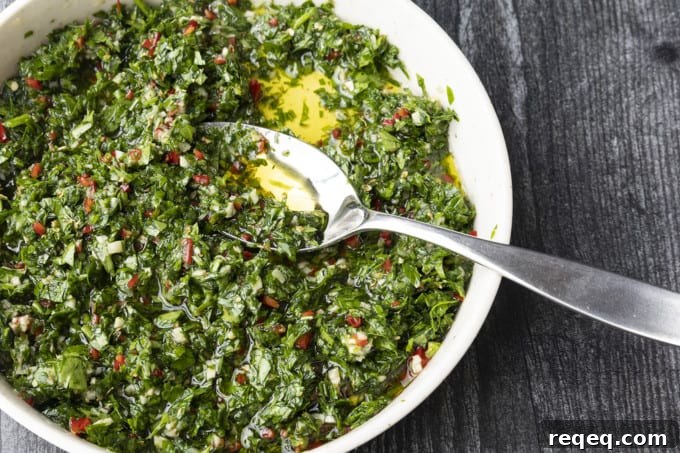
Chimichurri Sauce Recipe
Rebecca Lindamood
It also makes a great marinade — make a double batch, marinate half and serve the other half with the cooked dish.
Equipment
-
1 chef’s knife
-
1 cutting board
-
1 mixing bowl
-
1 mixing spoon
Ingredients
- 3 to 6 cloves garlic minced or pressed, to taste
- ½ red onion (or white or sweet onion) peeled and finely diced
- 1 fresno pepper or jalapeño, stem and seeds removed, finely diced
- ¼ cup red wine vinegar
- 1 teaspoon kosher salt
- 1 ¾ cups fresh flat leaf parsley firmly packed, roughly chopped
- ½ cup fresh cilantro firmly packed, roughly chopped
- ¼ cup fresh oregano leaves roughly chopped
- ½ to ¾ cups extra virgin olive oil
Instructions
-
Toss together the garlic, onion, pepper, vinegar and salt in a mixing bowl. Let it stand for 10 minutes while chopping your parsley, cilantro, and oregano.
-
Stir in the parsley, cilantro, and oregano. Add in ½ cup of your extra virgin olive oil.
-
If you’d like your sauce to be thinner, stir more olive oil 1 tablespoon at a time.
-
This chimichurri can be served immediately, but improves after resting tightly covered in the refrigerator for at least an hour. Store leftovers in the refrigerator for up to 5 days; best within 2–3 days.
Notes
If you can’t find fresh Fresno or jalapeño peppers, use ½–1 teaspoon crushed red pepper flakes to taste.
Nutrition
Nutritional information is an estimate and provided as a courtesy. Calculate exact nutrition using your specific ingredients if needed.