
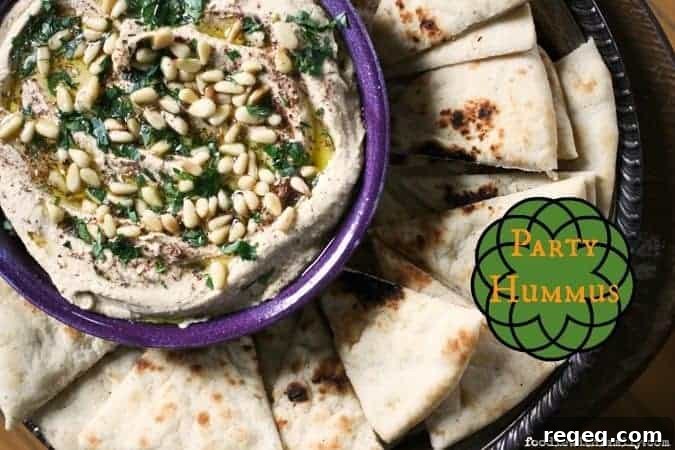
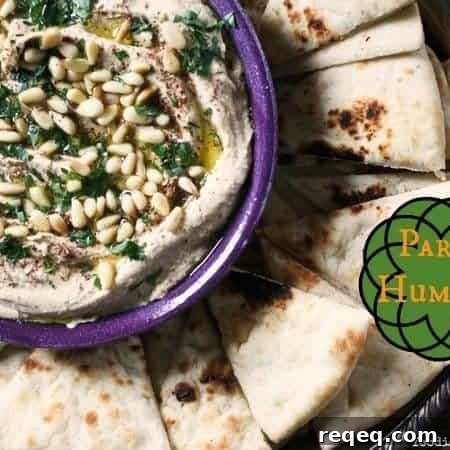
What makes Party Hummus so special? Simply put, it’s the best hummus I’ve ever tasted. I’ve eaten a lot of hummus in my life, and this version stands out: silky, rich, and indulgent. The generous tahini gives it depth, while a finishing drizzle of extra virgin olive oil, toasted pine nuts, a sprinkle of za’atar, and a scattering of chopped parsley add layers of flavor and texture. Crucially, this hummus is served warm or at room temperature—not cold—which brightens its flavors and preserves the velvety consistency. If you’ve only ever had chilled hummus, preparing it warm will change everything.
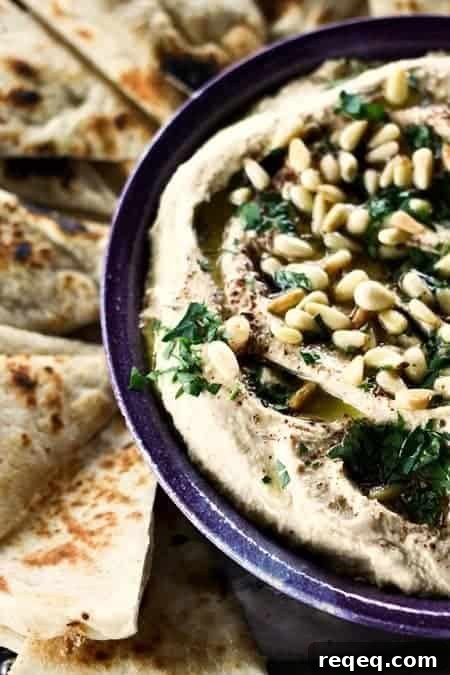
If you didn’t grow up in an Israeli or Middle Eastern household, there’s a good chance you’ve missed out on hummus served the way it’s traditionally enjoyed across the region: freshly made, smooth, and warm. Yes, you may have had good hummus before, but the full experience—warmth that activates aroma and flavor—makes a major difference. Warm food releases volatile oils from herbs and spices, enhancing scent and taste. In other words, your taste buds respond better when hummus is warm rather than chilled.
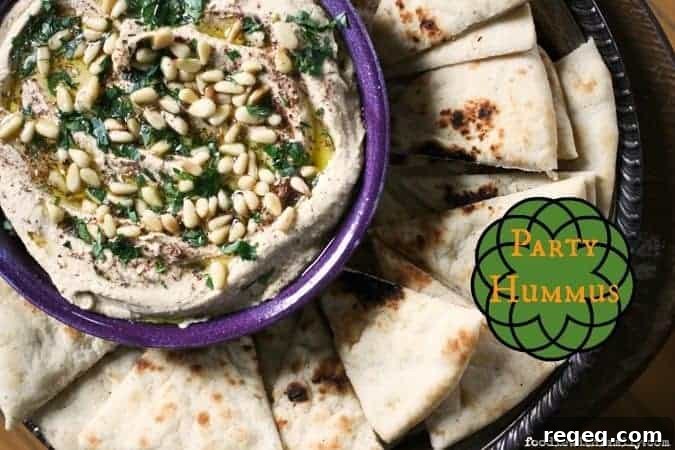
There’s also a texture angle: warm or room-temperature hummus is significantly silkier. Chilled hummus tends to feel denser because tahini thickens when cold. Tahini’s natural viscosity increases in the refrigerator, which can make the overall mixture feel stodgier. If you can’t finish a batch in one sitting, don’t leave it cold when serving—bring it back to room temperature or gently warm it in short bursts in the microwave to restore that luscious texture. Warm hummus really is magical.
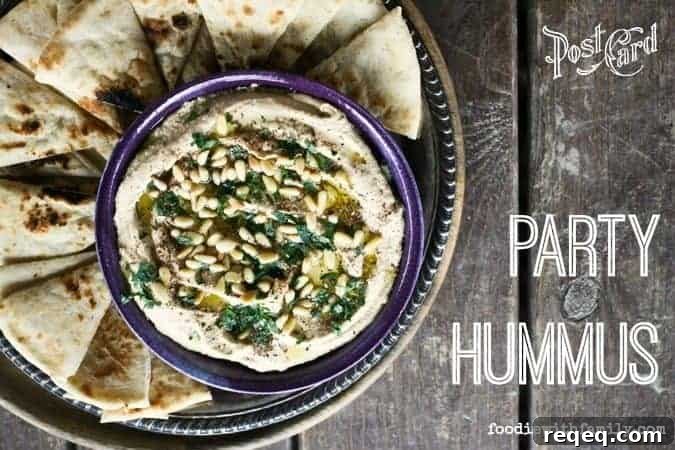
Toppings turn good hummus into party hummus. At minimum, drizzle high-quality extra virgin olive oil over the surface—this is essential. For a more festive finish, add toasted pine nuts for crunch, a handful of chopped parsley for freshness, and a generous sprinkling of za’atar for a bright, herbal-citrus note. Za’atar—a Middle Eastern blend of sesame seeds, oregano, marjoram, thyme, salt, and ground sumac—gives a lively lift that complements the hummus beautifully.
Cook’s Notes
- You can use home-cooked chickpeas or canned chickpeas—both work fine. If using canned, drain and rinse them well.
- Rinsing and removing loose skins improves texture. Cover the chickpeas with water, gently rub them, and skim off any skins that float to the top.
- A food processor or a powerful blender is essential for the silkiest result. Process the mixture for several minutes so it becomes warm and luxuriously smooth.
- If you store leftovers in the refrigerator, let the hummus return to room temperature or warm it slightly before serving to revive the texture and flavor.
- Serve with pita bread, raw vegetables (carrots, celery, cauliflower, broccoli), crackers, chips, pretzels, lettuce leaves, radishes, or use it as a spread on sandwiches or pizza.
Party Hummus
Rebecca Lindamood
Ingredients
- 2 cans chickpeas, drained, rinsed, and picked over to remove any loose skins (or about 3 cups home-cooked chickpeas)
- 3 cloves garlic, peeled and minced or pressed
- 1/4 cup freshly squeezed lemon juice
- 1 cup tahini
- 1/4 cup plus 2 tablespoons cool water, more if needed
- 1 teaspoon kosher salt
For Garnish:
- Extra virgin olive oil
- Toasted pine nuts
- Chopped fresh parsley
- Za’atar
Instructions
- Add the chickpeas, garlic, and lemon juice to the bowl of a food processor fitted with the metal blade. Process until a thick paste forms.
- With the processor running, drizzle in the tahini. Stop to scrape the sides, then continue processing while drizzling in the water until the mixture moves freely. Add more water if necessary to reach your preferred consistency.
- Let the hummus process for about 5 minutes; it should warm and become very silky as it blends.
- Scrape the hummus into a serving bowl. Drizzle generously with extra virgin olive oil, sprinkle with za’atar, and top with chopped parsley and toasted pine nuts.
Nutritional information is an estimate and should be calculated using the actual ingredients you use if precise values are needed.
Can’t make your own za’atar? You can purchase pre-made za’atar from a local Middle Eastern market or a specialty store if you prefer.