
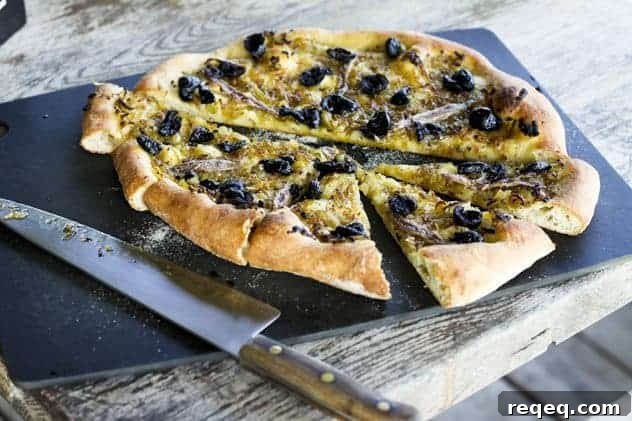
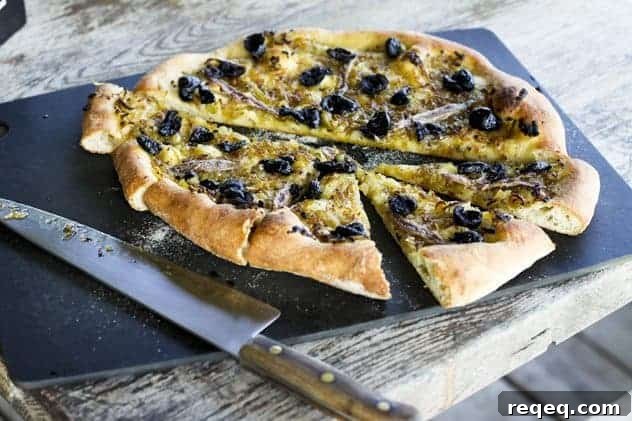
Pissaladière is a beloved French street food: a crisp, slightly breadier crust topped with deeply caramelized onions, salt‑cured anchovies and briny olives. It’s excellent hot or at room temperature, which makes it ideal for picnics, casual meals or a relaxed evening at home.
Picture la bonne vie: sitting on a blanket with a wedge of pissaladière and a chilled, crisp white wine. It’s equally satisfying at a table or on the couch.
Not everyone loves anchovies or olives, and that’s fine. For those who do, though, the flavors can be irresistible—and pissaladière was made for them.
Often called a French pizza, pissaladière is a flatbread from the region around Nice. When Nice became part of France, the local flatbread and its savory toppings came with it. The traditional version features a generous layer of soft, sweet, slowly cooked onions topped with anchovy fillets and black olives—typically Niçoise olives—showing the clear tie to regional Provençal cuisine.
How to Say Pissaladière
Pronunciation is straightforward: PEE-sah-lah-dee-air. If you want to sound extra French, draw out the final “air” a bit. Either way, locals will understand—and food lovers are often delighted when you show enthusiasm for their dishes.
Origins and the Name
The name comes from the Latin piscis, meaning fish, which evolved into pissalat, the anchovy paste originally used in the dish. Pissalat was made from tiny fry of sardines and anchovies, a traditional ingredient that has become rare because fishing for those young fish is now highly regulated. Today, anchovy fillets are widely accepted as authentic in Cuisine Nissarde, so you can enjoy a true regional flavor even without the original paste.
Anchovies: What They Are
Anchovies are small, oily saltwater fish usually preserved by gutting, brining and packing in oil or salt. That curing yields the bold, savory umami flavor that anchovy lovers prize. In many recipes they dissolve into sauces, giving depth without a strong fishy texture when mashed or cooked down.
Canned and Pickled Anchovies
Most commonly you’ll see anchovy fillets packed in oil in tins. Spanish-style boquerones en vinagre—anchovies pickled in vinegar—are a milder, delicate alternative and worth trying if you can find them. They’re pale, tender and less assertive than salted fillets, offering a different but equally enjoyable character on the pissaladière.
Are Anchovies Healthy?
Yes. Anchovies are nutrient-dense, offering easily digested protein plus calcium, iron, selenium and several B vitamins, including B12. They appear in many common foods—Caesar dressing, Worcestershire sauce and fish sauce among them—and can be cooked into sauces where they “melt” into the dish, adding richness without an overt texture.
Niçoise Olives
Niçoise olives are the classic choice for pissaladière. These small, oil‑cured, intensely savory olives come from the French Riviera and pair beautifully with the sweet onions and salty anchovies. In France, olives are often served with pits; if you leave pits in your pissaladière, warn guests. Kalamata olives can be used as a substitute if Niçoise olives aren’t available.
Pissaladière vs. Anchovy Pizza
Pissaladière closely resembles a pizza, but its personality is distinct. Instead of tomato sauce and cheese, the base is a nearly puréed layer of velvety caramelized onions. Anchovy fillets and olives crown the onions. A classic anchovy pizza usually includes tomato sauce and cheese with anchovies on top, while pissaladière is simpler and more focused on the sweet-salty contrast between onions, anchovies and olives—an elegant, regional variation on the flatbread theme.
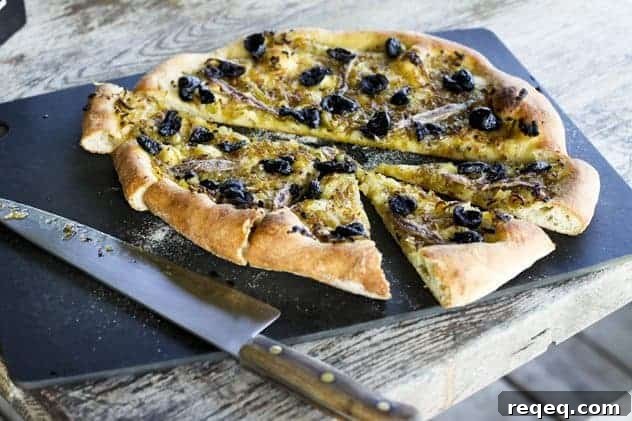
Pissaladière (French Pizza)
Rebecca Lindamood
Ingredients
- 1 pound pizza dough
- 3 pounds onions peeled, halved and cut into thin half-moons, then roughly chopped
- 1/4 cup olive oil
- 1/4 teaspoon dried thyme or 1/2 teaspoon fresh thyme
- 3 garlic cloves peeled and sliced
- 1/2 teaspoon kosher salt
- black pepper to taste
- 8-10 oil-packed anchovy fillets patted dry, or more to taste
- 16 Niçoise olives pitted and halved, or more to taste
Optional but tasty:
- 1 roasted red bell pepper stem and seeds removed, thinly sliced
Instructions
-
Preheat your oven and a pizza stone to 500°F (or up to 550°F if your oven goes higher).
-
Warm the olive oil in a heavy skillet over medium-low. Add the onions, thyme, garlic, salt and pepper. Cook gently for about 20 minutes, stirring, until the onions are very soft and just beginning to brown at the edges. Do not fully caramelize them on the stovetop—the onions will finish in the oven and you want to avoid any scorched taste. Remove any bay leaf before assembling.
-
Dust your work surface with flour and stretch the pizza dough into a roughly 1/8-inch thick circle. Dust a pizza peel generously with semolina or cornmeal to prevent sticking.
-
Spread the onion mixture (including oil) over the dough, leaving about 1/4-inch around the edge. Arrange anchovy fillets and olive halves on top. If using roasted red pepper strips, tuck them in among the anchovies. Check the peel for sticking and add extra semolina if needed.
-
Slide the assembled dough onto the hot stone and bake 8–15 minutes, depending on oven temperature, until the crust is evenly browned and crisp underneath. Transfer to a cutting board.
-
Cool five minutes, slice into wedges and serve warm or at room temperature.
Notes
Nutrition
Nutritional information is an estimate. Calculate values based on the actual ingredients you use if needed.
This post was sponsored by Frigidaire.