
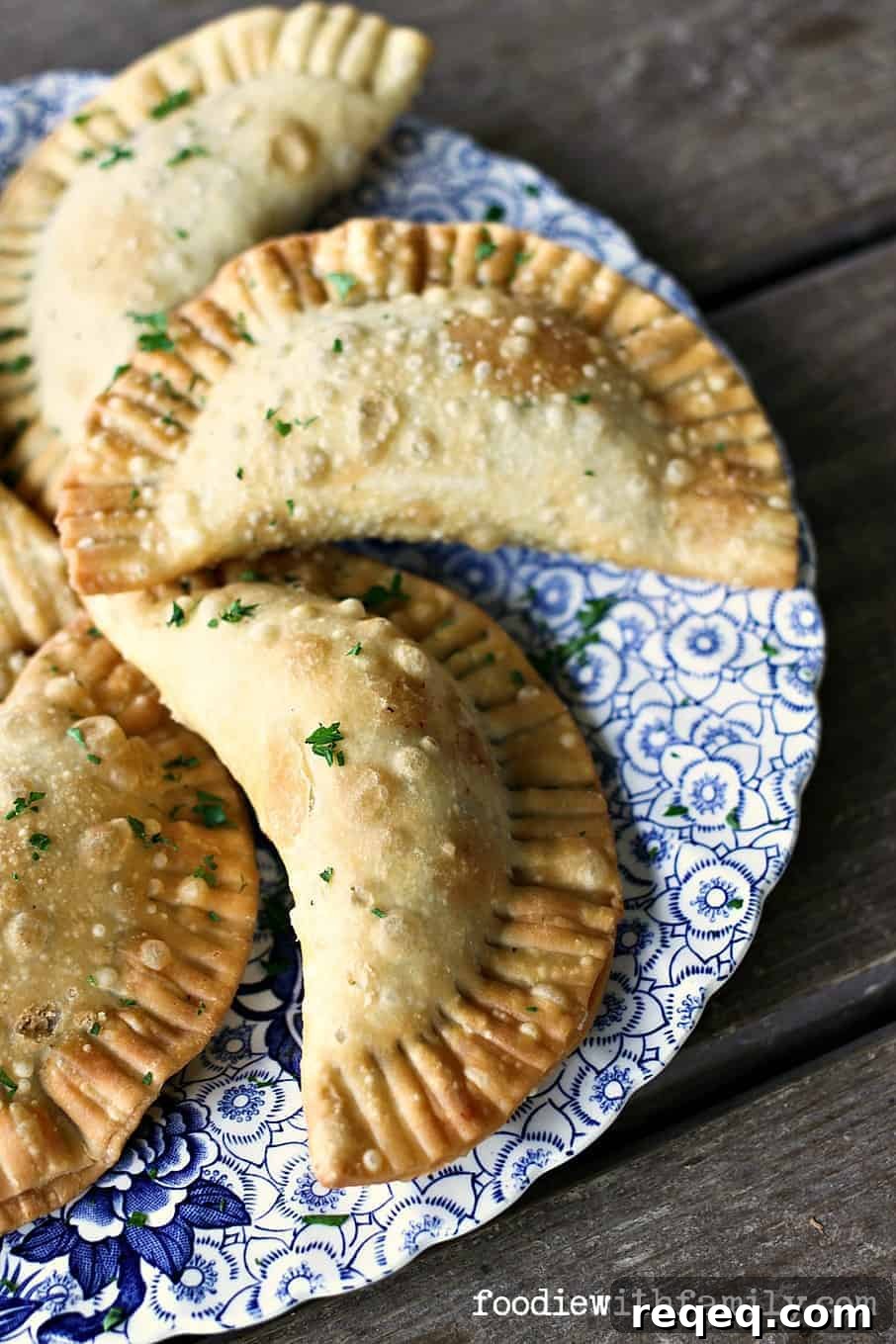
Classic Shepherd’s Pie—buttery mashed potatoes layered over beef and vegetables in gravy—gets a makeover: stuffed into empanada dough and fried or baked until flaky and golden. It’s comfort food made portable.
When guests arrive and you need something satisfying and easy to serve, repurposing leftovers can spark your best ideas. A few weeks ago a friend and her four kids came for lunch and I found myself staring into the fridge looking for inspiration. A pan of cold Shepherd’s Pie from the night before was waiting and the idea clicked: turn it into hand pies.
Cold Shepherd’s Pie is ideal for this because the mashed potatoes and the meat-and-gravy filling are firm enough to scoop and seal inside pastry. I used store-bought empanada discs, but homemade dough works just as well. My friend and I spooned about two tablespoons of the cold mixture into each pastry round, moistened the edges, folded and crimped them, then slipped them into hot oil to fry.
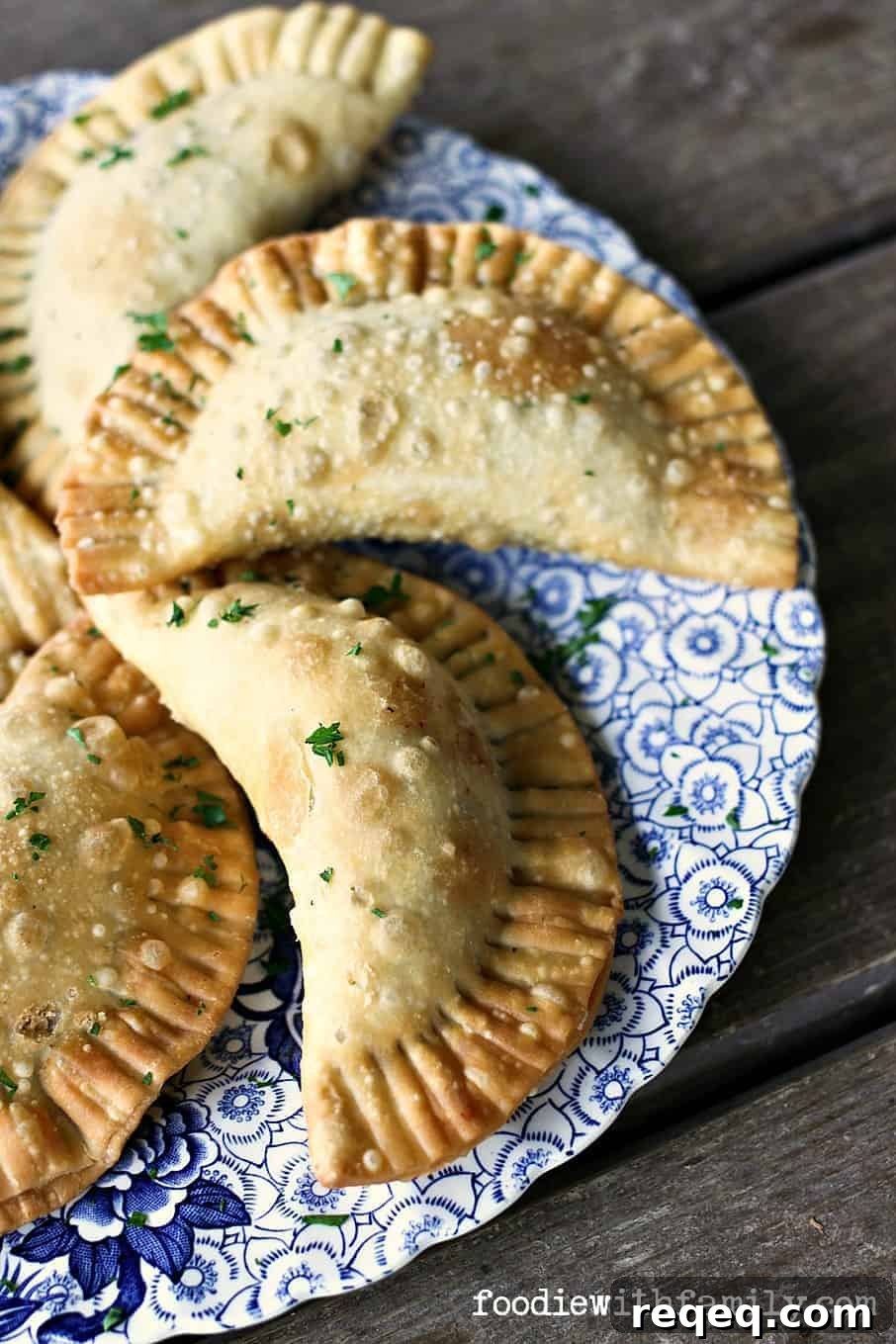
Fresh from the fryer they were irresistible: golden, flaky crust encasing steaming, buttery potatoes and a savory beef-and-gravy center with peas and sweet corn. The kids devoured them quickly. I ended up hiding two wrapped in paper towels on a high shelf so my husband could try one—there was considerable sniffing and suspicion from the taller kids that I’d hidden extras.
For those who prefer not to fry, I tested a baked batch. Baked empanadas are slightly softer and less crisp but still delicious; in fact, my husband preferred the baked version. Frying produces the flakiest, crunchiest result, but baking is a perfectly good alternative and easier for entertaining.
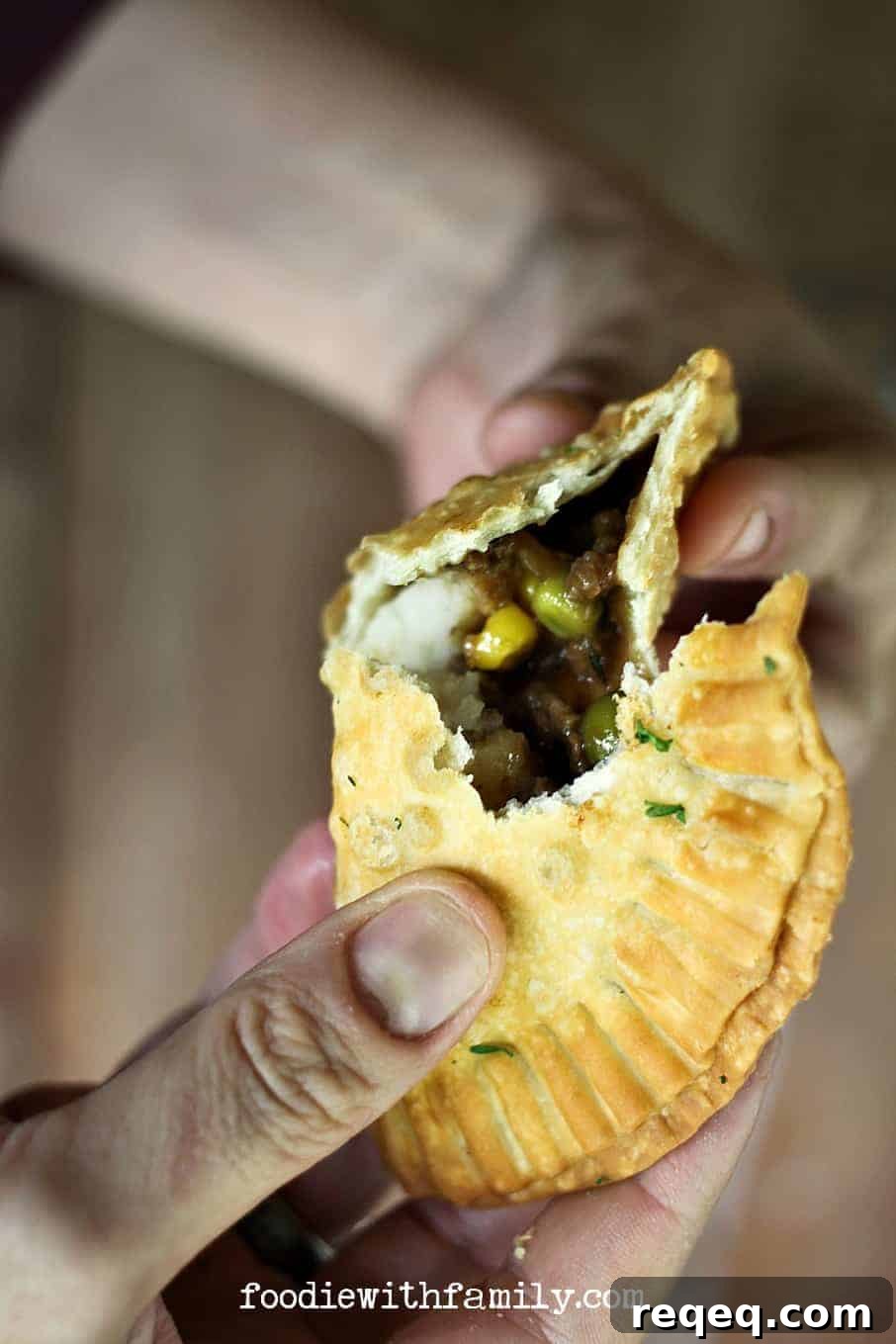
Big thanks to my friend Pamela for being the taste-tester and impromptu hand model. Friends willing to try your food experiments are a keeper.
Cook’s Notes
- You can use homemade empanada dough if you prefer. The discs are convenient but fresh dough works beautifully.
- Chill the Shepherd’s Pie thoroughly before assembling. Cold filling is firmer and easier to handle; warm filling will be too loose to seal neatly in the pastry.
- These empanadas are saucy inside thanks to the gravy, so they don’t require dipping sauces. If you like, serve with extra gravy or a dollop of sour cream.
- You can fry them up to two days in advance and reheat on a baking sheet at 350°F for a quick snack or party food.
- If you bake them instead of frying, expect a less crisp crust—that’s normal and still delicious. Choose frying or baking based on your preference and equipment.
- They travel well. After reheating, wrap in foil for easy, warm snacks on cool-weather outings, football games, or hikes.
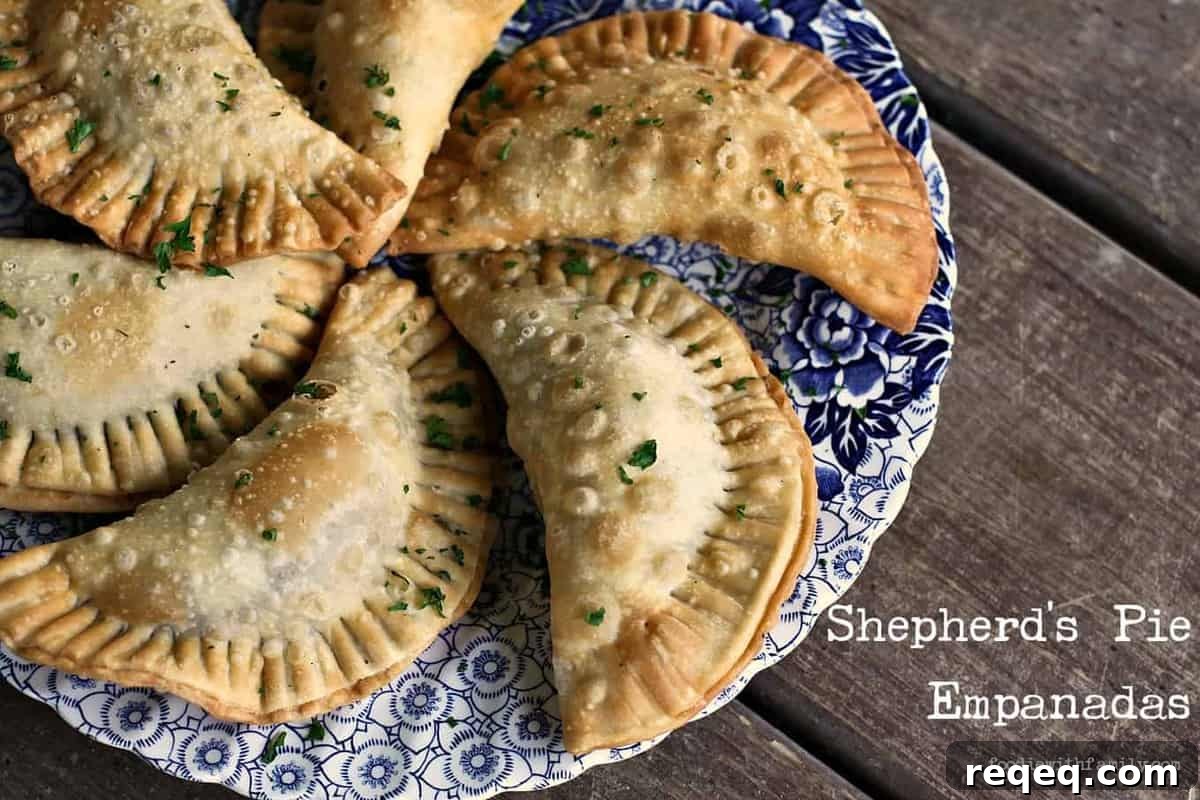

Shepherd’s Pie Empanadas (hand pies)
Rebecca Lindamood
Ingredients
- 4 cups cold leftover Shepherd’s Pie
- 20–30 empanada wrappers (store-bought discs or homemade)
- Peanut oil, lard, vegetable, or canola oil for frying or brushing before baking
Optional
- Fresh parsley for garnish
Instructions
To assemble the Shepherd’s Pie empanadas
- Place an empanada dough round on your work surface. Scoop about 2 tablespoons of the cold Shepherd’s Pie—potatoes and meat/vegetables—into the center of the dough.
- Wet the dough perimeter with water, fold the edges together, and press firmly to seal. Use a fork to crimp the edges. Transfer to a plate and repeat until all empanadas are filled.
To fry the Shepherd’s Pie empanadas
- Heat 2–3 inches of oil to 350°F in a deep fryer or a heavy, high-sided pan. Gently lower a few empanadas into the oil, avoiding crowding.
- Fry 3–5 minutes until golden brown and bubbly. Drain on paper towels and let rest at least 3 minutes before serving. Repeat with remaining empanadas.
To bake the Shepherd’s Pie empanadas
- Preheat oven to 400°F. Lightly oil a rimmed baking sheet and arrange empanadas 2 inches apart. Brush the tops lightly with oil.
- Bake 20–30 minutes until edges are lightly golden and dough feels firm. Let rest 5 minutes before serving.
To reheat leftover empanadas
- Preheat oven to 350°F. Arrange empanadas on a rimmed baking sheet and bake 10–15 minutes until heated through.
Nutritional information is an estimate. Calculate based on the actual ingredients you use.

This post was originally published September 3, 2014.