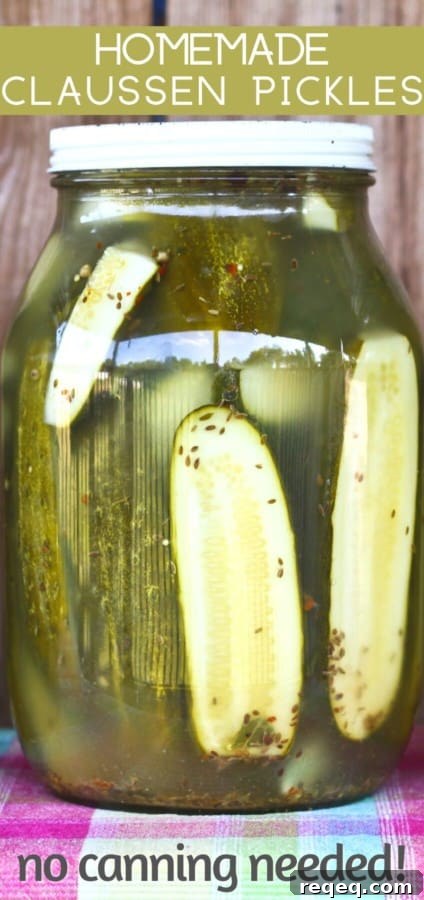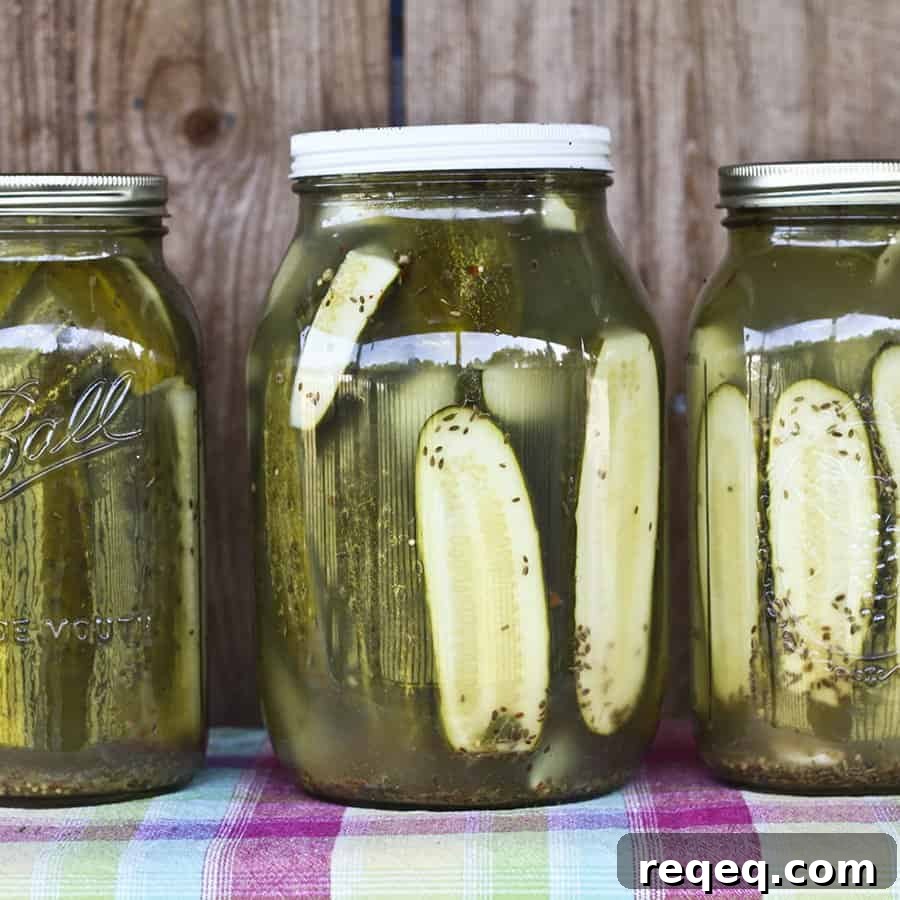
Claussen pickles are the ultimate crunchy, salty kosher dill—easy to make at home and even better than the store-bought version. These half-sour, refrigerated pickles are garlicky, crisp, and require no special equipment or canning experience.
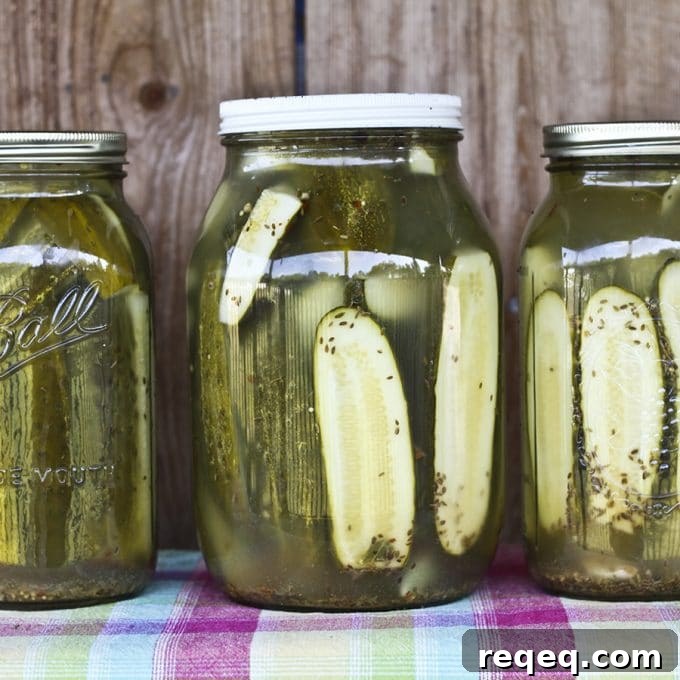
I’ve always preferred savory snacks to sweet, and when the weather gets stifling there’s nothing more refreshing than an icy-cold, salty, crunchy pickle. My family feels the same—pickles are almost a food group in our house. I grew up on my grandmother’s dill pickles and started making my own as soon as I had a kitchen. My sister and I compare batches like others compare wine vintages.
Dill Pickle Recipe
Of all the pickles I make, these half-sour, Claussen-style dill pickles stand out. They’re meant to be eaten fresh: incredibly crisp, full of garlic and dill, and perfectly salty.
Recipe for Claussen Pickles
Here’s what you need to make these Claussen-style half-sour pickles at home.
Equipment
- 1-gallon glass jar, or four quart jars, or a large food-safe container with a tight-fitting lid
- Liquid measuring cup
- Chef’s knife or paring knife
Ingredients
- Small to medium pickling cucumbers (fresh is best)
- 1 cup apple cider vinegar (or white distilled vinegar)
- 2/3 cup coarse canning or kosher salt (do not use iodized table salt)
- Garlic cloves (to taste)
- Fresh dill heads or dill seed
- Mixed pickling spices or mustard seed
- Cold water (to top the jar)
Apple cider vinegar gives a slightly smoother brine than white vinegar but won’t add sweetness. White vinegar is a fine substitute and is what many commercial Claussen pickles use.
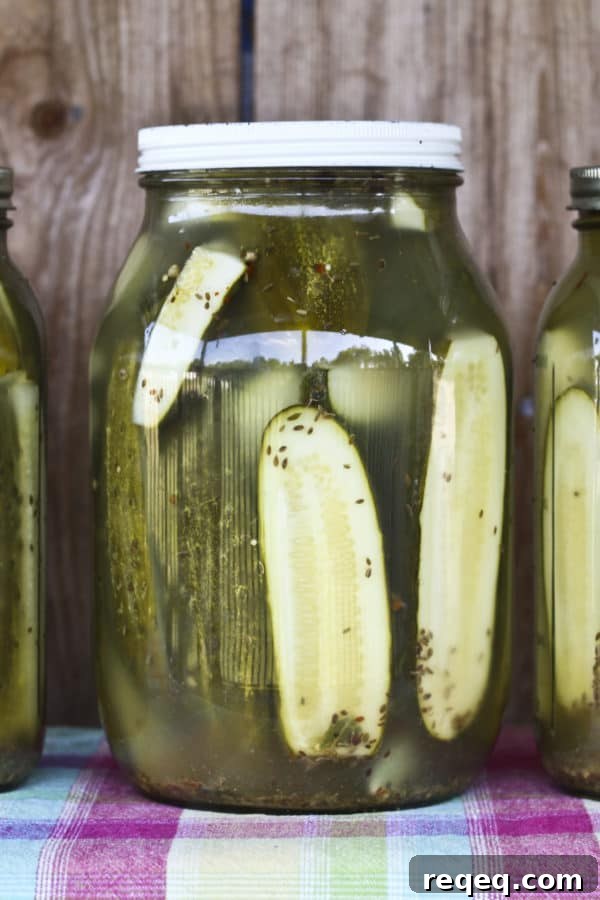
These pickles are ridiculously easy—most of the work is waiting two to four days for the flavor and texture to develop. If you can’t wait, they’re often tasty within 24 hours.
Claussen Pickle Recipe
These are refrigerator pickles, also called Lithuanian half-sours or Claussen-style kosher dill pickles. They’re fermented rather than heat-processed, which is why they stay so crisp. Because the brine is fermented and not highly acidic, these pickles are not safe for canning.
Refrigerator Pickles
No cooking is required. Rinse and trim the cucumbers, layer them with garlic, dill, and spices in jars, stir the brine until the salt dissolves, pour over the cucumbers, and let them sit. They ferment on the counter for two to four days, then move to the refrigerator to chill and store.
How to Make Pickles — FAQ
Follow these simple steps for reliable results:
- Trim 1/8–1/4 inch from the blossom end of each cucumber to reduce enzymes that cause softening. Slice them in half lengthwise or into quarters depending on size and preference.
- Layer dill, pickling spices, garlic, and cucumbers in a gallon jar or other food-safe container. If using multiple jars, divide the seasonings evenly.
- Mix the brine in a separate pitcher: cold water, vinegar, and kosher salt. Stir until the salt dissolves. You may have extra brine—store it in the fridge to top off jars if needed.
- Pour brine over the cucumbers and make sure everything is fully submerged. Use a plate, a small bag of beans, or another nonreactive weight to keep cucumbers under the brine.
- Cover lightly (loosely or with cheesecloth) and leave out of direct sunlight for two to four days or until they taste like pickles throughout. In very hot kitchens, you can place them directly in the refrigerator; they’ll simply take a bit longer.
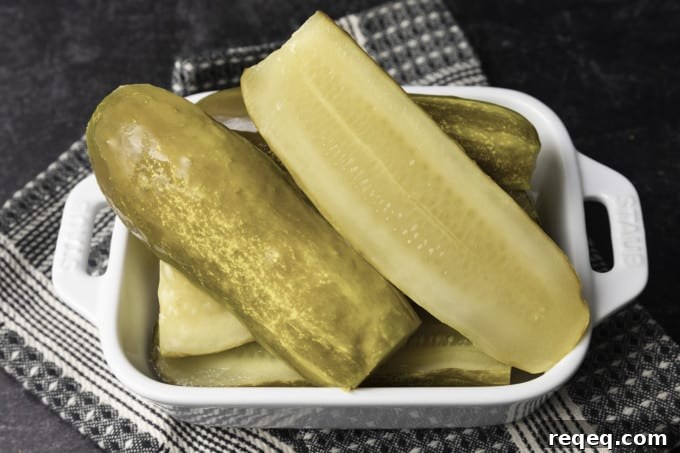
Troubleshooting
- Cloudy brine: Normal for fermented pickles. Avoid iodized table salt, which can cause additional cloudiness and off-flavors—use kosher or pickling salt.
- Scum, foam, or film on the brine: Fermentation can produce foam. Skim it off with a spoon and discard; then top off with reserved brine. Remove any fuzzy growth and any affected cucumbers.
- Soft pickles: Usually caused by not trimming enough of the blossom end or by using older cucumbers. Use fresh, recently harvested cucumbers and trim the blossom end thoroughly.
- Mold: Mold appears when cucumbers are exposed to air. Keep cucumbers submerged; use a weight if necessary.
- White sediment: Harmless—either fermentation byproducts or anti-caking agents from salt.
- Garlic turns blue/green: Often harmless and can result from garlic variety, maturity, or trace metals reacting in vinegar. If there are no other signs of spoilage, it’s safe to eat.
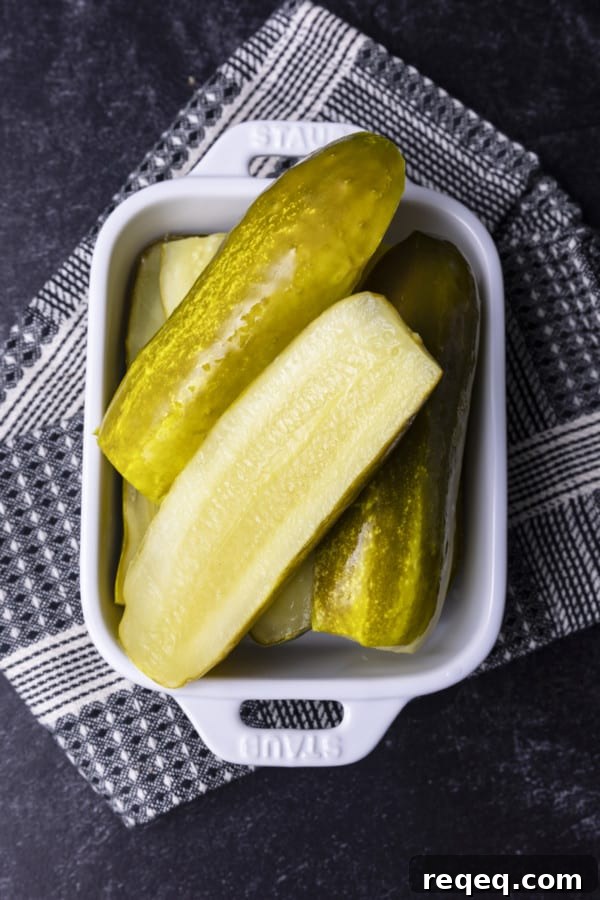
Important: Check your pickles starting at 24 hours. If they smell and taste pickled, move them to the refrigerator. Do not leave them on the counter longer than four days. These are not suitable for canning because they are not acidic enough and heat would ruin the crisp texture.
Serving Suggestions
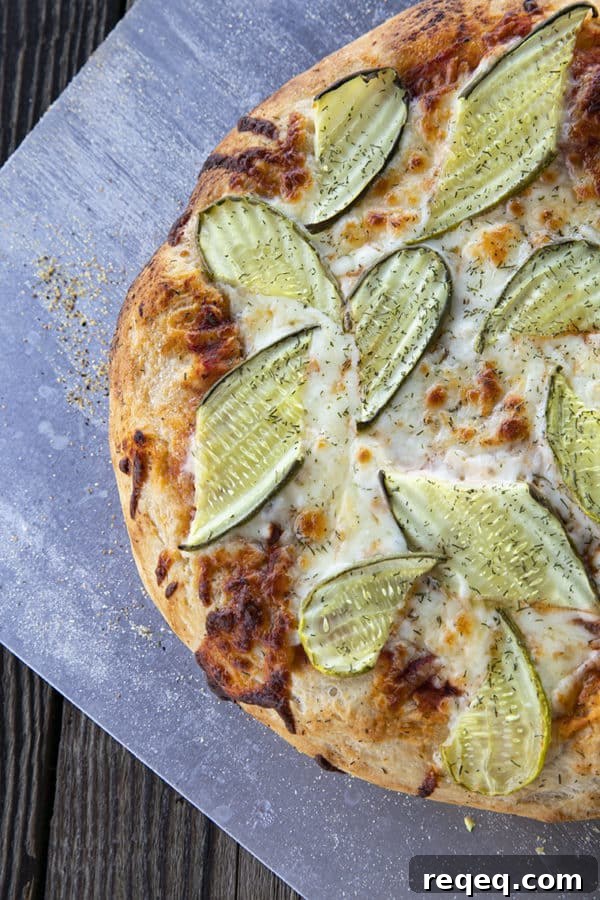
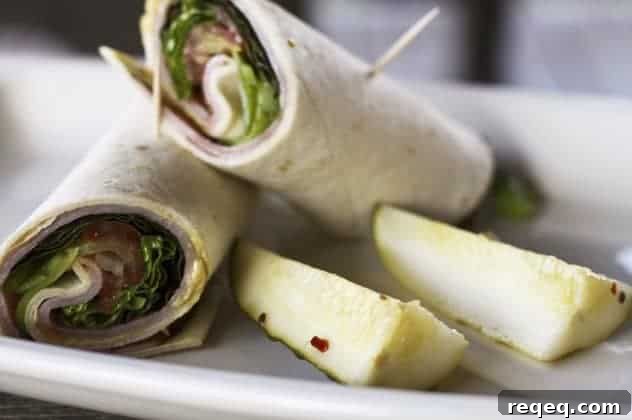
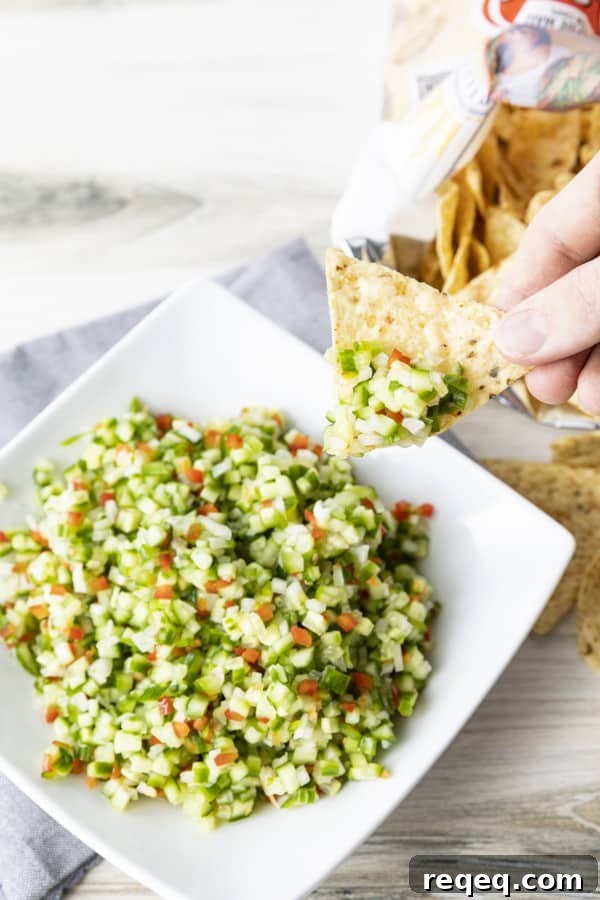
These pickles are delicious on sandwiches, burgers, or chopped into dips and salads. Try them in a pickle dip, pickle de gallo, dill pickle egg salad, bagel burgers with dill pickle cream cheese, or even pickle pizza. Extra pickles also work great for specialty recipes like moonshine pickles or a zesty Bloody Mary garnish.
Why Half-Sour Pickles?
Half-sour pickles are fermented, not heat-processed, which preserves their crisp texture. Heat processing softens cucumbers, so refrigerator, half-sour pickles will never be quite the same as canned shelf-stable pickles. Properly stored in the refrigerator and kept submerged in brine, these pickles will keep up to six months, though they rarely last that long at my house.
Quick Recipe Summary
Wash cucumbers (don’t scrub), trim 1/8–1/4 inch from the blossom end, and slice. Layer dill, garlic, pickling spices, and cucumbers in a jar. Stir together cold water, vinegar, and kosher salt until dissolved, pour over cucumbers so everything is submerged, and weigh them down if needed. Cover loosely and leave in a cool spot out of direct sunlight for two to four days or until pickled through. When ready, seal and refrigerate. Remove any fuzz or foam that appears and discard the affected pieces.
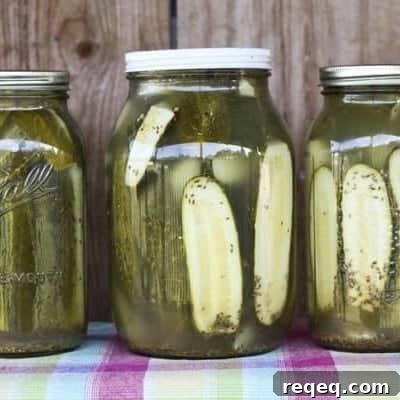
Homemade Claussen Knock-Off Pickles
Rebecca Lindamood
Equipment
- 1 gallon jar (or 4 quart jars or a large food-safe container with a tight-fitting lid)
- Liquid measuring cup
- Large mixing bowl or pitcher
Ingredients
- 35–40 small to medium pickling cucumbers
- 1 gallon cold water
- 1 cup apple cider vinegar (or white vinegar)
- 2/3 cup coarse canning or kosher salt
- 4+ garlic cloves, to taste
- 4 heads fresh dill or 4 tbsp dill seed
- 2 tbsp mixed pickling spices
Instructions
- Wash cucumbers but do not scrub them.
- Trim 1/8–1/4 inch from the blossom end and cut cucumbers in half lengthwise or into quarters.
- Layer dill heads or seed, garlic, pickling spices, and cucumbers in a large jar.
- In a pitcher, stir cold water, vinegar, and salt until the salt dissolves.
- Pour brine over the cucumbers, ensuring they’re fully submerged. Weigh them down if necessary.
- Cover loosely or secure cheesecloth and leave out of direct sunlight for two to four days, or until pickled through.
- Seal the jar and refrigerate. They keep up to six months if kept submerged in brine.
- If foam or “fuzz” appears on the brine, skim it off and remove any affected cucumbers.
Notes
Please check pickles daily for doneness. Do not leave them on the counter longer than four days. These pickles are not suitable for canning.
Nutrition
Originally published July 22, 2011. Updated with FAQs and troubleshooting and reposted August 2022.