


Lots of people feel a little anxious when they get assigned to make deviled eggs for a gathering. Because deviled eggs have been a party staple for generations, everyone has an expectation for how they should look and taste. If no one taught you family tricks for making them, they can feel intimidating.
Have you ever rushed to buy or collect fresh eggs, boiled them, cooled them, and then been frustrated when the shells stuck or ripped away chunks of egg white? It’s not your fault—fresh eggs are simply harder to peel. Eggs straight from the hen or very fresh store eggs tend to cling to their shells. If you can plan ahead, let truly fresh eggs rest for seven to ten days before boiling. For store-bought eggs, check the sell-by or expiration date: if it’s three to five weeks out, the eggs may still be difficult to peel.
If waiting isn’t an option, there are reliable tricks to consistently get clean, hard‑boiled eggs without a green ring, even with fresher eggs. I can’t fully explain the chemistry, but these steps work well for me, even with eggs just a day or two old.
- Start with the oldest eggs in your refrigerator when possible.
- Place the eggs in a single layer in a heavy pot—don’t stack them.
- Cover the eggs with cool tap water by 1 to 2 inches.
- Add a generous splash of vinegar to the water.
- Bring the water to a full rolling boil, put a tight-fitting lid on the pot, then turn the heat off completely. Leave the pot undisturbed.
- After exactly 15 minutes, carry the pot to the sink. Use the lid to hold the eggs while you pour out the hot water immediately.
- With the lid still securing the eggs, give the pot a couple of sharp shakes to crack the shells slightly.
- Run cold tap water over the eggs for about three minutes.
- Working one egg at a time under running water, rap the egg all over with the back of a spoon to break the shell into small pieces. Flip the spoon and slip its tip between the shell and the egg, using the spoon’s curve to lift the shell away. The water will flush away remaining fragments.
- Repeat until all eggs are peeled. Peel sooner rather than later—eggs become harder to peel the longer they sit.
With the peeling taken care of, let’s make the filling. A silky, smooth yolk mixture and a few thoughtful toppings are all you need for standout deviled eggs. I like a classic, slightly retro base—mayonnaise and Dijon mustard—and then add bold toppings to keep things interesting.
Deviled eggs may not be on the cutting edge of culinary trends, but they bring comfort and familiarity to any buffet. A classic filling also serves as a neutral canvas for creative toppings, pleasing both traditionalists and those who want something new.
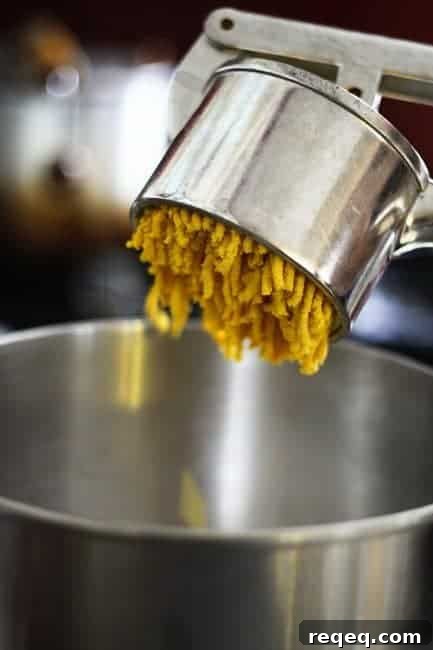
To get an ultra-smooth filling, I use a potato ricer. It yields a silky texture without the fuss of pressing yolks through a fine-mesh sieve. It’s quick, low-mess, and perfect for home cooks who want great texture without restaurant-level effort.

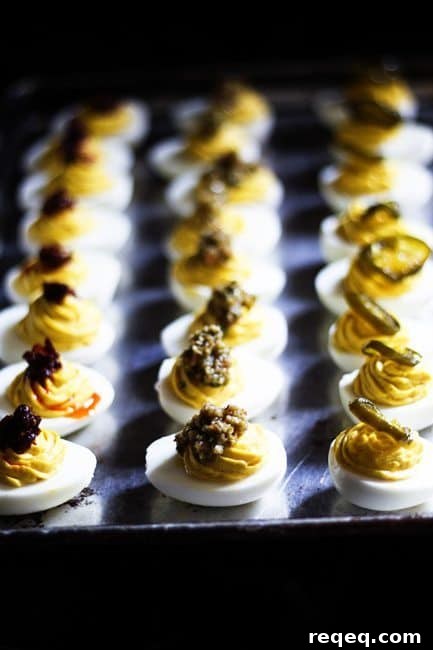
After ricing or mashing the yolks, mix them with mayonnaise and Dijon mustard until perfectly smooth. You can spoon the filling into the whites or pipe it for a tidy, classic presentation—I prefer piping for the finished look.
I usually leave some eggs plain for traditionalists and top others with a variety of flavors. Some favorites: green olive tapenade, spicy chili crisp or chili garlic sauce, candied jalapeños, bacon jam, crumbled crispy bacon, roasted red pepper strips or spreads, and minced green onion or chives. A platter with several different toppings looks colorful and gives guests choices.
Have you ever panicked over hard‑boiled eggs, or are you a peeling pro? If you have tips or favorite deviled egg toppings, I’d love to hear them. For now, here’s a simple, reliable recipe and a list of topping ideas so you can make dependable, delicious deviled eggs every time.

Best Basic Deviled Eggs with Topping Ideas
Rebecca Lindamood
Ingredients
To Make the Deviled Eggs:
- 12 chicken eggs
- splash of vinegar
- 1/4-1/2 cup mayonnaise
- 1-2 tablespoons Dijon mustard
- salt and black pepper to taste
Topping Ideas:
- Green olive tapenade
- Bacon jam
- Spicy Chili Crisp or Chili Garlic Sauce
- Sriracha
- Candied Jalapenos
- crumbled crispy bacon
- roasted red pepper strips
- roasted red pepper spread
- minced green onion or chives
Instructions
-
Place eggs in a single layer in a heavy pot with a tight-fitting lid. Cover with 1–2 inches of cool tap water and add a splash (about a tablespoon) of cider vinegar. Heat the pot over high heat until the water reaches a full rolling boil. Immediately clamp the lid on and shut the heat off. Let the eggs sit, undisturbed, for exactly 15 minutes.
-
When 15 minutes are up, carefully move the pot to the sink. Use the lid to hold the eggs while you pour off the hot water. Give the pan a couple of sharp shakes to crack the shells, then run cold tap water over the eggs for about 3 minutes.
-
Work with one egg at a time. Rap the egg all over with the back of a teaspoon to break the shell into small pieces. Flip the spoon, slip its tip between shell and egg under running water, and use the spoon’s curve to ease the shell away. Rinse off any fragments and place peeled eggs on a clean towel.
-
Repeat until all eggs are peeled.
-
Slice eggs in half lengthwise and transfer yolks to a bowl. Mash with a fork or press through a potato ricer for extra-smooth texture. Mix in 1/4 cup mayonnaise and 1 tablespoon Dijon mustard, adjusting mayonnaise by tablespoonfuls to reach desired creaminess. Season with salt and black pepper to taste.
-
Spoon or pipe the filling into the egg white halves. Serve immediately with desired toppings, or refrigerate un-topped until ready to serve.
Nutritional information is an estimate provided as a courtesy. Calculate nutrition using the exact ingredients and quantities you use if needed.
did you make this recipe?
Tag @foodiewithfam on Instagram and use #foodiewithfamily so the author can see your version.