
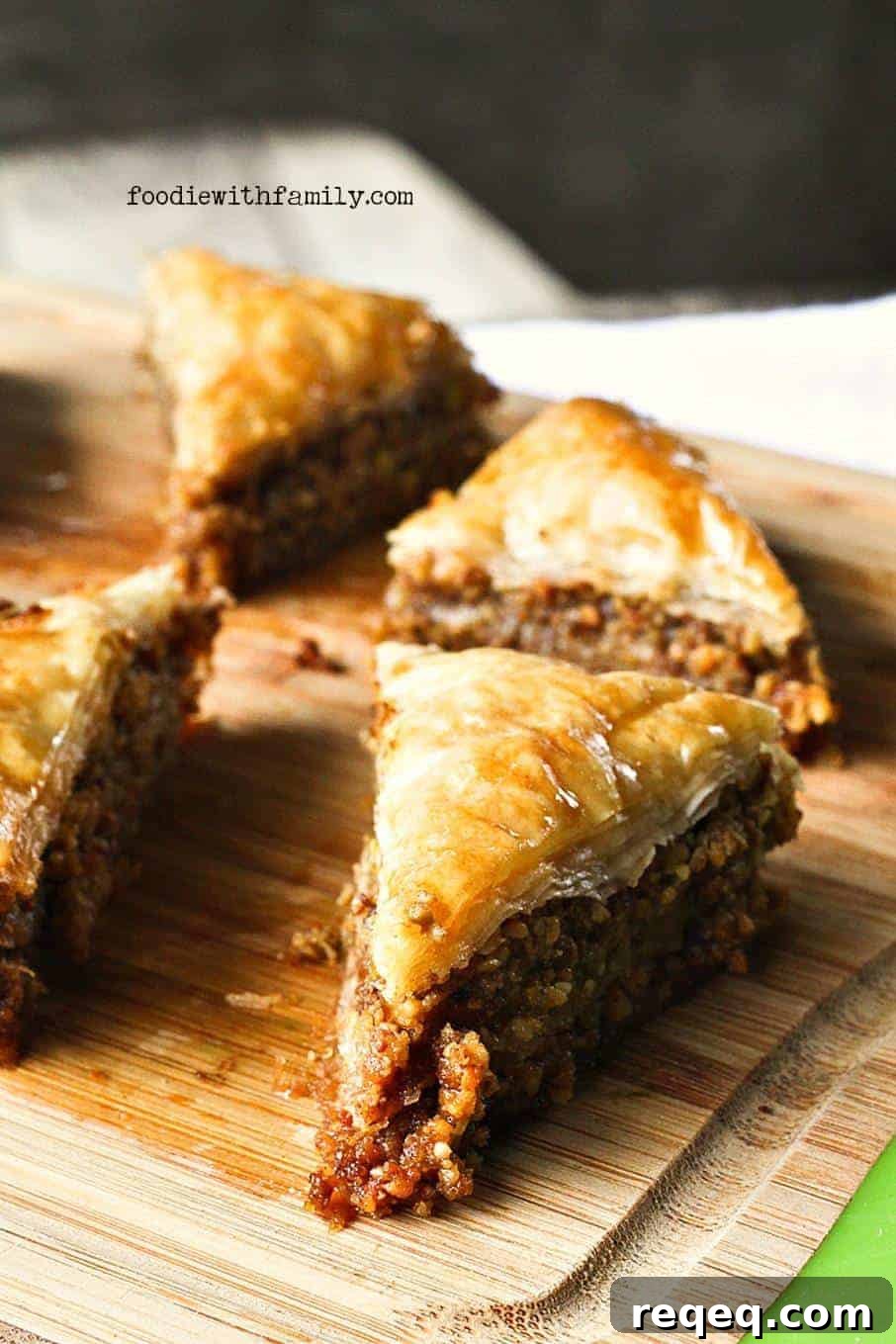
Of all the desserts in the world, baklava is my absolute favorite. I don’t have a huge sweet tooth, but a tray of small, syrupy baklava pieces will test any willpower. I simply can’t resist.
My husband jokes that baklava is “anciently tasty.” He doesn’t mean stale—he pictures Mesopotamian kings nibbling it centuries ago. I adore his quirky historical imagination.
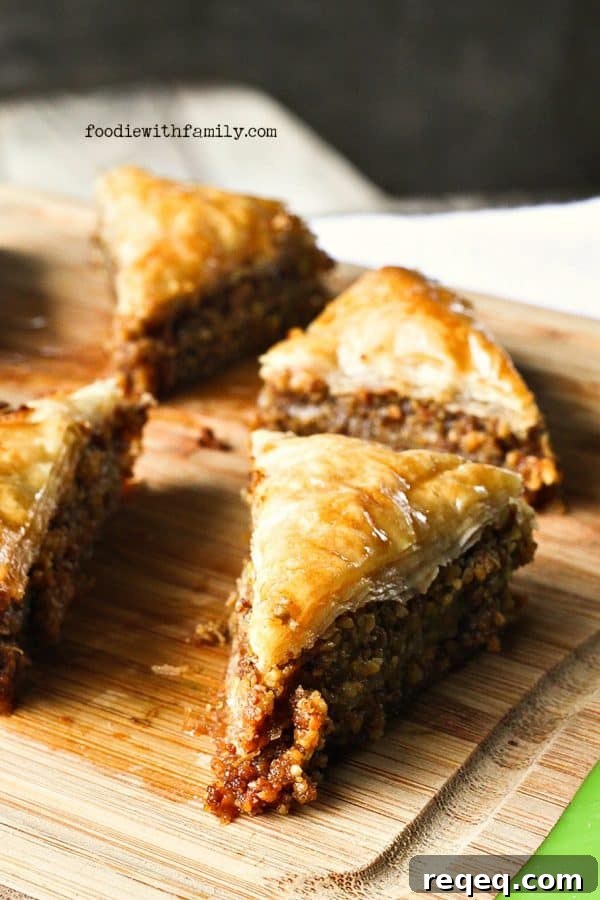
Our preferred version at home is Cardamom Pistachio Baklava. Pistachios play the starring role, supported by toasted almonds and walnuts, a warm blend of cardamom and cinnamon, and an orange-honey syrup infused with cardamom. It’s the kind of dessert you sneak extra slices of while still in your pajamas.
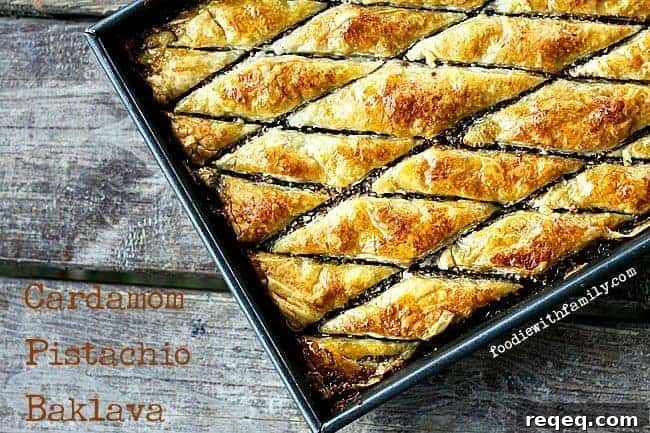
Baklava can seem a little fussy because of phyllo dough, but the effort is worthwhile. Below are practical tips and notes to make working with phyllo and assembling this baklava easier and more reliable.
Tips for Working with Phyllo Dough
- Buy phyllo that’s well within the “use by” date. It’s extremely delicate and dries out or tears easily when past its prime.
- Choose a box that looks intact—avoid damaged or crushed packages.
- Consider buying an extra package and freezing it as backup. It’s handy to have extra sheets for future batches.
- Thaw phyllo exactly as the package recommends. Avoid “speed thaw” tricks; follow the manufacturer’s best method.
- Keep thawed phyllo covered with a slightly damp towel while assembling. This reduces drying and tearing.
- To trim phyllo to the pan size, invert your baking dish over the stack and use a sharp knife to cut around the edges. Don’t press down on the dough or you’ll compress the layers and create headaches when separating sheets.
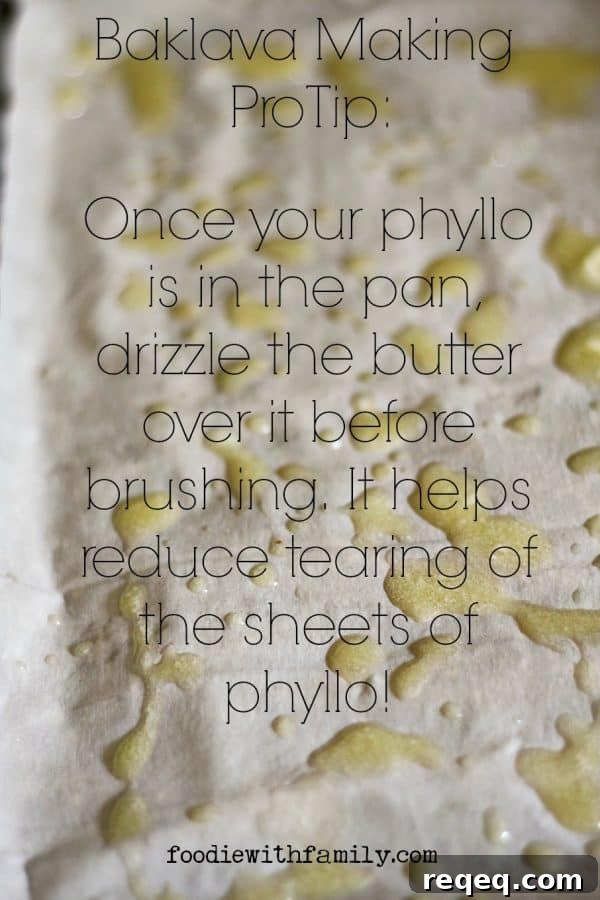
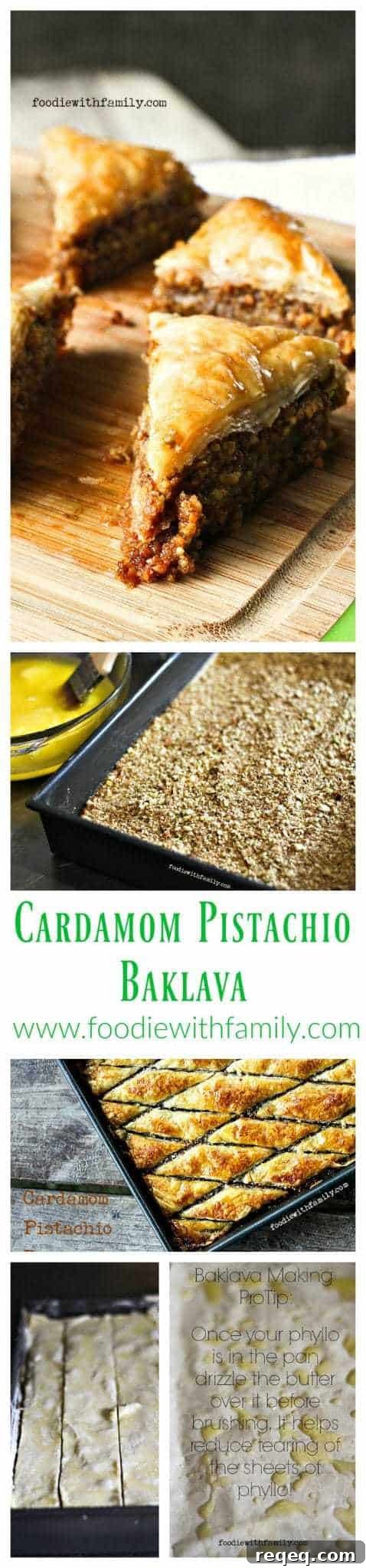
- When brushing phyllo with butter, drizzle the butter across the sheet first and then brush it out gently—this reduces tearing.
Cook’s Notes
- You can make this baklava with either salted or unsalted pistachios. If you use salted nuts, omit any added salt in the recipe.
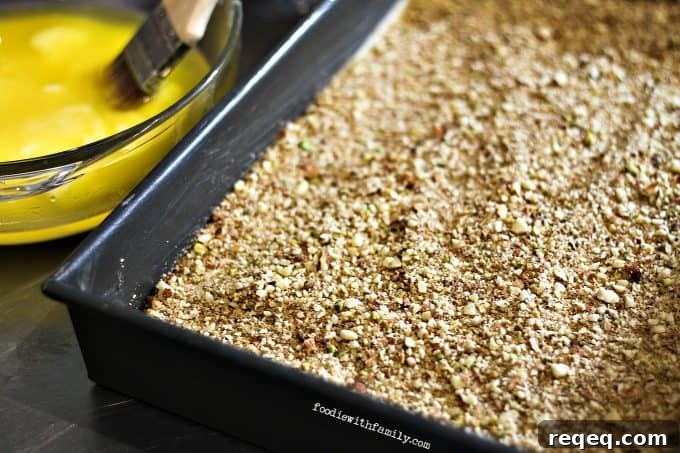
- Grind the nuts to a texture roughly the size of Grape-Nuts cereal or slightly smaller—small, but not a paste.
- Work quickly during assembly so the phyllo sheets don’t dry out as you build layers.
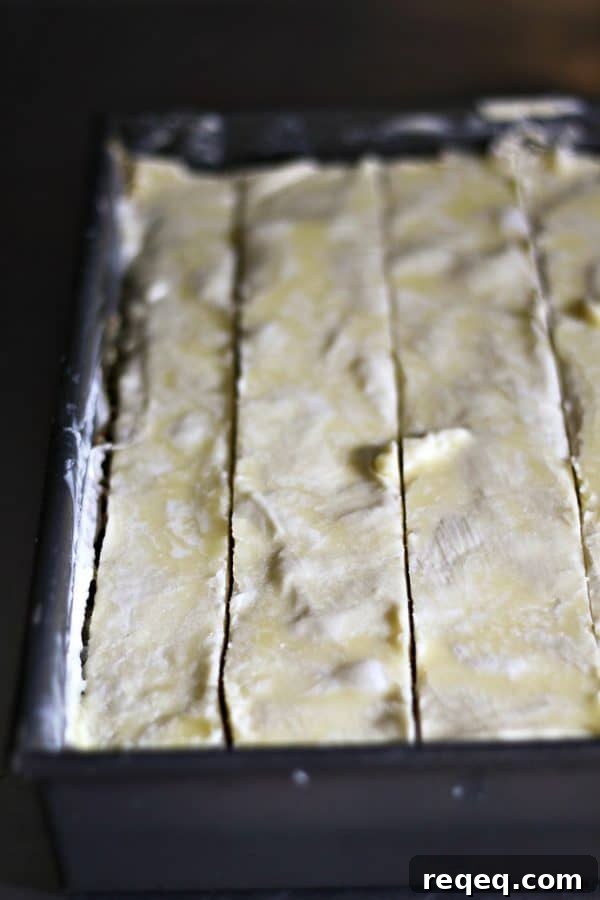
- After assembling the baklava, refrigerate it for 30–60 minutes before baking. Chilling helps the butter firm up, making cleaner cuts and keeping the delicate layers intact.
- Make five lengthwise cuts first, then cut diagonally across to form diamonds. Alternatively, cut perpendicular and then diagonally across squares to make triangles—choose the shape you prefer.
- Pour the orange-cardamom-honey syrup over the baklava while it’s hot from the oven so the syrup soaks in more effectively.
- Allow the syrup-soaked baklava to rest for at least 6–8 hours (overnight is ideal). This resting time lets the syrup penetrate and the layers settle, improving both texture and flavor.
Cardamom Pistachio Baklava
Ingredients
- 1 pound shelled pistachios, toasted
- 1/2 pound shelled walnuts, toasted
- 1/2 pound blanched almonds, toasted
- 2/3 cup brown sugar
- 1 teaspoon ground cinnamon
- 1/2 teaspoon ground cardamom
- 1/4 teaspoon ground cloves
- 1/2 teaspoon salt (omit if using salted pistachios)
- 1 pound unsalted butter, melted
- 1 package phyllo dough, thawed according to package instructions
Syrup Ingredients
- 2 cups sugar
- 2 cups water
- 1/2 cup mild honey (orange blossom, clover, or similar)
- 1 teaspoon vanilla extract
- Juice of half a lemon
- Two long strips of orange peel (removed with a vegetable peeler)
- 1 cinnamon stick, broken into pieces
- 1 lightly smashed cardamom pod
- 1 whole clove
Instructions
- Pulse the toasted pistachios, walnuts, and almonds in a food processor until finely chopped—about the texture of Grape-Nuts or slightly smaller. Transfer to a bowl and stir in brown sugar, cinnamon, cardamom, cloves, and salt (if using). Set aside.
- Trim the phyllo to fit a 9×13-inch pan by laying the pan over the stack and cutting around the edge with a sharp knife. Keep the phyllo covered with a damp towel while you work.
- Brush the bottom and sides of the pan with melted butter. Layer one sheet of phyllo in the pan, brush with butter, and repeat until you have 8 sheets layered. Spread half the nut mixture evenly across the phyllo. Place one phyllo sheet on top, brush with butter, and repeat until you have 4 sheets. Add the remaining nut mixture, then layer another 8 buttered phyllo sheets on top. Drizzle any remaining melted butter over the top and brush to distribute evenly.
- Refrigerate the assembled pan for 30–60 minutes to firm the butter.
- Preheat the oven to 350°F (175°C). Using a very sharp knife, cut the chilled baklava five times lengthwise to create long rectangles, then cut diagonally across to form diamond shapes (8–12 diagonal cuts depending on desired piece size).
- Bake for about 40 minutes, or until the baklava is golden brown and the edges look flaky.
- While the baklava bakes, combine the syrup ingredients in a saucepan and bring to a boil. Reduce heat and simmer about 10 minutes until slightly thickened. Strain out the orange peel, cinnamon stick, cardamom, and clove.
- Remove the baklava from the oven and scoop out any nuts that spilled into the cuts. Place the pan on a heatproof surface and drizzle the hot syrup evenly over the hot baklava. Let it cool and stand at room temperature for several hours—6 to 8 hours or overnight for best results.
- Store leftovers in an airtight container at room temperature for several days.
This post was originally published September 29th, 2014.