
If you enjoy this No-Knead Cinnamon English Muffin Bread, check the Bread Recipes page for more homemade bread ideas!
I’ve been making English Muffin Bread for my family for years. It’s so easy I can practically make it in my sleep. My boys never tire of the craggy, butter-catching texture that’s perfect for toasting, and best of all it requires no kneading or special bread-making skills. It’s simply one of the easiest and most satisfying breads around. Recently I experimented by adding a hint of sweet cinnamon to the recipe—and the result was spectacular. My husband closed his eyes the first time he tasted a slice toasted with butter.
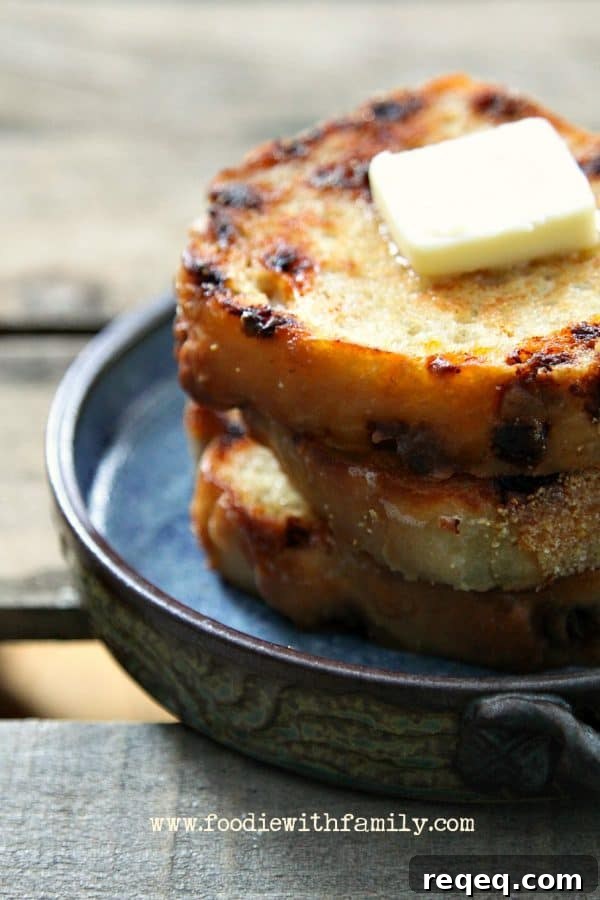
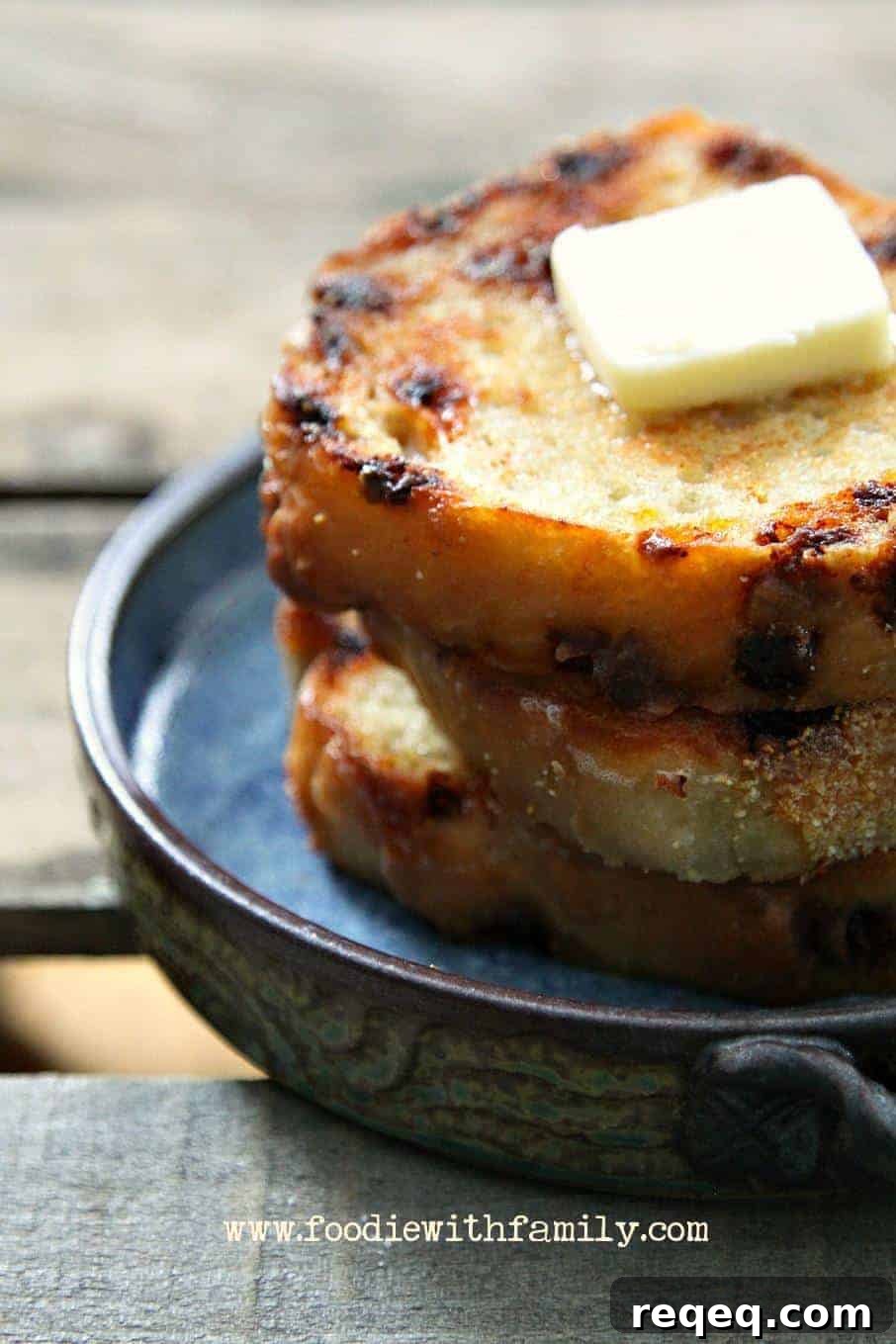
Slightly sweet, studded with cinnamon baking morsels, and still full of the classic nooks and crannies we love in English muffins. I’ll keep making our original English Muffin Bread for sandwiches and mini pizzas, but the cinnamon version is dreamy for breakfast or brunch.
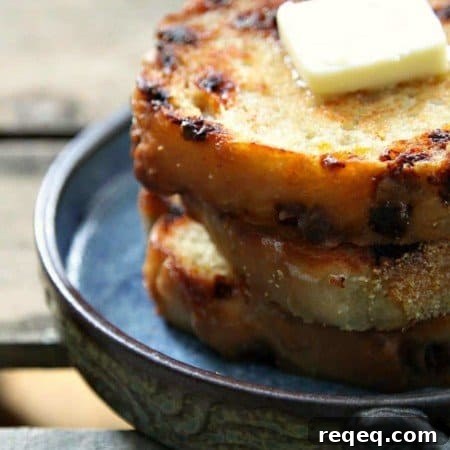
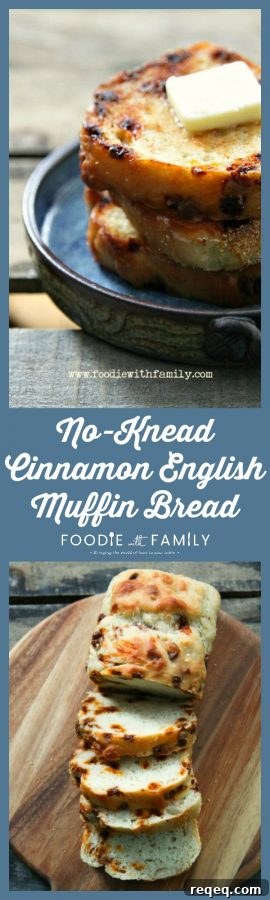
I can’t fully describe the aroma that rises when you toast thick slices of this bread in a skillet with a generous pat of butter. Since the dough is no-knead, it saves time up front and rewards you with a loaf that’s worth a little extra toasting effort.
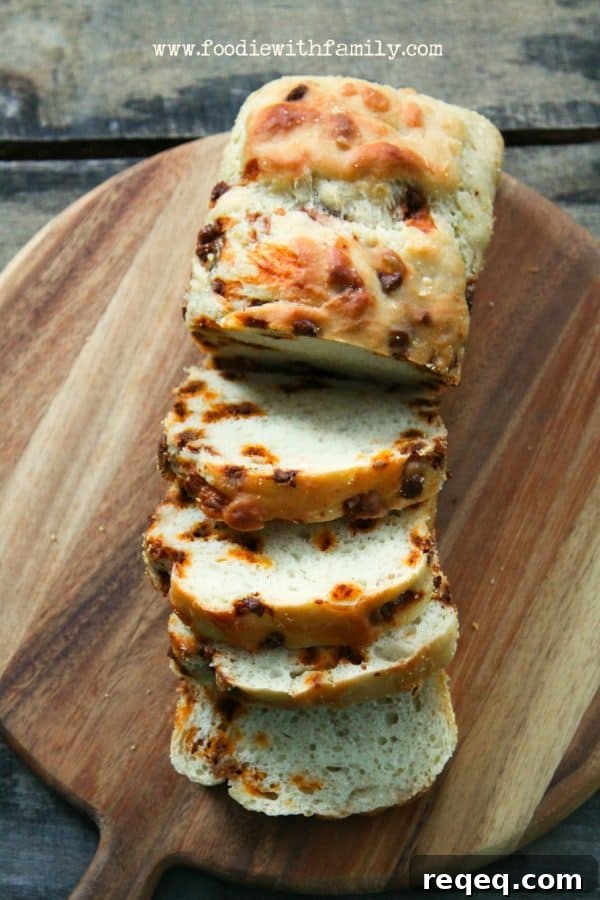
Note: the full recipe yields 3 to 4 loaves, which is a lot if you’re baking for a small household. A half-size ingredient list is provided for 1–2 loaves. That said, you’ll probably wish you’d made the full batch—this bread freezes beautifully, so making more to store is often worthwhile.
Cook’s Notes
- Bread pan sizes vary, so the yield is given as a range (1–2 loaves for half recipe, 3–4 for full). It’s easier to prepare the higher number of pans and not use one than to be stuck searching for another pan when the dough is in your hands.
- A dough whisk is my preferred tool for mixing this wet dough because it’s sturdy and designed for the job, but a strong wooden spoon works fine too.
- Pan preparation is important: grease the pans and dust them with cornmeal. This prevents the moist dough from sticking, helps the loaves release easily, and gives the signature cornmeal crunch like classic English muffins. If you’re short on cornmeal, semolina works as a substitute.
- Do not cut this bread until it has completely cooled. This dough is very wet and needs carry-over cooking as it cools to set the crumb. If you slice it while hot, the texture will be gummy. Wait until it’s fully cooled, then reheat or toast slices as desired.
- Toasting in a skillet with butter gives the best flavor and texture, though the toaster will work in a pinch.
Prep Tips
- Mixing bowl
- Dough whisk or sturdy wooden spoon
- Loaf pans (8.5″ or 9.5″ x 4″)
- Cinnamon baking morsels or bits
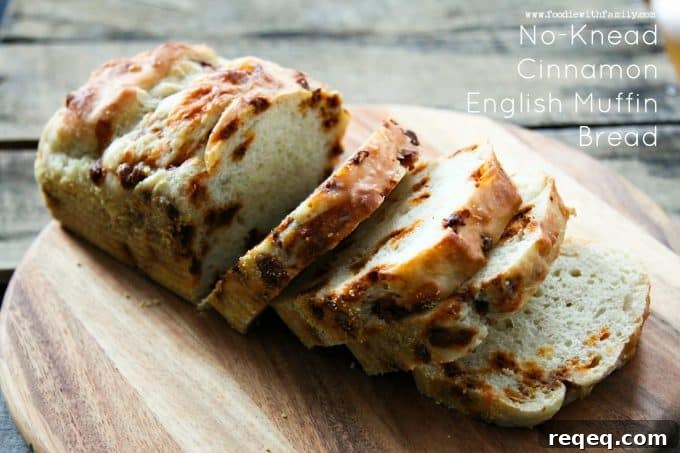
No-Knead Cinnamon English Muffin Bread
Ingredients
For a Standard Recipe (3–4 loaves):
- 5 1/2 cups warm-to-the-touch water (not hot)
- 2 tablespoons kosher salt
- 3 tablespoons sugar
- 2 tablespoons plus 3/4 teaspoon instant yeast (or 3 packages)
- 1 (12-ounce) bag cinnamon baking morsels or bits
- 11 1/2 cups all-purpose or bread flour (about 3 lb 1.5 oz by weight; you can use a half-and-half mix)
For a Half-Size Recipe (1–2 loaves):
- 2 3/4 cups warm water (not hot)
- 1 tablespoon kosher salt
- 1 tablespoon plus 1 1/2 teaspoons sugar
- 1 tablespoon plus 1 1/4 teaspoons instant yeast (about 1 1/2 packages)
- Half of a 12-ounce bag of cinnamon baking morsels or bits
- 5 3/4 cups all-purpose or bread flour (about 1 lb 9 oz by weight)
Also needed:
- Non-stick cooking spray
- Cornmeal (or semolina)
- Plastic wrap
- Melted butter for brushing mid-bake and after baking
Instructions
To prepare the dough:
- Stir all ingredients together by hand in a large mixing bowl (or use a stand mixer with a paddle) until combined. The dough will be shaggy and very sticky.
- Spray a piece of plastic wrap with non-stick spray and lay it loosely over the bowl. Let the dough rise in a warm, draft-free place for about an hour, until bubbly and puffy.
- Spray 3 or 4 standard loaf pans with non-stick spray and sprinkle a thin layer of cornmeal in each pan. Tap out any excess.
- Spray your hands with non-stick spray and divide the dough evenly between the pans, filling no more than halfway. If needed, prepare an extra pan for any remaining dough.
- Spray plastic wrap and lay it loosely over each pan. Let the loaves rise again in a warm, draft-free spot until bubbly and the dough dome is just peeking over the edge of the pan. Meanwhile preheat the oven to 350°F.
Baking:
- Place the loaf pans evenly in the oven and bake for 30 minutes. After 30 minutes, remove one pan at a time and brush the tops with melted butter. Rotate pans front to back and return to the oven for an additional 10 minutes, or until the tops are lightly golden.
- Immediately turn the loaves out onto a cooling rack and brush again with melted butter. Cool completely before slicing.
- Store tightly wrapped at room temperature for up to a week. For longer storage, wrap cooled unsliced loaves in two layers of plastic wrap and one layer of foil, then freeze up to 3 months. Loaves can be sliced from frozen and toasted directly.
This post was originally published January 20, 2015. Updated November 2017 with Cook’s Notes and tips.