
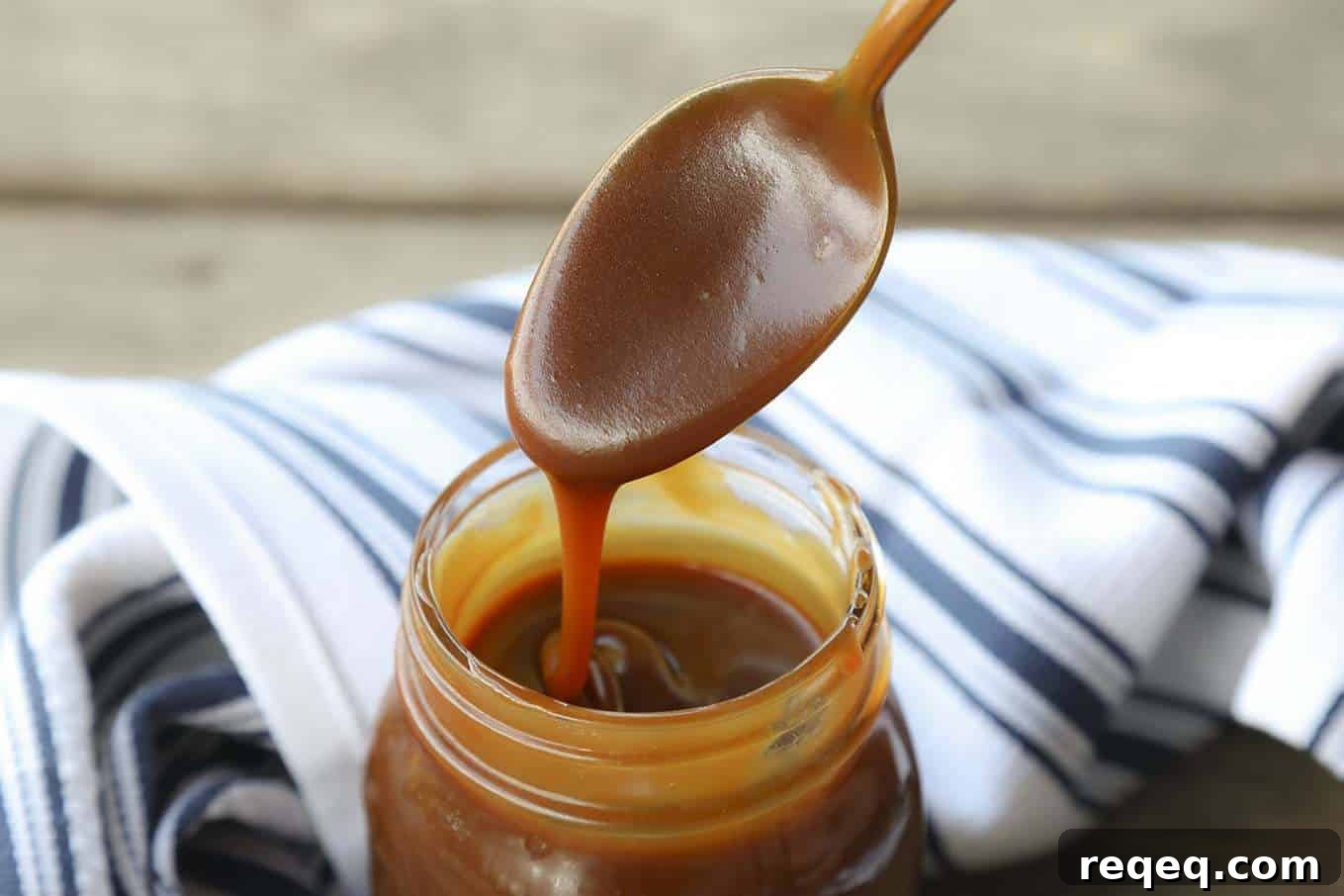
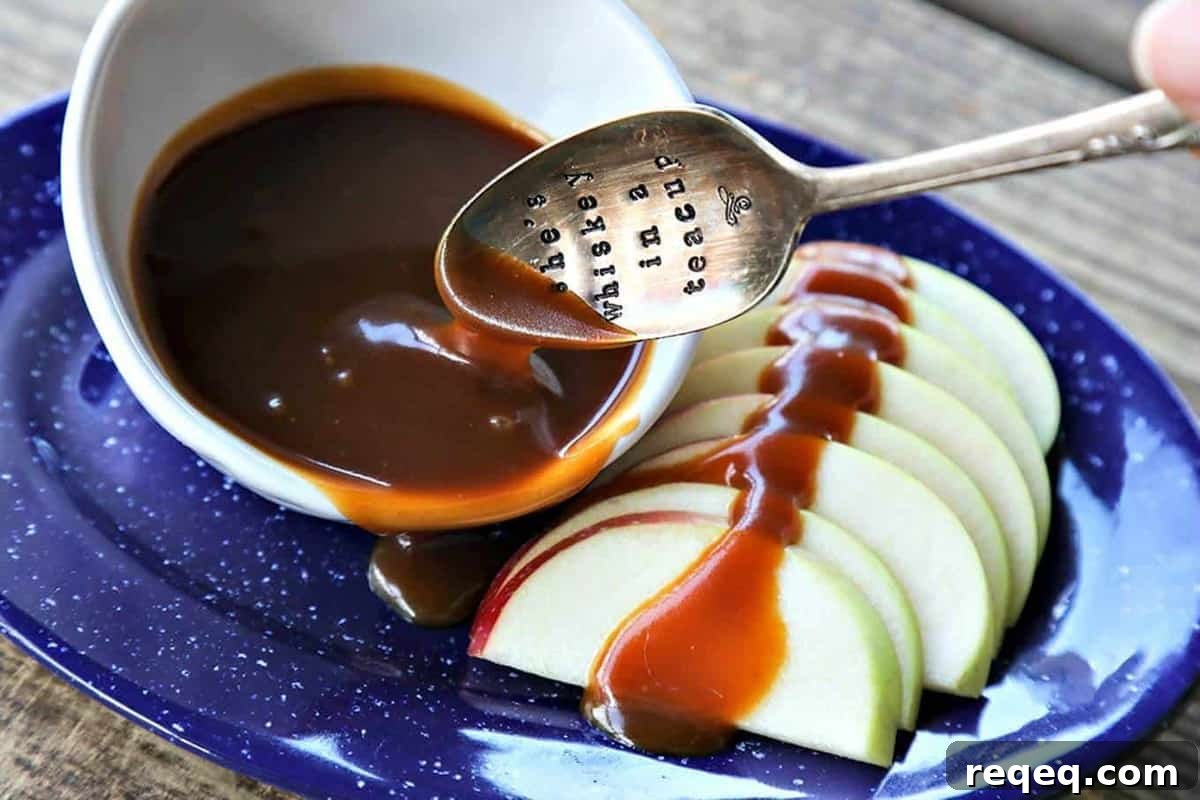
For me, autumn is the best season for food. Cooler weather and an abundance of my favorite ingredients make me very happy. Crisp, juicy apples that drip when you bite into them are a pleasure I look forward to all year. When New York apples are piled high at roadside stands, I eat them with meals, as snacks, and for dessert. My favorite dessert pairing is simply sliced apples served with a ramekin of excellent caramel sauce. When the apples are this fresh and sweet, the caramel needs to be exceptional. Enter Bourbon Salted Caramel Sauce.
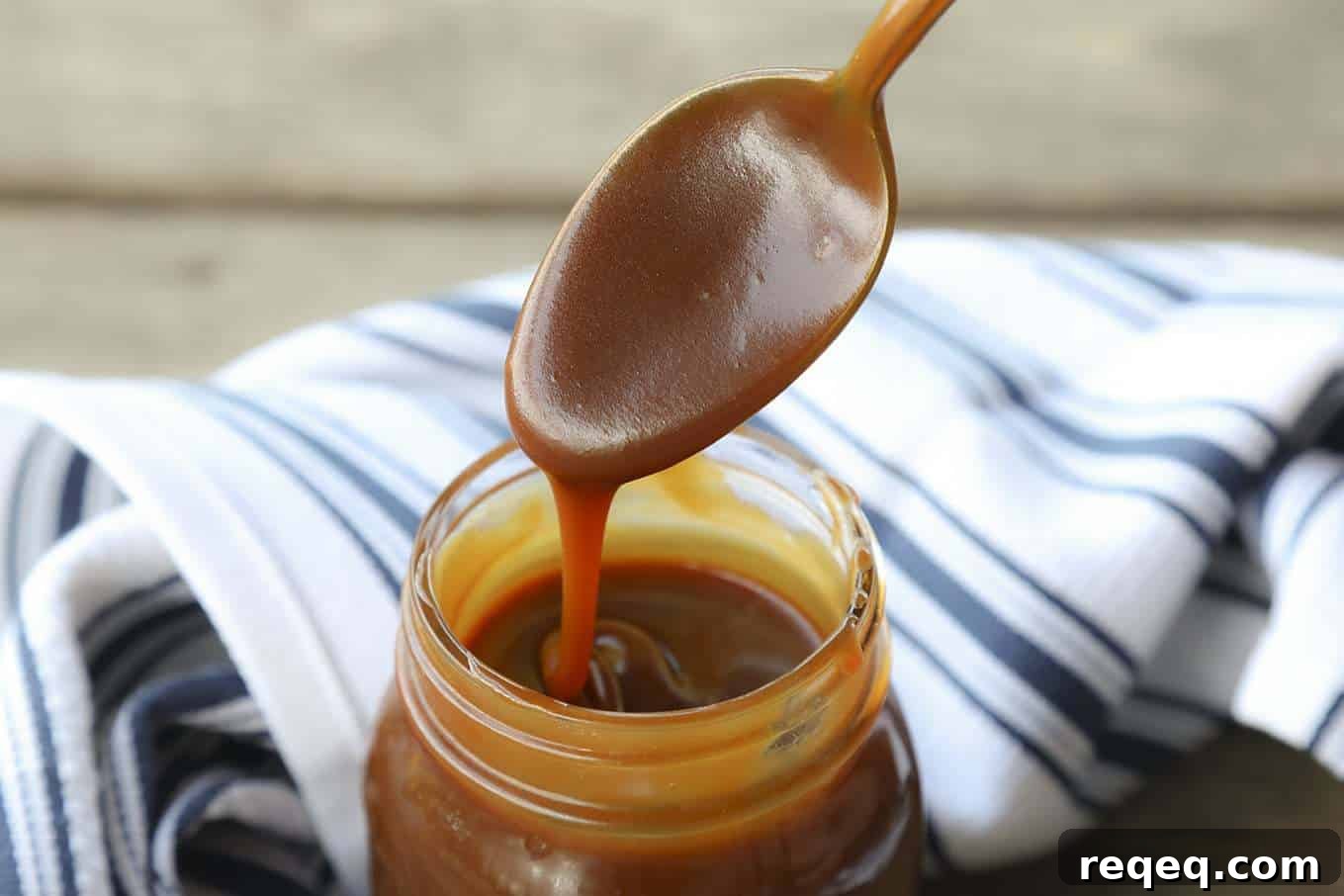
Bourbon Salted Caramel Sauce is everything a great caramel should be: just sweet enough, velvety smooth, with a subtle smoky note from the bourbon and a deep amber color. Once you’ve tasted homemade caramel, store-bought versions won’t satisfy. This sauce is a simple, beautiful union of high-quality ingredients—granulated sugar, butter, heavy cream, bourbon, and coarse flake sea salt. It doesn’t need fuss to be outstanding.
Cook’s Notes
- Bring the butter and heavy cream to room temperature before you begin. Cut the butter into tablespoon-sized pieces so it’s ready when the caramel has fully melted—there’s no good time to get up and fetch it once the sugar is bubbling and browning.
- Use a heavy-bottomed saucepan with at least 2 quarts capacity (3 quarts preferred). The caramel will bubble and increase in volume during the final stages; a larger pan prevents dangerous boilovers and a difficult cleanup.
- Molten sugar is much hotter than boiling water—do not test its temperature with your finger or let it touch skin.
- If you’re new to dry caramelizing (melting sugar without adding water), it’s actually straightforward but requires attention. Stand at the stove and whisk or stir until the sugar first looks clumpy and like damp sand, then continues to melt. Once fully melted, stop stirring—continued stirring can encourage crystallization and make the caramel grainy. Instead, gently swirl the pan as needed.
- Caramel color develops quickly once the sugar is melted. Watch closely for a deep mahogany or red-brown hue and an aromatic, toasty scent. If using a thermometer, you’re aiming for about 340°F–350°F. Add the butter at this point; do so carefully, as it will boil and bubble vigorously.
- This recipe is written for coarse flake sea salt. Do not substitute kosher or iodized table salt, which will change the flavor balance and can make the caramel overly salty.
- Choose a bourbon you enjoy drinking. The alcohol cooks off, but the flavor remains—start with something you like.
- Store leftover caramel in a microwave- or heat-proof jar with a tight-fitting lid in the refrigerator. Served cold it will be thick; warm it gently in short microwave bursts or place the jar in hot tap water until pourable. Reheat until warm and smooth, not boiling.
Ingredients
- 2 cups granulated sugar
- 12 tablespoons unsalted butter, softened
- 3/4 cup heavy cream, warmed to room temperature
- 1 tablespoon bourbon
- 1 1/2 teaspoons coarse sea salt flakes (do not substitute kosher or table salt)
Instructions
- Evenly sprinkle the sugar over the bottom of a heavy-bottomed saucepan (2–3 quart capacity). Place the pan over medium-high heat and whisk as the sugar begins to melt and clump. Continue until all the sugar has melted; then remove the whisk and gently swirl the pan from time to time as the sugar browns to a deep amber color (about 340°F–350°F).
- Carefully add the softened butter all at once; the mixture will bubble vigorously. Whisk until the butter is fully incorporated, then remove from the heat.
- Whisk in the warmed heavy cream, then add the bourbon and sea salt. The mixture will bubble again—be cautious. When bubbling subsides, set the pan aside on a cool burner or trivet for about 10 minutes, then transfer the caramel to a heat-proof jar. The sauce will thicken as it cools. Refrigerate, tightly covered, for up to one month.
- To reheat, remove the lid and microwave in 10-second bursts, stirring between each, until the caramel is smooth and pourable. Alternatively, place the closed jar in a container of hot tap water until it loosens and becomes pourable.
Nutritional information is an estimate and provided as a courtesy. Calculate nutrition using the actual brands and measurements you use if precise values are required.