Rustic Roasted Garlic Sourdough Boule Recipe for Crusty Loaves
Visit our Bread Recipes page for more homemade bread ideas. If you need help making a sourdough starter, we have clear, practical instructions to get you going.
If you don’t already have roasted garlic, try our simple oven method for roasting garlic to use in this recipe — the difference is worth it.
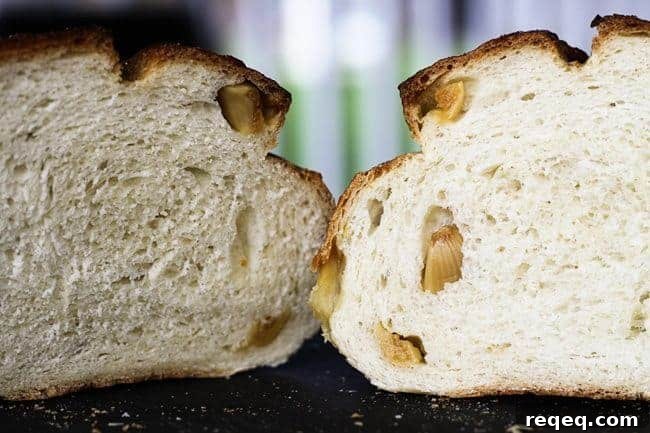
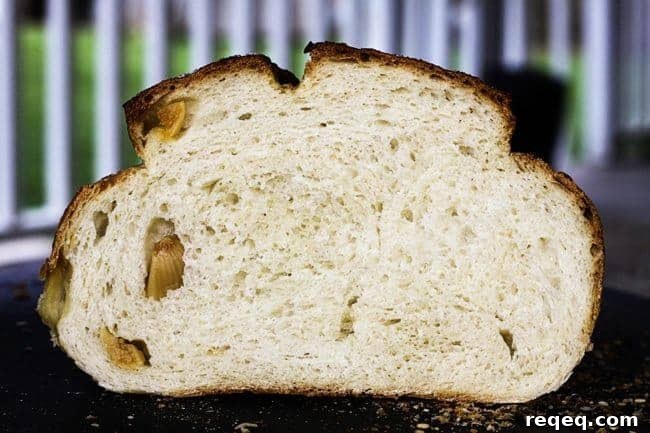
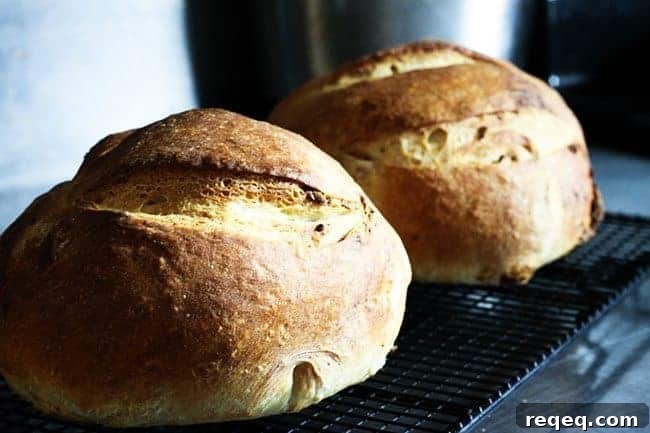
After attending King Arthur Flour’s Blog & Bake event, I returned home eager to bake. Fresh bread has a way of breaking down my willpower; that loaf above is a perfect example. It’s a Roasted Garlic Rustic Sourdough Boule, adapted from King Arthur Flour’s rustic sourdough recipe and made with a pedigreed sourdough starter I picked up at their Baker’s Store. That starter has a long lineage, which makes baking with it feel a little like baking with history as well as flavor.
Are you breadphobic?
Many home bakers tell me they feel anxious about working with yeast. If that’s you, take heart: when you measure carefully and follow the steps, homemade bread rarely turns out inedible. It might not look perfect the first time, but it’s almost always worth eating. If a loaf doesn’t meet your expectations, treat it as a lesson—review what you did, try again, and remember someone or something probably enjoyed the results. Baking is a skill anyone can learn with a bit of time and patience. If you need help, King Arthur Flour offers a free Baker’s Hotline where experts answer baking questions. They’re kind and helpful, and they’ll walk you through any stumbling blocks so you can gain confidence with yeast breads.
How to form a rustic loaf of bread
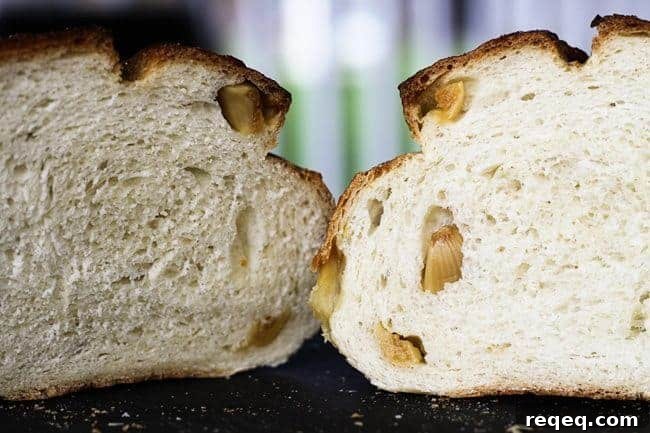
I followed the rustic sourdough formula that came with the starter and made one small change: instead of kneading the roasted garlic into the dough, I spread the dough after the first rise, sprinkled the garlic across the surface, and rolled it up. That keeps whole cloves more visible in the finished boule instead of crushing them into the crumb while kneading. Below are a few helpful notes for shaping and finishing this garlic-studded sourdough.
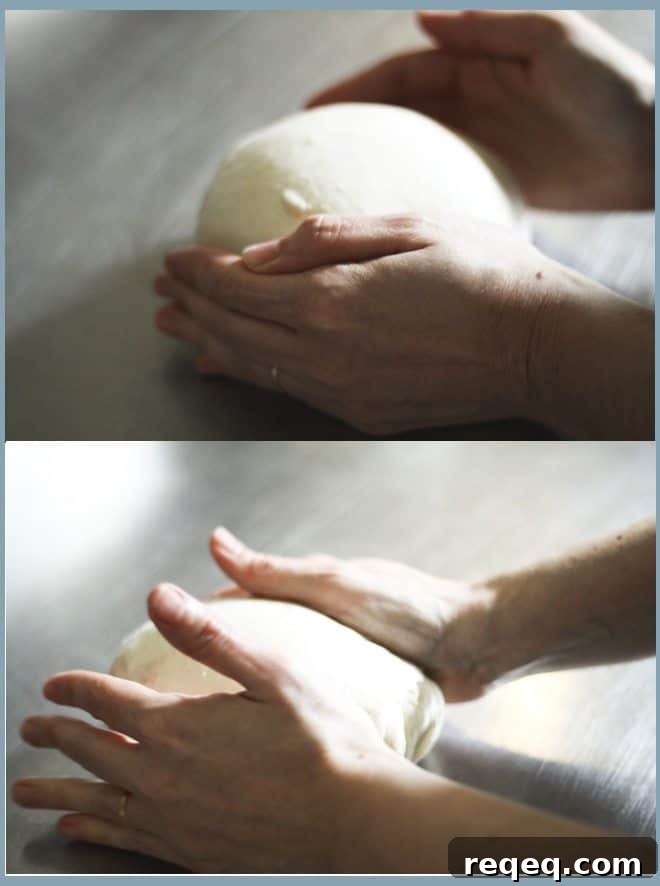
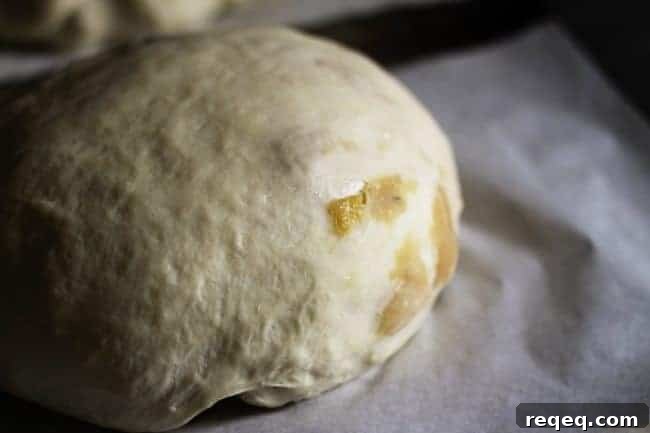
After the first rise, pat each piece of dough into a flat oval about 1/2-inch thick. Spread chopped roasted garlic evenly across the surface, then roll the dough up from a short side into a long log. To shape a boule, tuck one coiled end toward the center, rotate the dough about 45°, and repeat around the log until you have a rough ball. Flip the dough so the smooth side faces up. Cup your hands at a 45° angle and roll the dough on the counter by alternately pushing and pulling with each hand; this tightens the surface and forms a smooth skin. Take care not to roll so tightly that roasted garlic bursts through everywhere — a few pops are fine and add rustic charm.
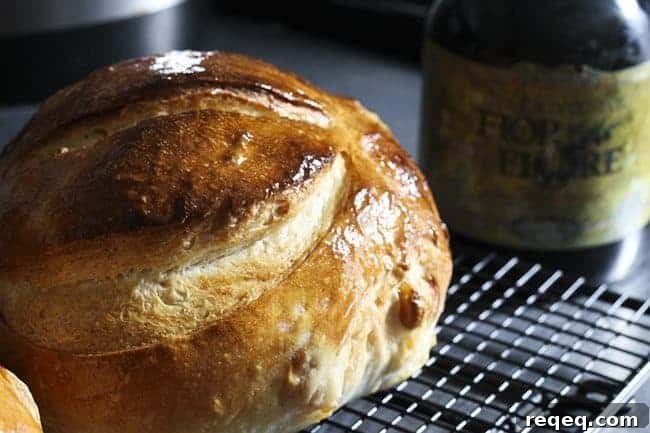
I score the tops with a sharp blade before baking so the loaves expand gracefully instead of tearing. The cuts also create an attractive finished look.
Left as-is, these loaves have a crisp, shattering crust and a chewy, mildly tangy crumb with pockets of roasted garlic. I like to brush the warm loaves with extra virgin olive oil and sprinkle super-fine sea salt on top. That softens the crust slightly and adds a savory, fragrant finish that’s especially good if you plan to make sandwiches. If you prefer the very crisp crust, skip the oil and salt.
This bread stands up to hearty sandwich fillings, toasting with butter or olive oil, topping with a fried egg, or serving alongside soups and stews to mop up every last drop. Leftover slices that have slightly dried out turn into excellent croutons.
How would you serve this loaf?
XO
Rebecca
Roasted Garlic Rustic Sourdough Boule
Rebecca Lindamood
Prep Time 2hrs
Cook Time 30mins
Total Time 2hrs30mins
Print Recipe
Pin Recipe
A classic rustic sourdough loaf gets a savory upgrade with roasted garlic cloves rolled into the dough when shaping. After baking, loaves can be brushed with extra virgin olive oil and finished with super-fine sea salt for added flavor and a softer crust.
Ingredients
1cupripe sourdough starterabout 8 1/2 ounces by weight
1 1/2cupsbody-temperature waterabout 12 ounces by weight
2 1/2teaspoonssalt
1tablespoonsugar
2teaspoonsinstant or active dry yeastno need to dissolve first
5cupsall-purpose flourabout 1 lb 5 1/4 oz by weight
1cuproasted garlic clovesroughly chopped
Optional:
extra virgin olive oil for brushing and super-fine sea salt for sprinkling over finished loaves
Instructions
Whisk together the flour, yeast, salt, and sugar in a large bowl or the bowl of a stand mixer fitted with a dough hook. Add the sourdough starter and water and mix until a shaggy dough forms.
Turn the dough onto a lightly floured surface and knead until smooth and elastic, about 8 minutes, or use the dough hook to reach the same texture. Place dough in a lightly greased bowl, cover, and let rise in a warm place until puffy and marshmallowy; a gentle poke should leave an indentation.
Turn the dough out, divide it in half, and pat each piece into a rough rectangle about 1/2-inch thick. Sprinkle the chopped roasted garlic evenly over each piece and roll from a short side into a log.
To form a boule, tuck one coiled end toward the center, rotate 45°, and repeat until the dough is roughly ball-shaped. Flip so the smooth side is up, cup your hands at 45° and roll the dough on the counter, alternating push and pull to tighten the surface. Place smooth-side up on a parchment-lined baking sheet at least 6–8 inches apart. Cover and let rise 30 minutes.
Preheat the oven to 425°F with an empty cast-iron or other heavy oven-safe pan on the oven floor. Bring a pot of water to a boil on the stove.
Just before baking, score an X or scalloped pattern about 1/4-inch deep on each loaf to control expansion.
Slide the parchment with boules into the oven and carefully pour about 1 cup of boiling water into the heated pan to create steam. Close the oven and bake 20 minutes. Remove the water pan, close the oven, and bake another 10 minutes.
Loaves should be deep brown, firm, and register at least 195°F in the center. Transfer to a cooling rack. If desired, brush with extra virgin olive oil and sprinkle with super-fine sea salt. Cool completely before slicing.
Store leftovers at room temperature wrapped in a tea towel.
Nutritional information is an estimate and provided as a courtesy. Calculate nutrition with the exact ingredients you use if needed.
Did you make this recipe?
Tag @foodiewithfam on Instagram and use #foodiewithfamily so I can see your loaf!