Recipes 5 min read
Tangy Pickled Brussels Sprouts Recipe for Flavorful Sides
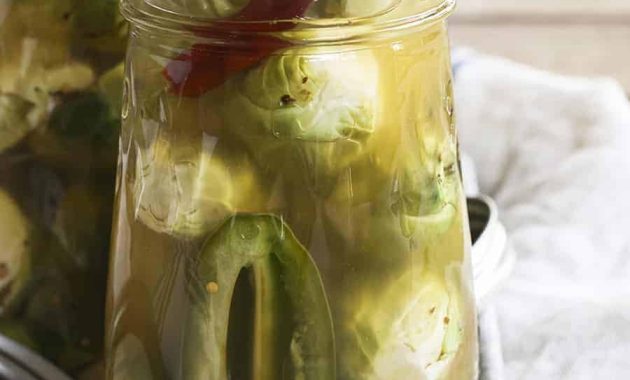
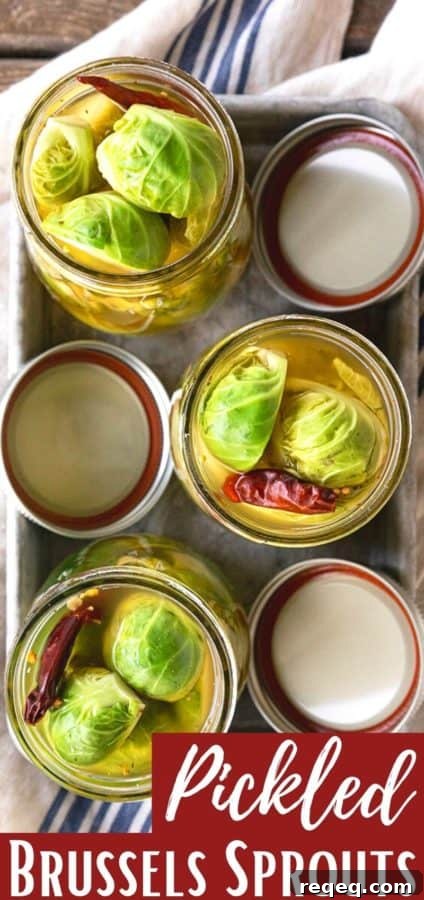
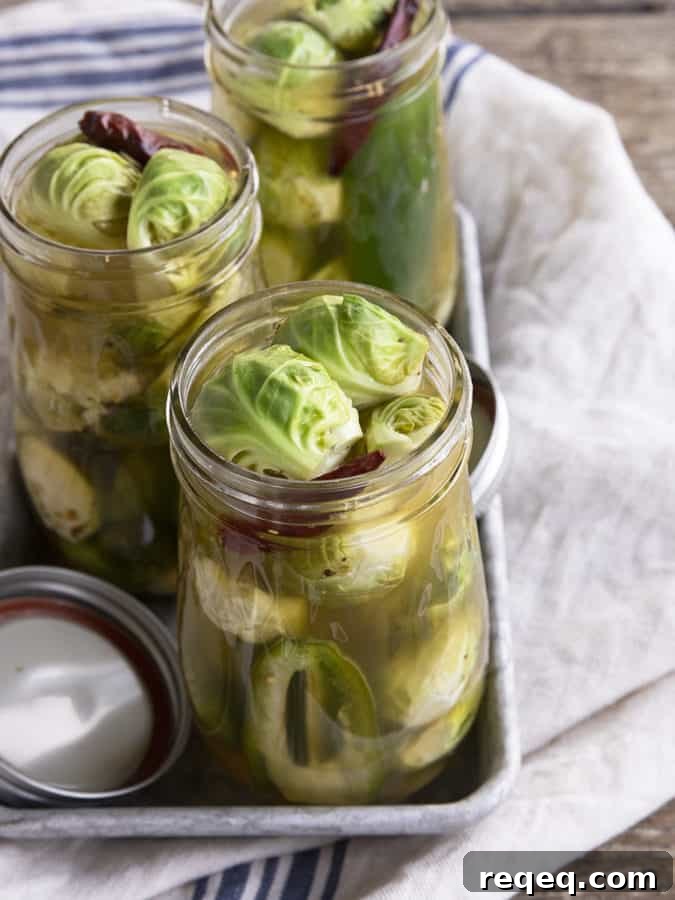
Pickled Brussels sprouts are garlicky, tangy, crisp-tender little green orbs with an earthy bite. They work beautifully as a snack, on a charcuterie board, or even as a surprising garnish in a Bloody Mary. They may sound unusual, but one taste will win you over.
Not long ago a reader named Dianne mentioned using extra candied jalapeño syrup to make sweet-and-spicy pickled Brussels sprouts. I’m experimenting with that idea, but when I received eight pounds of Brussels sprouts in my Misfits Market box, I set out to make a garlicky, tangy, and slightly spicy version that highlights bright vinegar and crunchy texture. The result was so good I had to share the method.
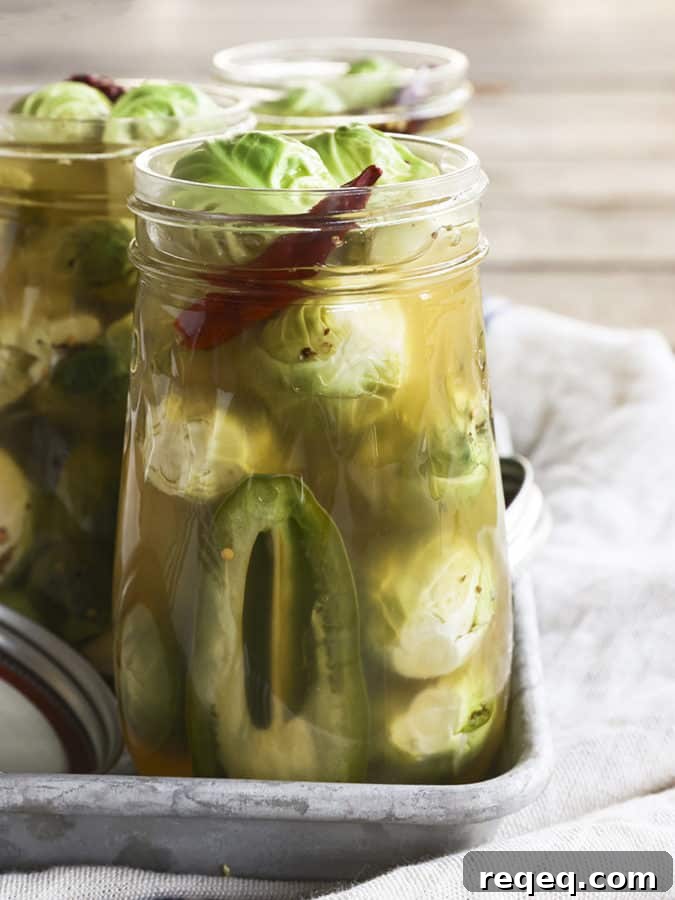
Visually, pickled Brussels sprouts tend to take on a muted green when cooked, so they may not be the most vivid jars on the shelf. But their texture and flavor are addictive—my sister thought the jars were “so pretty,” and my picky eleven-year-old niece loved them too.
How to Pickle Vegetables
We’re big fans of pickles and preserve a wide range of vegetables: green beans, cherry tomatoes, red onions, cherries, ginger, and more. Different vegetables respond differently to pickling methods, so a one-size-fits-all approach doesn’t always work. Fortunately, Brussels sprouts are among the easiest to pickle successfully.
One universal rule: start with the freshest produce you can find. Fresh vegetables yield the crispiest pickles. If your produce is bruised or soft, the pickles will be softer too. Trim any dry or damaged areas from the stems and remove loose outer leaves before pickling.
Vinegar choice affects both flavor and color. Apple cider vinegar gives a milder, slightly sweeter flavor and a more muted green appearance, while white distilled vinegar produces a brighter, tangier pickle. Both are delicious—choose based on your taste preferences.
This recipe uses two kinds of peppers for depth: fresh jalapeño and a dried Sichuan pepper. The finished sprouts are not overwhelmingly hot, just layered in flavor. If you’re very sensitive to heat, omit the jalapeño or the dried pepper. To add more heat, swap the Sichuan pepper for a dried arbol chile.
Can I Pickle Frozen Vegetables?
Short answer: no. Frozen vegetables release water during freezing that damages cell walls, which makes them soft once thawed. That texture is fine for cooked dishes but unacceptable for pickles, which should remain crisp. For the best results use fresh, in-season vegetables for pickling.
Can I Can Pickled Brussels Sprouts?
Yes. This recipe is written for water-bath canning so the jars can be stored on the shelf. If you prefer not to can, you can stop after pouring the boiling brine over the sprouts: seal the jars and refrigerate. They will be safe to eat but won’t have the extended shelf-life of properly canned jars. If you want to learn safe canning techniques, consider a reputable canning guide to build confidence and skills.
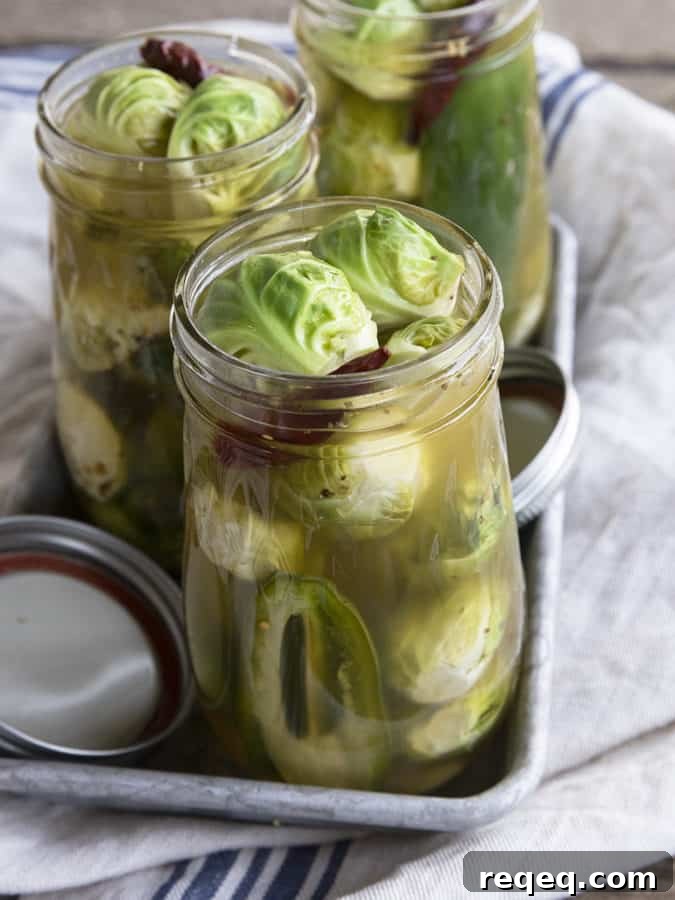
Pickled Brussels Sprouts
Prepare 8 to 10 pint jars by washing them in the dishwasher.
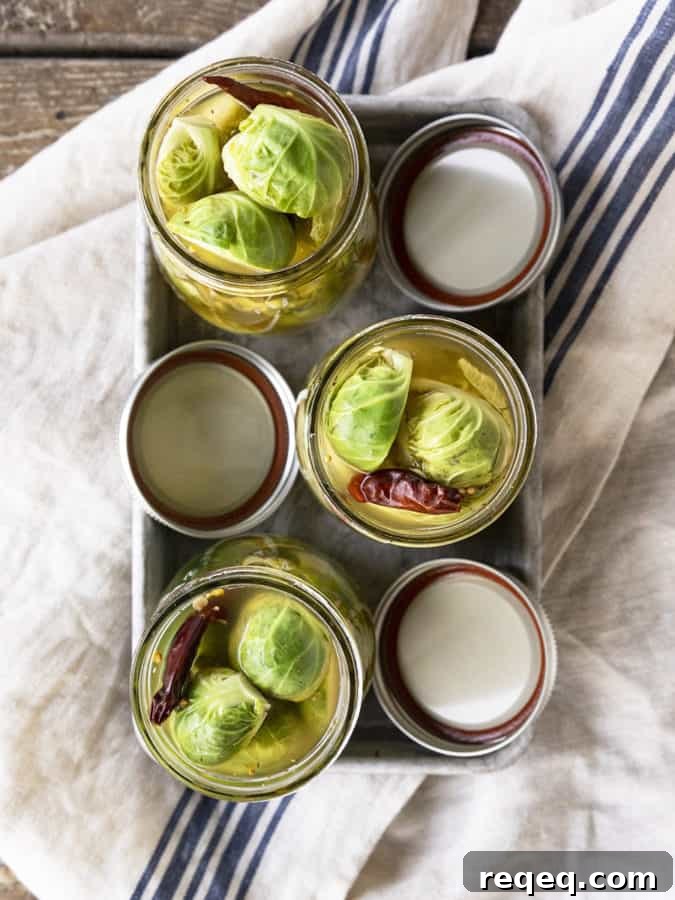
In each pint jar place: 4 cloves of peeled garlic, half a fresh jalapeño (optional), one dried Sichuan pepper (or a dried arbol for more heat), 1/4 teaspoon dried dill seed, 1/4 teaspoon celery seed, and 1/8 teaspoon coriander seed. Set the jars aside.
Wash and trim the Brussels sprouts, removing any loose leaves or dry spots. If the sprouts are large, cut them in half from pole to pole. Pack the raw sprouts into the jars without packing them too tightly.
Bring 6 cups apple cider vinegar, 4 cups water, and 1/2 cup Morton’s kosher salt to a boil. Carefully ladle the boiling brine over the packed jars, leaving 1/4-inch headspace.
Wipe the jar rims with a paper towel moistened with vinegar and place new two-piece lids on the jars, tightening fingertip tight.
Place the jars in a canner with boiling water covering them by 2 inches, put the lid on, and when the water returns to a full rolling boil, process for 10 minutes. After 10 minutes, turn off the heat and remove the canner lid.
Let the jars sit in the hot water for 5 minutes, then transfer them carefully to a cooling rack or a towel-lined counter. Allow jars to rest, undisturbed, for 24 hours. After that time remove the rings, wipe the jars clean, label them, and store on shelves.
Let the pickled Brussels sprouts age for at least two weeks before opening for the best flavor. Once opened, refrigerate and use within about two weeks.
Pickled Brussels Sprouts
Rebecca Lindamood
Equipment
-
8 to 10 pint jars
-
canning lids
-
canning pot
Ingredients
- 4 pounds whole fresh Brussels sprouts
- 6 cups apple cider vinegar
- 4 cups water
- ½ cup Morton’s Kosher Salt
Per Pint Jar:
- 4 cloves garlic peeled
- ½ of a fresh jalapeno pepper optional
- 1 dried Sichuan Chinese pepper optional, or dried arbol chile pepper
- 1/4 teaspoon dried dill seed
- ¼ teaspoon celery seed
- ⅛ teaspoon coriander seed
Instructions
Prepare pint jars by washing them in the dishwasher.
-
Place 4 cloves garlic, half a jalapeno pepper, a dried pepper, dill seed, celery seed, and coriander seed in each pint jar. Set them aside.
-
Wash and trim the Brussels sprouts and cut away any dry spots. Remove any loose leaves. If the sprouts are large, cut in half from pole to pole. Pack the prepared sprouts into the jars without packing too tightly.
-
Bring the apple cider vinegar, water, and salt to a boil. Ladle over the Brussels sprouts, leaving ¼-inch headspace.
-
Wipe the rims with a paper towel moistened with vinegar and secure new two-piece lids fingertip tight.
-
Place jars in a canner filled with boiling water to cover them by 2 inches and add the canner lid.
-
When the water returns to a rolling boil, process for 10 minutes. Turn off the burner and remove the canner lid.
-
Let the jars sit in the water for 5 minutes, then transfer carefully to a cooling rack or towel-lined counter. Leave undisturbed for 24 hours before removing rings, wiping clean, labeling, and storing.
-
Allow pickles to rest for two weeks before opening. Once opened, keep refrigerated and use within about two weeks.
Nutrition
Nutritional information is an estimate provided as a courtesy. Calculate nutrition using the exact ingredients you use if needed.
Did you make this recipe?
Share your results on Instagram and tag @foodiewithfam so the author can see your jars.